Tallinn's Old Town Card: Some of This Is Real, Some of It's Worked
A lucha libre trainer used to grading whether a mask comes off clean walks Katariina käik's craft benches and Old Town's marzipan houses to call which of Tallinn's medieval reveals are earned and which are just wearing the costume.

The Entrance
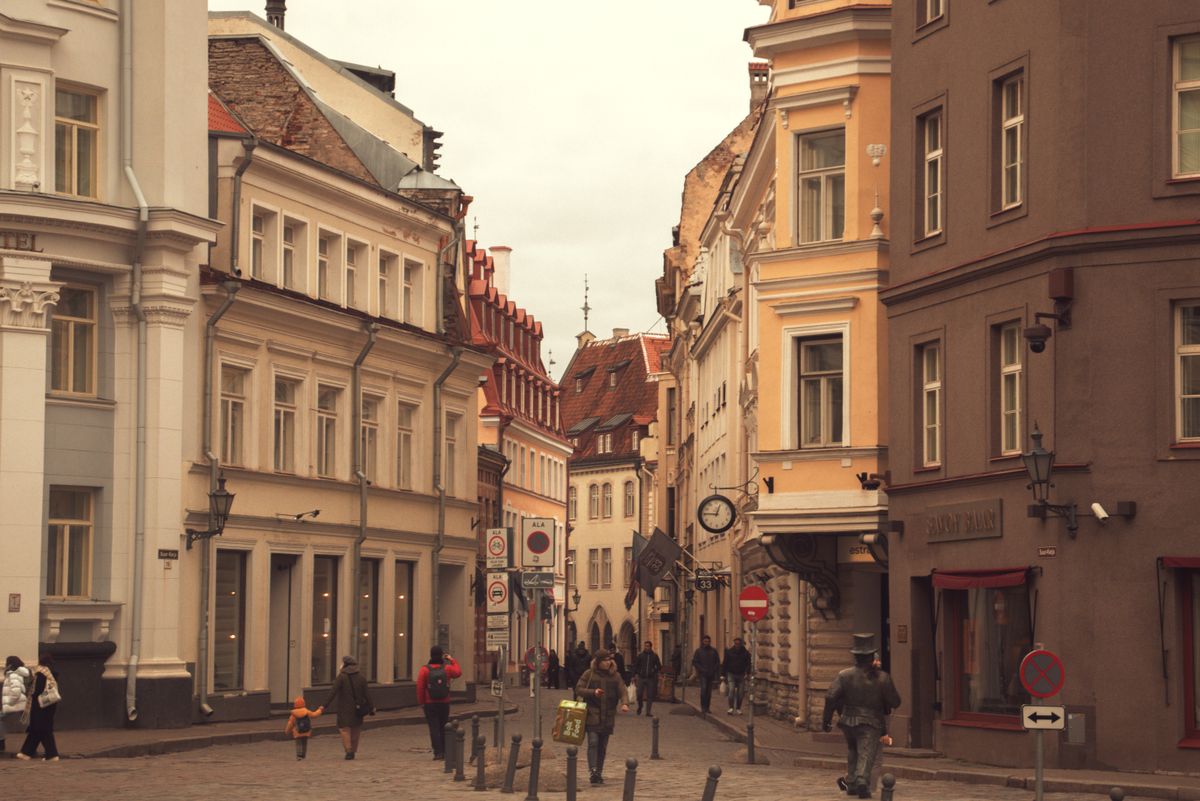
The feeling-out process. Two guys circle for the first ten seconds of a match without committing to anything real, each one reading what the other actually carries before either throws a move that means something. That's me on Vene Street, camera still zipped in the bag, walking toward Katariina käik with the specific suspicion of a man who has watched enough manufactured moments to spot one before it starts.
The passage itself is barely wide enough for two people to pass without turning sideways, medieval stone underfoot, and along both walls sit workshops with their doors open to the street: a glassblower, a ceramicist, a weaver at a loom you hear clacking before you see it, a hatmaker, a bookbinder stitching signatures by hand. Katariina Gild is the name for the group of them, and nobody in any of those doorways is wearing a costume. They are working people making things people buy, using methods old enough that nobody bothered updating the marketing.
Stop at the weaver's doorway and you can watch the treadles move before your eyes adjust enough to catch the pattern building one row at a time. A few doors down, the bookbinder has a stack of loose signatures waiting to be sewn, needle and thread, no machine anywhere in sight. Nothing rehearsed for the tourist trade about either of them. They just happen to be visible from the street, which was somebody's design choice four centuries back, not a modern one.
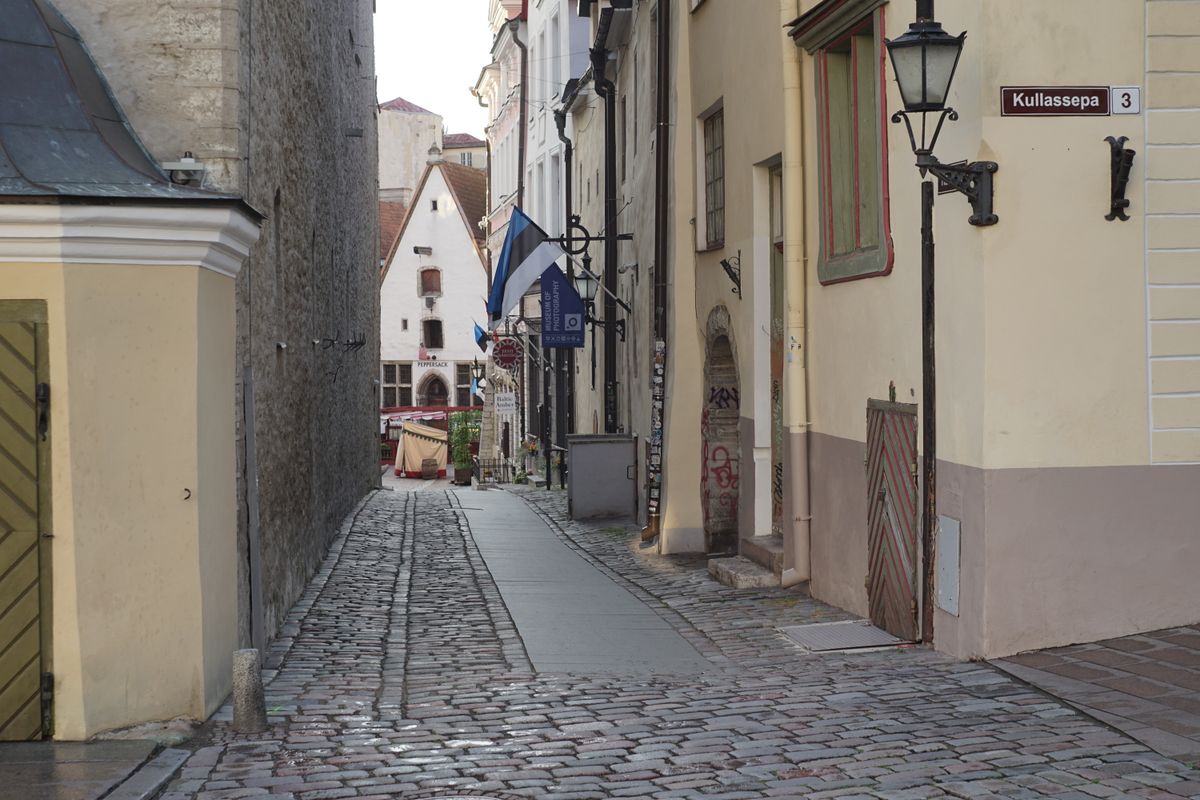
Vene Street outside the passage carries the pedestrian traffic, the pace of a weekday afternoon with tour groups working through it in loose clumps, and that's the street pictured above, one turn away from the workshops themselves. Duck off it into Katariina käik and the noise drops by half, because the alley is narrow enough to swallow sound instead of bouncing it around.
Worked as a room, sure. Any space that pulls tourists eventually gets arranged for tourists, doors propped open at the hours people are walking by, sightlines built for a phone camera. But that's set dressing around something real, not instead of it. I watched the glassblower's hands before I decided anything, and hands don't lie about whether a person has done a task ten thousand times. His had. Earned.
The Work
The rest hold. Two guys locked up on the mat, barely moving, and a crowd that doesn't know wrestling reads it as nothing happening, when what's actually going on is a controlled recovery setting up the next fifteen minutes. That's the glassblower at his bench in Katariina käik, rod turning slow over the flame, doing what looks like very little for a very long time.
There's a gather of molten glass on the end of the rod, orange shading toward white, and the whole job is turning it at a constant speed so gravity doesn't pull it into a shape nobody wanted. He'd stop, reheat, turn again. No wasted motion, no playing to the row of people with phones out, which is itself the detail worth grading: performers work the crowd, craftsmen work the material.
Ten minutes' walk away, a different pitch. A guy in a felt tunic and a rubber sword works the street outside a tavern doorway, calling out something about a medieval feast to anyone who slows down enough to make eye contact, and inside is a fixed menu built around the word medieval doing most of the labor. I went in for one drink. The mead came in a mug shaped like a horn, which is not the same thing as being served by someone who forged the mug.
That's the difference between a cheap unmasking and a real one, and Old Town has both within a few blocks of each other. The tunic and the rubber sword are the promo, all buildup and no payoff behind it, a costume standing in for a craft. The glassblower never once looked at the crowd, because he didn't need us to buy it. We were buying it either way. Worked, the tavern. Earned, the bench.
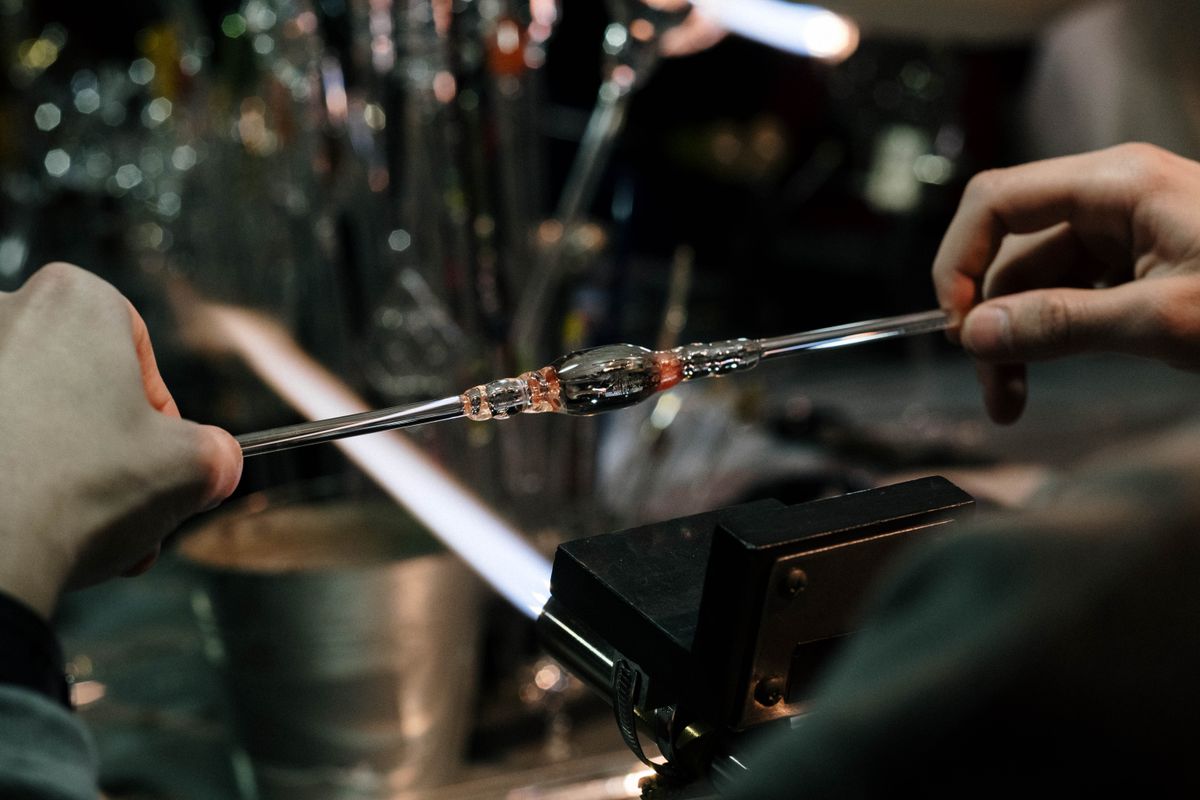
Anybody can rent a costume, but only one crew on this street can actually work the glass.
The Finish
The finish. Whatever built up over a match has to pay off in the last few minutes or the whole card feels like a wasted evening, and Tallinn's version of a finish runs through marzipan, of all things. Raeapteek, the Town Hall Pharmacy on Raekoja plats, was first documented in 1422, which makes it the oldest continuously operating pharmacy in Europe, still doing business out of the same building where that record starts.
Local legend has it an apprentice there invented marzipan by accident, maybe while mixing something meant to treat plague. I like a good legend as much as anybody selling tickets to one, but I've trained enough guys who can tell a story about how they got a scar to know origin stories get worked over time until the version that survives is the one that sells best. Can't confirm this one from a notebook. Don't need to. The pharmacy, the building, the 1422 record, that part isn't a story. That part's a document.
Café Maiasmokk on Pikk Street carries the more provable half of the tradition. It has operated in its current form since 1864, making it Estonia's oldest running café, and a Swiss confectioner named Lorenz Cavietzel was already making marzipan on that property earlier in the century before Georg Johann Stude, a Baltic German out of Narva, expanded the business further. Stude's marzipan figures and chocolates got popular enough to reach the Russian imperial court, which for one shop on one street is about as clean a main event as you can book.
Kalev, the confectionery brand that grew out of that lineage, keeps a Marzipan Museum Room with something like two hundred figures made from molds over a hundred years old, and runs sessions where visitors sit down and paint their own. That's not a legend. That's inventory you can count and molds you can date.
ringside notes
Walk Katariina käik before noon, when the workshop doors are open and the tour groups haven't filled the alley yet.
Watch a craftsperson's hands for thirty seconds before you watch the product. Real technique looks unhurried.
Raeapteek on Raekoja plats is worth a look for the building alone, first documented in 1422.
Book the Kalev Marzipan Museum Room painting session ahead of time. It fills.
If a guy in a costume is calling out to you from a doorway, that doorway is the promo, not the match.
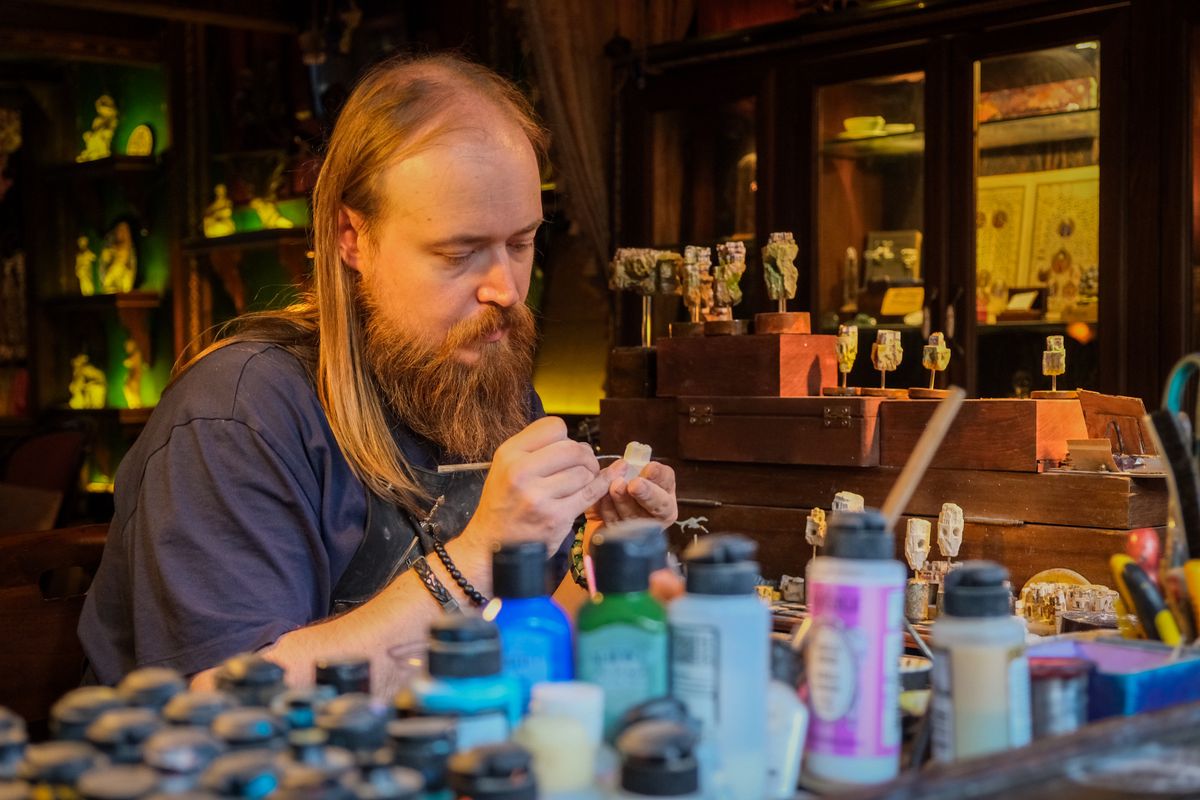
The bench I sat at wasn't marzipan, it was small figures lined up to be finished with a brush, but the discipline reads the same: patient strokes, a piece that only counts as done when the paint reads clean from a foot away. Nobody rushed me and nobody performed for me either. The woman running the session corrected my brush angle twice without making a show of correcting it.
So here's the card, read straight. Katariina Gild works because the crafts are real and nobody's selling the costume instead of the skill. The tunic and rubber sword outside the feast tavern is a cheap heat trick, entertaining for exactly as long as the mead lasts and not one second longer. Maiasmokk and the marzipan room split the difference, a documented 1422 pharmacy carrying a legend that doesn't need to be true to be worth telling, standing next to a craft that is. Tallinn's reputation for handwork isn't hype. Most of the building it's standing on will hold your weight. Just don't put your weight on the guy in the tunic. ■