Slow Berimbau, Fast Hill: Reading Pelourinho's Roda Circuit
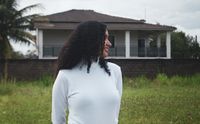
São Bento Pequeno, first read of Pelourinho. That's the slow toque, the rocking one, the tempo you play when you're feeling out an opponent before you commit to anything. Walk into the square on a Tuesday morning and the whole hill plays it: tour groups shuffling in clumps, waiters testing the air for lunch trade, a boy dragging a football two steps behind his own feet. Nobody has decided yet how fast today is going to go.
Ginga: Reading the Hill
Ginga is the sway capoeiristas never stop making, weight rocking foot to foot so no attack ever lands on a body that was already there. Pelourinho ginga's like that too, if you watch the cobblestones instead of the postcards. Vendors set up and pack down and reset three shops over. A tour guide breaks off mid sentence to wave at a friend across the square, picks the sentence back up without losing his place. Rigid this street is not.
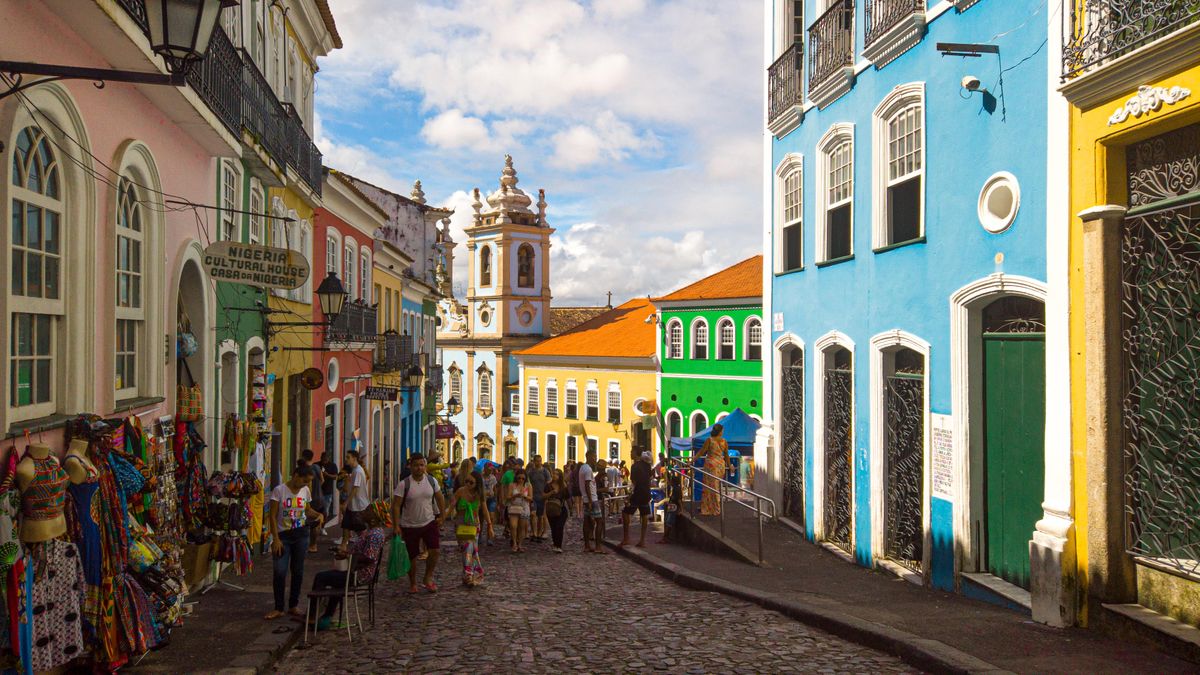
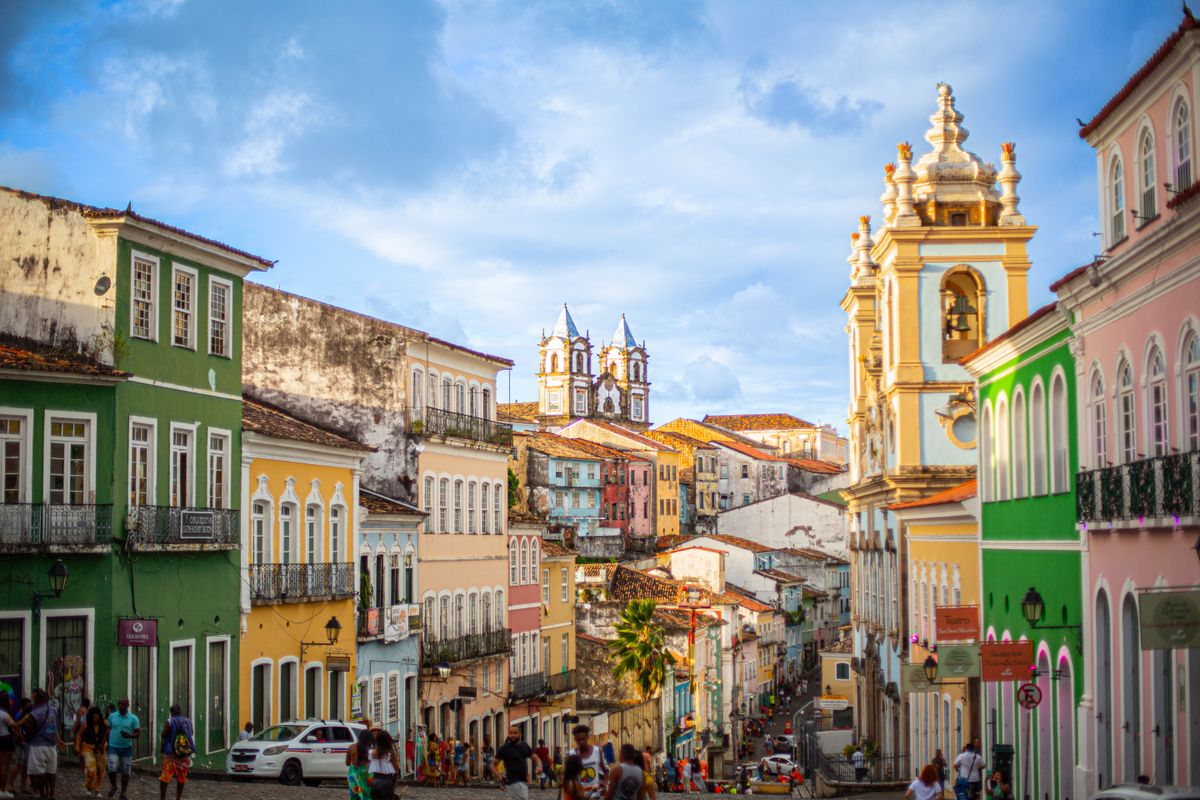
Pelourinho means pillory. The name is not decoration. This square, four centuries back, was where enslaved people were bound and whipped in public, the punishment staged for anyone passing through to see. Salvador built its wealth on that violence, and Pelourinho's colonial facades, the blue and ochre and butter yellow UNESCO listed in 1985, still draw the tour groups shuffling through at the same slow pace they kept all morning, straight over that ground. A place can hold two tempos, the color and the wound, and Pelourinho does. I won't pretend the second one isn't there.
My own esquiva came on day one, dodging a cobblestone that had other ideas about my ankle, a loose one right at the top of Rua Alfredo de Brito. Full weight forward, no time to think, just the dodge the body already knew from a thousand rodas: catch the balance low, let the hip carry it, come up somewhere else entirely. A local selling acarajé from a cart laughed and told me the street had been doing that to tourists since before her mother's mother. Esquiva earns you nothing if you don't come up laughing too.
Berimbau: The Circle Opens
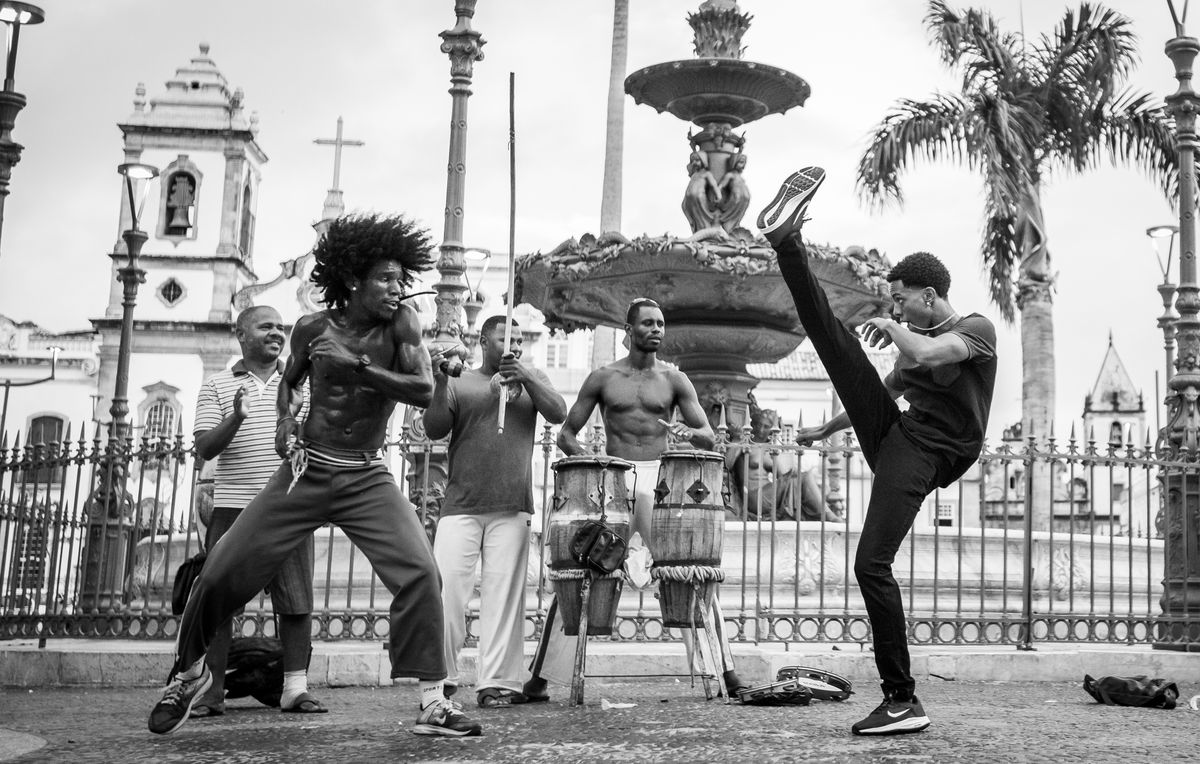
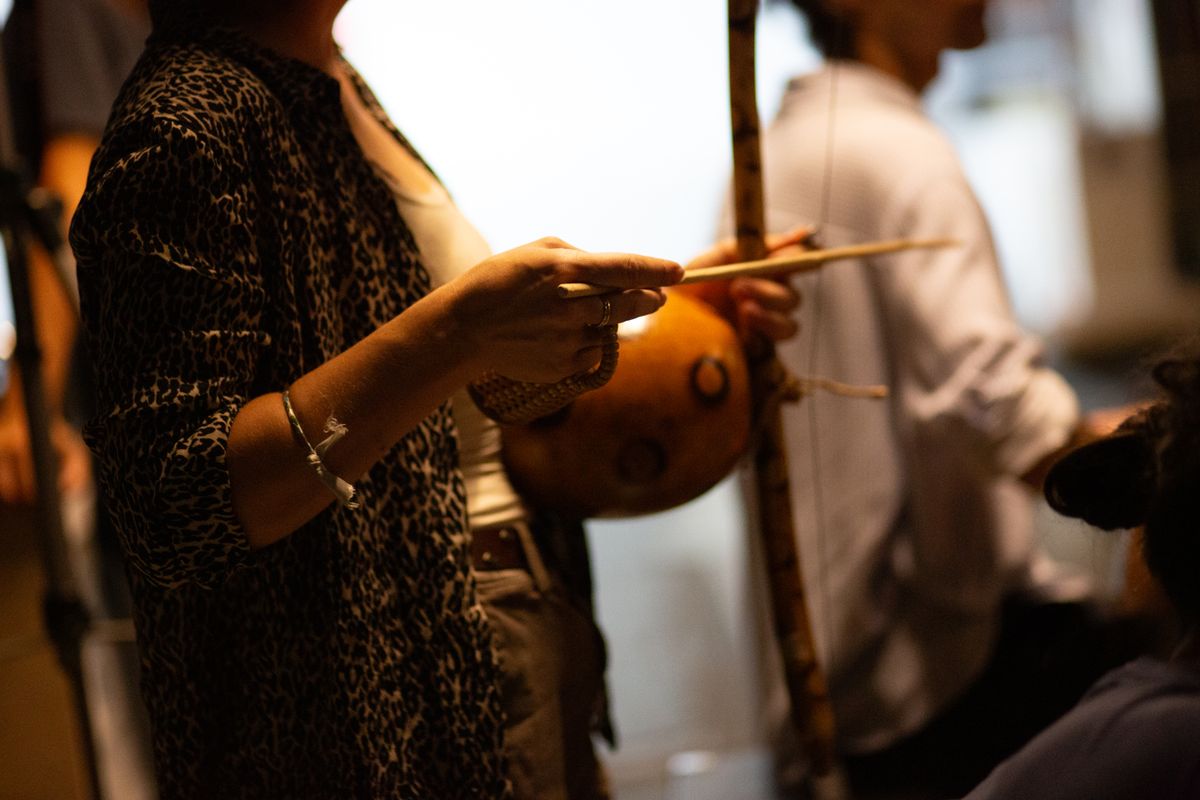
Wait long enough on any given evening near Largo do Pelourinho and someone unpacks a berimbau. One string, one gourd, one baqueta, and the whole square changes its listening. That's the instrument that runs a roda, not just an accompaniment. The mestre playing it decides whether the game underneath stays slow and grounded or opens up fast, and everyone else, singers, clappers, the two capoeiristas waiting to enter the circle, answers to that decision, not to each other.
A roda formed near the old Casa de Jorge Amado while I stood there, maybe twenty people ringed around two bare patches of stone. The berimbau started on something close to Angola, low and patient, and the two who stepped in matched it: crouched, circling, testing distance with a kick that never actually meant to land. Then the toque shifted, faster, tighter, closer to São Bento Grande, and the game inside the circle shifted with it in the same breath. Nobody called a timeout, and nobody needed to. The music called it and the bodies just went.
Call and response is the whole architecture. Someone sings a line, the circle sings it back, hands clap the pulse the berimbau sets, and the two in the middle play, not fight, the difference mattering enormously to anyone who has ever practiced this in a Sunday afternoon academy back home. A rasteira swept clean, one player folding to the ground and rolling straight back up into the next question the game was asking. That fluidity is the whole point. Stiff bodies get read instantly, in a roda same as on any street corner in this town.
A roda calls you the way a drum calls a foot. You answer before you decide to.
Volta ao Mundo: Two Mestres, One Street
Volta ao mundo, the walk capoeiristas take around the edge of the roda between exchanges, one lap to reset before diving back in. Take that same walk through Pelourinho's back streets and you'll cross two very different lineages inside a few hundred meters, both born right here in Bahia. Mestre Bimba built Capoeira Regional in this city, faster, more sport in its bones, more codified. Pastinha held the other line, Capoeira Angola, slower, lower to the ground, closer to the ritual roots the game came from. Academies up and down these streets still teach one or the other, sometimes both, and you can feel the difference in the first thirty seconds of watching a class through an open doorway.
I sat in on a Regional-leaning class one afternoon, borrowed a spot against the wall while eight students worked ginga in pairs. The instructor, younger than me by a decade, called corrections the way I do back at my own academy: not the position, the timing, always the timing. A kick landed a half-beat early reads as an attack. The same kick landed on the beat reads as a question. Watching someone else teach that same lesson, four thousand kilometers from my own floor, moved something in my chest I hadn't planned for and won't oversell here. It just did.
Ginga Notes
Street rodas cluster loosely around Largo do Pelourinho and Terreiro de Jesus most evenings. Nothing runs to the minute, so build in slack.
Watch the berimbau player first, not the two in the circle. The toque tells you what's coming before the kick does.
Ask before stepping into a roda as a beginner. Reading the circle wrong is its own kind of stiff.
Carry small bills. A hat sometimes goes around and nobody demands it, but play fair anyway.
Free Circle, Paid Floor
I never learned who won the roda I watched longest. Doesn't matter, wasn't the point, and if you go looking for a final score you're already off the beat. Pelourinho keeps its own tempo whether or not you catch it. Mine's still catching up. ■