Compasso First: The Lineage Behind Pelourinho's Roda
Before Pelourinho's circle ever formed, a school across town taught Bahia how capoeira could survive, and Pelourinho still keeps that same count today.
Compasso: The Count Before the Circle
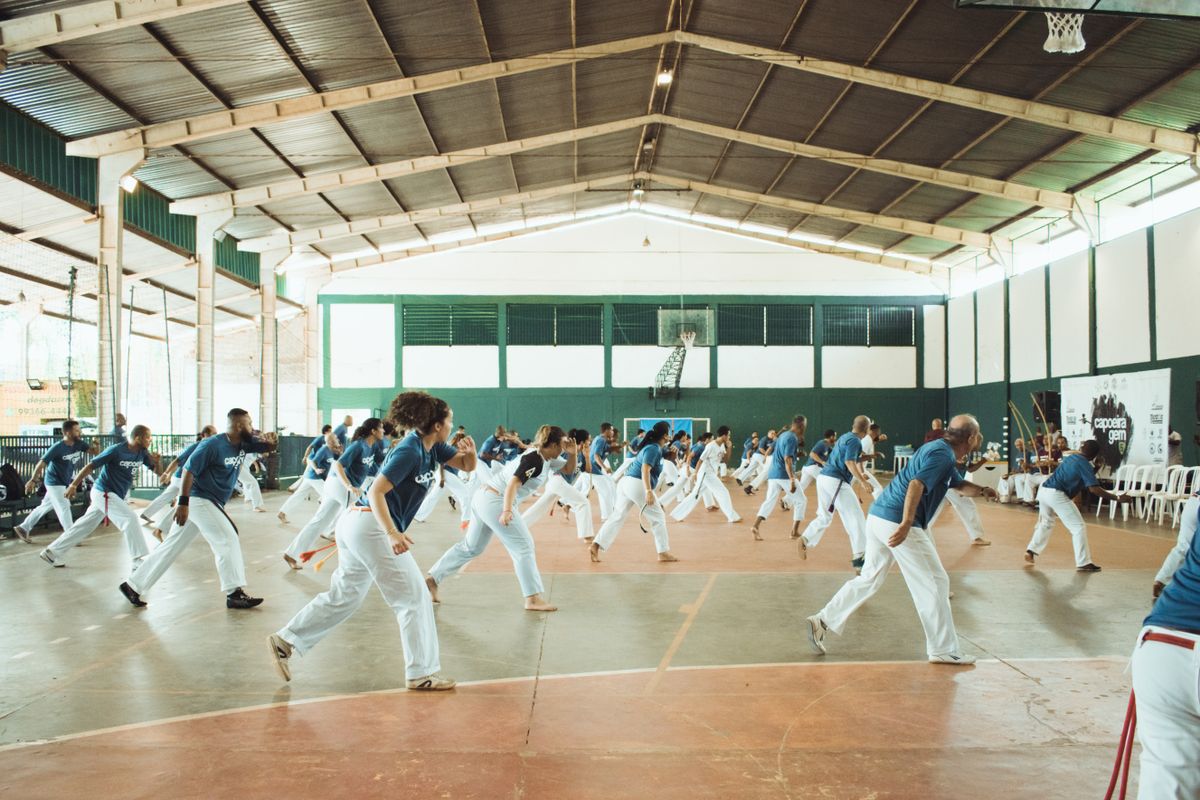
A large group class today, the kind of scale Bimba's teaching method was built to produce, though this particular room isn't his.
Compasso. The count a mestre keeps before anyone plays a note, the pulse under the song rather than the song itself. That's the tempo I went looking for on this leg of the trip, not the roda everyone already photographs in Pelourinho, but the beat that came before it, in a neighborhood most visitors never learn to pronounce.
Engenho Velho de Brotas sits inland from the historic center, a short bus ride and an entirely different register. In 1932, a fighter named Manoel dos Reis Machado, known to everyone as Mestre Bimba, opened an academy there under the name Centro de Cultura Física Regional Baiana. No colonial plazas, no crowd of tourists. Just a room, a handful of students, and a method he had been sharpening for years.
Why build something new when capoeira already existed? Because the practice was under threat from two directions at once. Capoeira had been outlawed and hunted through Salvador's streets for decades by the time Bimba opened his doors, treated as vagrancy, sometimes worse. The older, more ceremonial style of the game survived in backyards and corners, but it was losing the combat that once justified its existence. Bimba wanted the fight put back into the dance.
So he broke the game into named sequences, drills a student could learn in order, a curriculum instead of pure inheritance. That's compasso again: structure laid over something that used to run on feel alone. Discipline doesn't have to kill the music. Sometimes it's the only thing keeping the music from dying out completely.
Five years he ran the program before the city agreed it was legitimate. On June 9, 1937, Bimba registered his school with the Secretary of Education, Health and Public Services, the first capoeira academy in Brazil to receive that kind of recognition. Read that slowly. A practice chased through backstreets for a century just earned a stamp from the same government that used to jail the people who played it. That's the downbeat everything else in this roda circuit rests on.
A method survives when someone writes the beat down instead of only feeling it.
Aú Sem Mão: Landing Back in Pelourinho
Getting back to Pelourinho from Engenho Velho de Brotas took its own correction. I misread the stop and boarded a bus heading up Avenida Vasco da Gama in the wrong direction, watching an unfamiliar stretch of Brotas slide past the window for several minutes before saying the mistake out loud. Call it a rasteira, the sweep that puts you flat before you've clocked the setup. You don't fight it, you fall, you laugh, and you catch the next bus back the way you came.
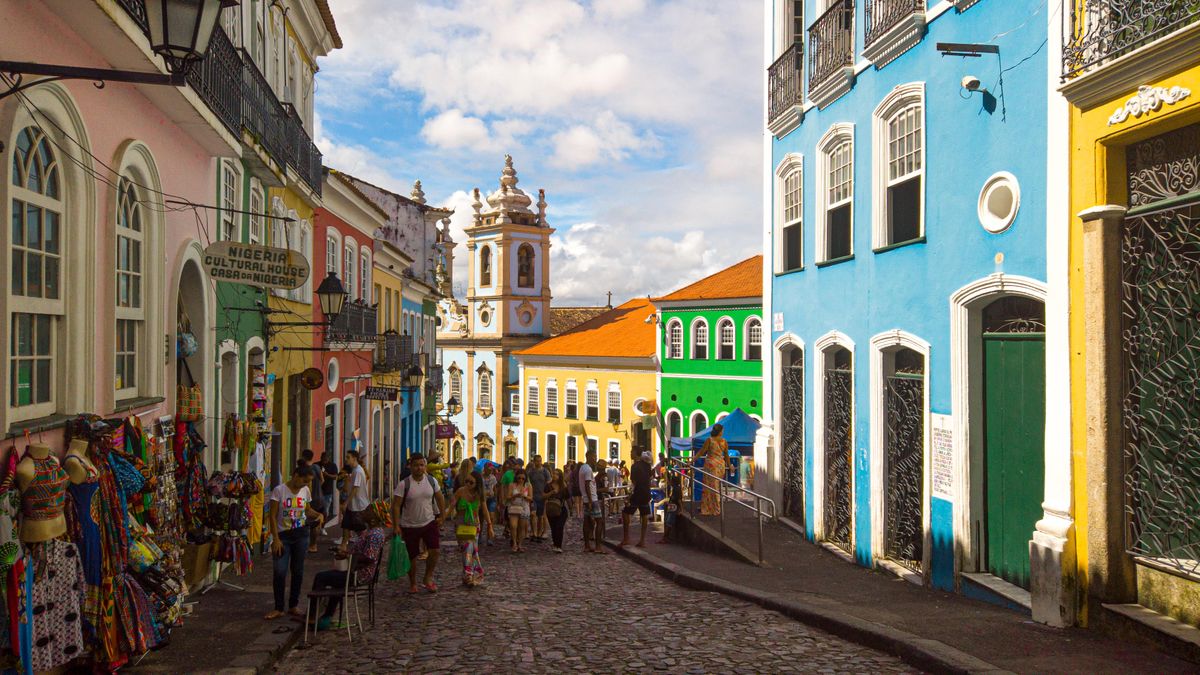
Filhos de Bimba Escola de Capoeira sits inside the historic center now, a straight line of inheritance from that room across town. Mestre Nenel, Bimba's son, founded it on June 10, 1986, and named it exactly what it is: the children of Bimba, carrying his father's method into a neighborhood the original academy never occupied. Almost half a century after that government stamp, the lineage finally moved into Pelourinho itself.
I graded the place the way I'd grade a student's ginga, watching whether weight travels through a room or just sits there. FBEC moves. An instructor corrects a hip angle mid-sentence without losing the count. Students rotate through drills without a scramble, and nobody stands around looking for permission to start.
A stiff academy drills the same eight counts until the room goes quiet with boredom. Fluid ones keep changing the question instead, small variations layered onto the basic ginga until a beginner and a decade-long student work the same drill at two different speeds. This one kept changing the question.
ginga notes
FBEC sits inside Pelourinho's historic center; class schedules shift by season, so confirm ahead.
Engenho Velho de Brotas is a separate neighborhood from Pelourinho; a short bus ride gets you to where Regional actually started.
Check the bus direction before boarding, not just the number on the sign.
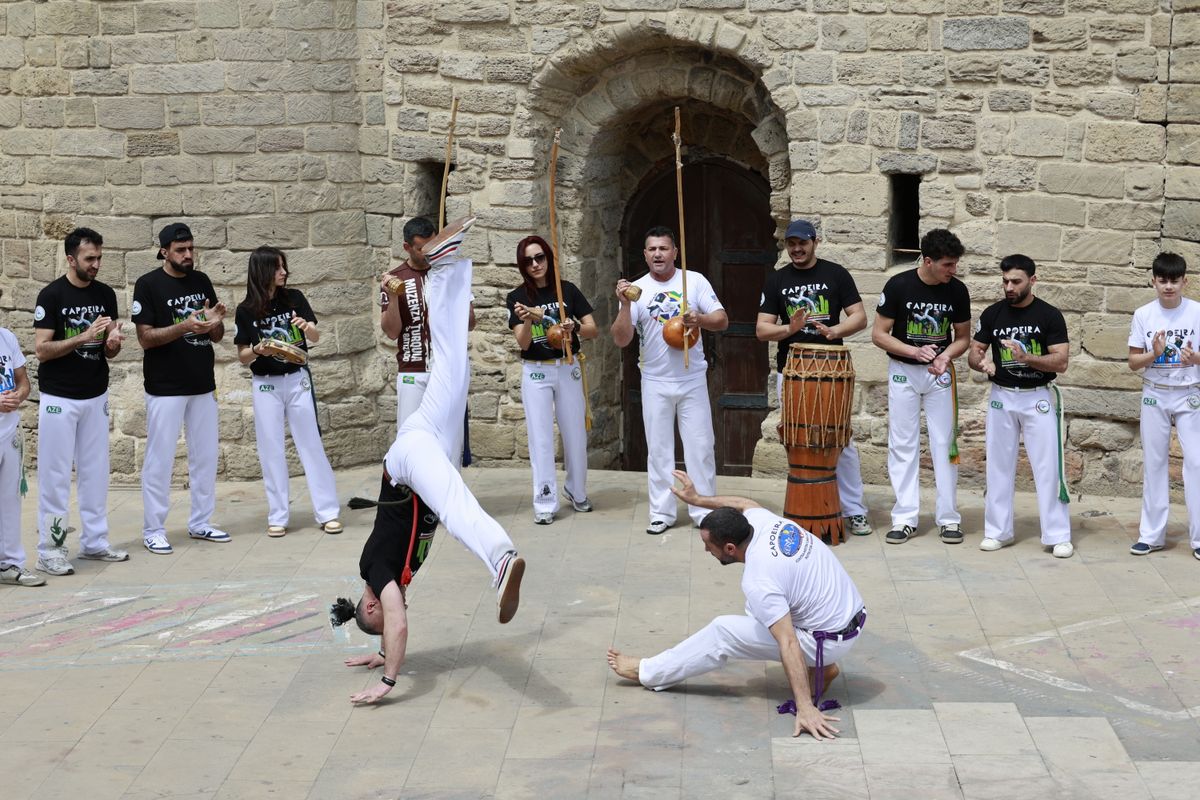
Outside, on the stones between the academy and the square, a demonstration had already gathered its own gravity. Two players traded a meia lua and an esquiva at a pace closer to conversation than combat, the berimbau setting a toque quick enough that the crowd's feet started answering before their brains caught up.
Tourists photographed it as spectacle. I read it as syllabus, the same drills from the room upstairs let loose at full speed in daylight. No neat lesson arrived to close things out, just a clearer count: Engenho Velho de Brotas first, 1932 and 1937, then Pelourinho, 1986 onward, one beat handed down without skipping. The roda you see in the street today is the second half of a phrase that started somewhere you can't see from the plaza. ■