The Escadaria Selarón at Golden Hour: A Roda in Tile and Light
Two hundred and fifteen steps of tile teach the same lesson a good roda does: the crowd sets a tempo, and you either find it or you trip on it.
São Bento Grande: The Fast Toque Up From the Arches
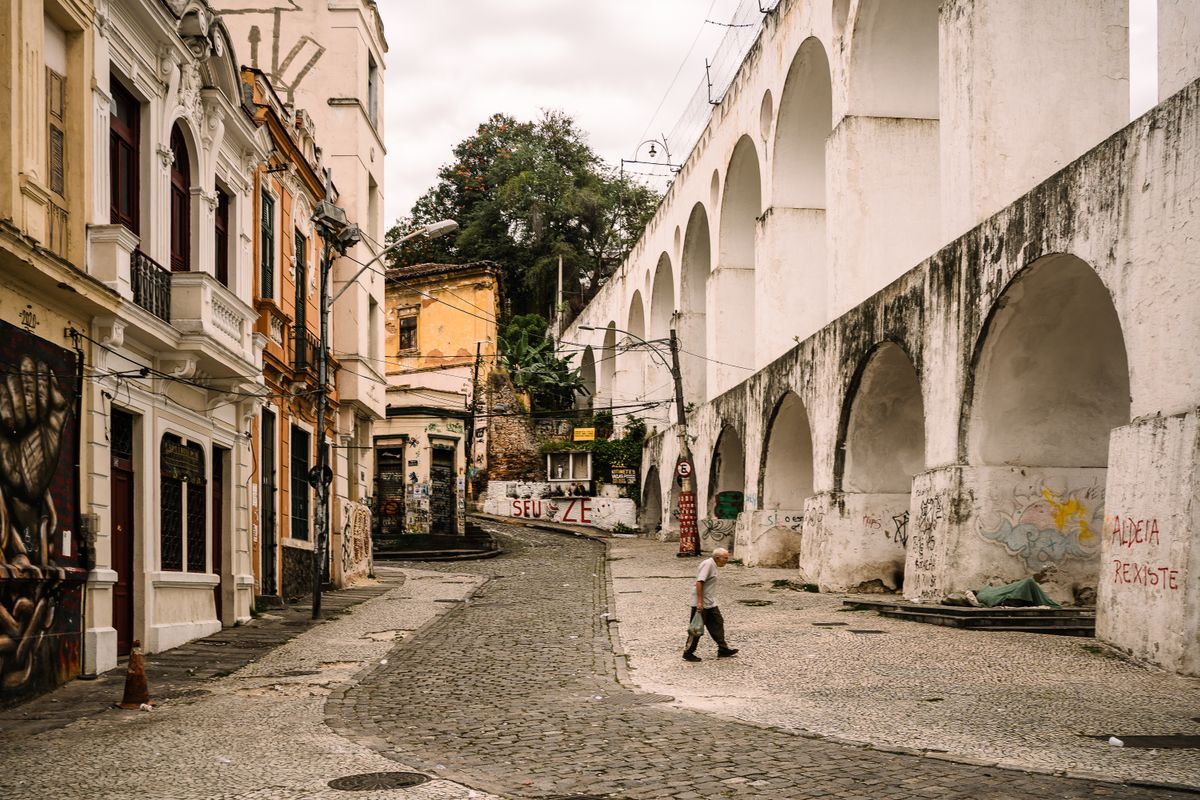
São Bento Grande, this stretch of Lapa at five in the afternoon. That's the quick toque, the one that gets your feet moving before your head has agreed to anything, and it's exactly the rhythm the street plays under the Arcos da Lapa once the light starts turning the color of cachaça.
The old aqueduct funnels everybody through the same handful of gaps between its arches, so the crowd's tempo changes the instant you pass beneath one. Single file for the length of the arch, shoulders in, chin down. Then loose again on the far side, the way a roda opens back up after a fast exchange between two jogadores who both know when to stop pushing.
Climb from there and the steps announce themselves before you see them, a rope-line of phones going up first, bodies second. Two hundred and fifteen of them, and Jorge Selarón laid the first tiles himself in 1990, blue, green, yellow, the flag's colors, selling his own paintings to pay for the cement. He kept adding pieces until 2013, plates and mirror shards and portrait fragments mailed to him from more than sixty countries, so the staircase never really finished. It just kept changing key, verse after verse, the way a good song does when a new voice steps into the circle.
Esquiva at Step Forty
A tourist backed straight into my path at step forty, both eyes on his screen, framing his girlfriend against a wall of blue-and-white tile. No time to argue about right of way. I dropped my weight low, let my hip carry me sideways onto the next tread over, an esquiva you'd use to duck a rasteira you saw coming a half-second too late. He never even knew there'd been an exchange. I got a better photo than he did, and I didn't have to apologize to a stranger's shins for it.
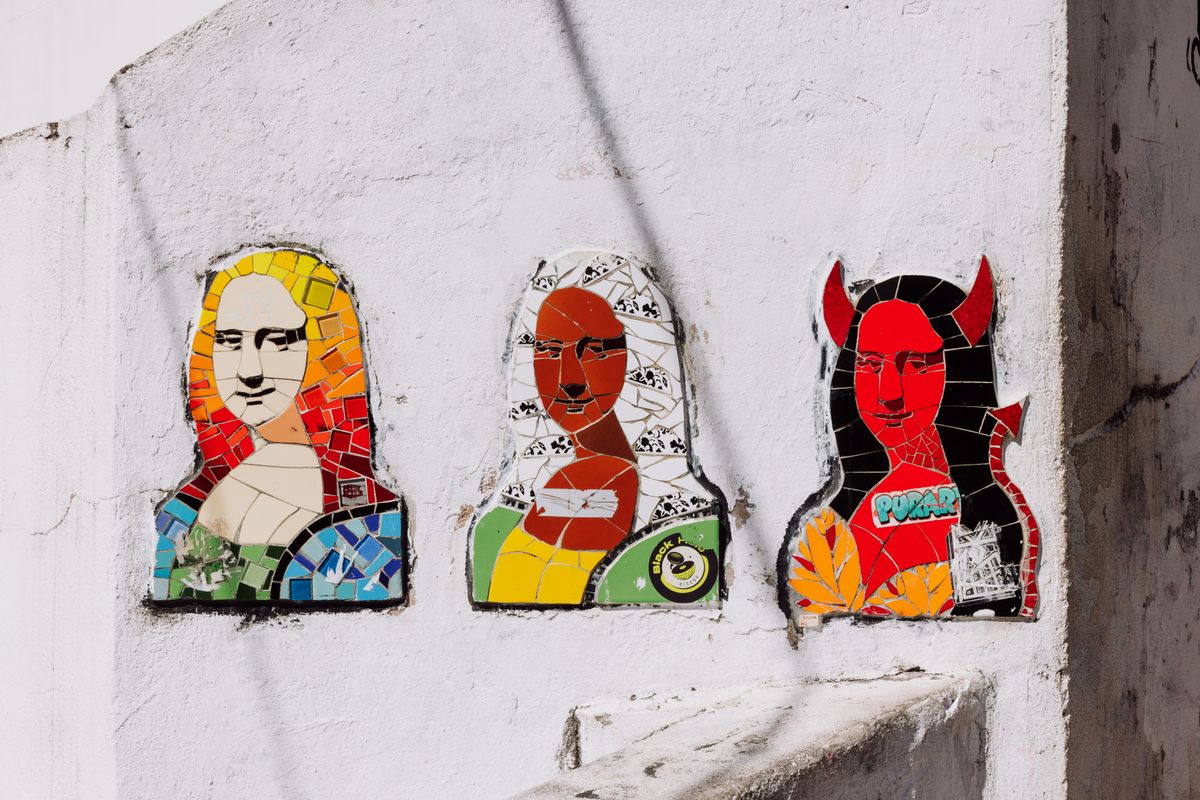
This is the kind of work the whole hill is stitched from, faces built out of broken plates instead of paint, a nose from one country's souvenir shop and a cheekbone from another's. Up close a portrait like this reads jagged, all seams and grout lines. Step back ten paces and the seams disappear into a face that holds still while everything around it keeps moving. That's the trick Selarón never stopped chasing, getting stillness to survive inside a rhythm that never lets up.
Grade the staircase itself on ginga and it earns high marks despite the crowd, maybe because of it. A stiff place locks you into one lane and makes you wait your turn like a bus queue. This one lets four different tempos share the same width of tile, families posing, a runner threading the gaps, an old man just climbing home, and none of them collide, because the steps themselves seem to know how to bend around a body without stopping the music.
Ginga Notes
Golden hour hits the tile straight on for maybe twenty minutes, come from the Arcos side so the light is at your back, not the crowd's.
Weekday late afternoon has a looser tempo than weekend midday, which plays more like a packed samba circle than a slow toque.
Keep your weight low on the worn treads near the top, the glaze goes slick exactly where everyone's foot lands the same way.
If you want a photo without a stranger's elbow in it, wait for the beat between tour groups instead of fighting the one in front of you.
A roda calls you the way a drum calls a foot. The steps just happen to be the drum here.
— roda call
Angola, Slow and Alone Two Hills Over
Angola toque, this back street. Slow, low to the ground, the kind you play when there's no one left to perform for. I found it four blocks north of Selarón's steps, up a hill nobody photographs, where the crowd's noise drops away one switchback at a time until it's just my own sandals on stone.
The stairway there isn't tiled at all, just painted, flat blocks of green and yellow and blue laid straight onto the concrete by someone whose name I never found posted anywhere. No plaques, no queue, no one working an angle for a better shot. A woman was sweeping her doorway at the bottom of it when I passed, and she barely looked up, the way you don't look up for a bus you already know the schedule of.
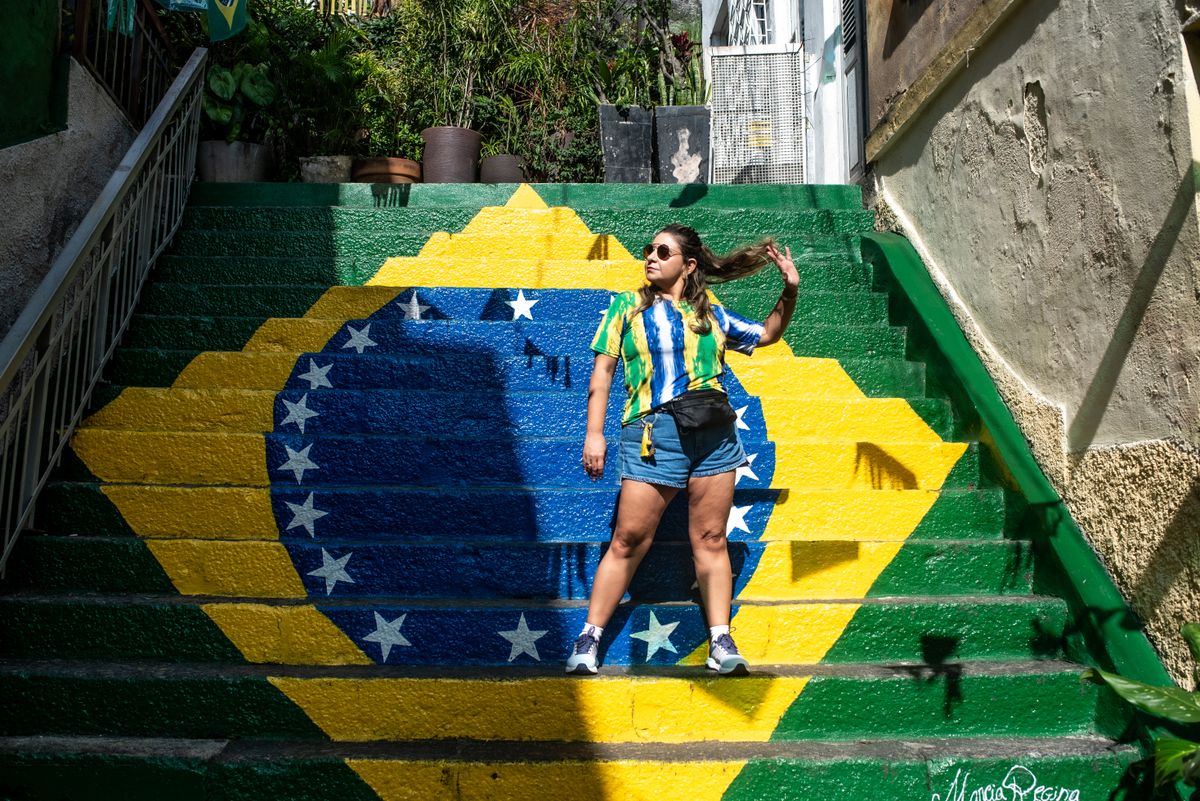
Grade this one's ginga and you'd call it slower, not stiffer. Stiff is a place that fights you, that gives nothing back no matter how you move through it. This staircase gives plenty back, it just gives it to almost nobody. My footsteps were the only percussion for a full minute at a time, and the paint held its color like it was waiting for an audience that mostly never shows up. A capoeirista plays just as well alone in an empty academy as she does in a packed roda. The steps here have that same discipline, keeping good time whether or not anyone's counting.
That's the real tempo of this stretch of Rio, not one rhythm but two running side by side, the fast toque at the famous steps and the slow one four blocks over that most visitors never hear. Selarón built his roda in public, tile by mailed-in tile, and the hill answered by growing quieter versions of it in every direction nobody bothered to point a camera at. Both are honest music. You just have to walk far enough to catch the second one. ■