Ras Mohammed, the Blue Hole, and a Bedouin Camp After Dark
A marine biologist logs the Red Sea's healthiest reef wall, its most misunderstood dive site, and a desert camp with no water in it at all.

Ras Mohammed: A Reef Survey
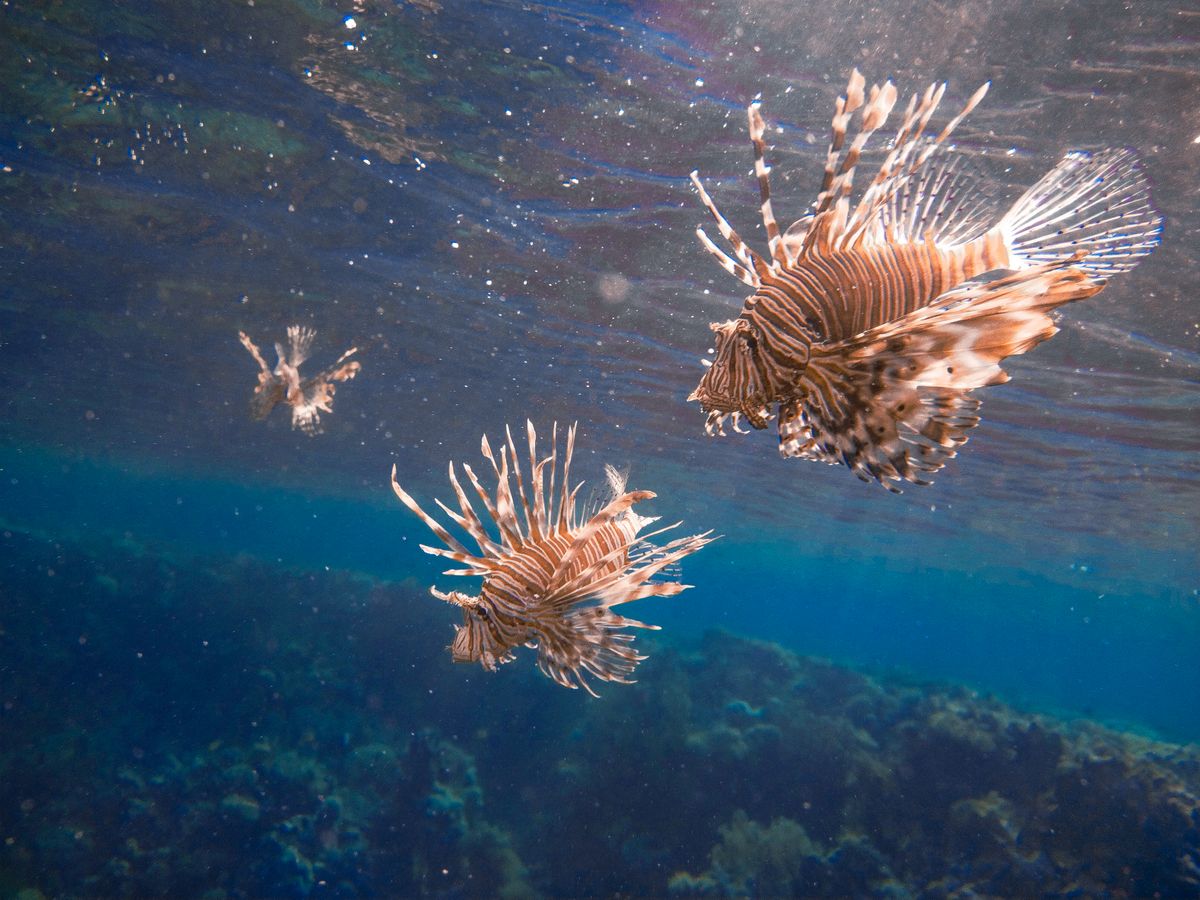
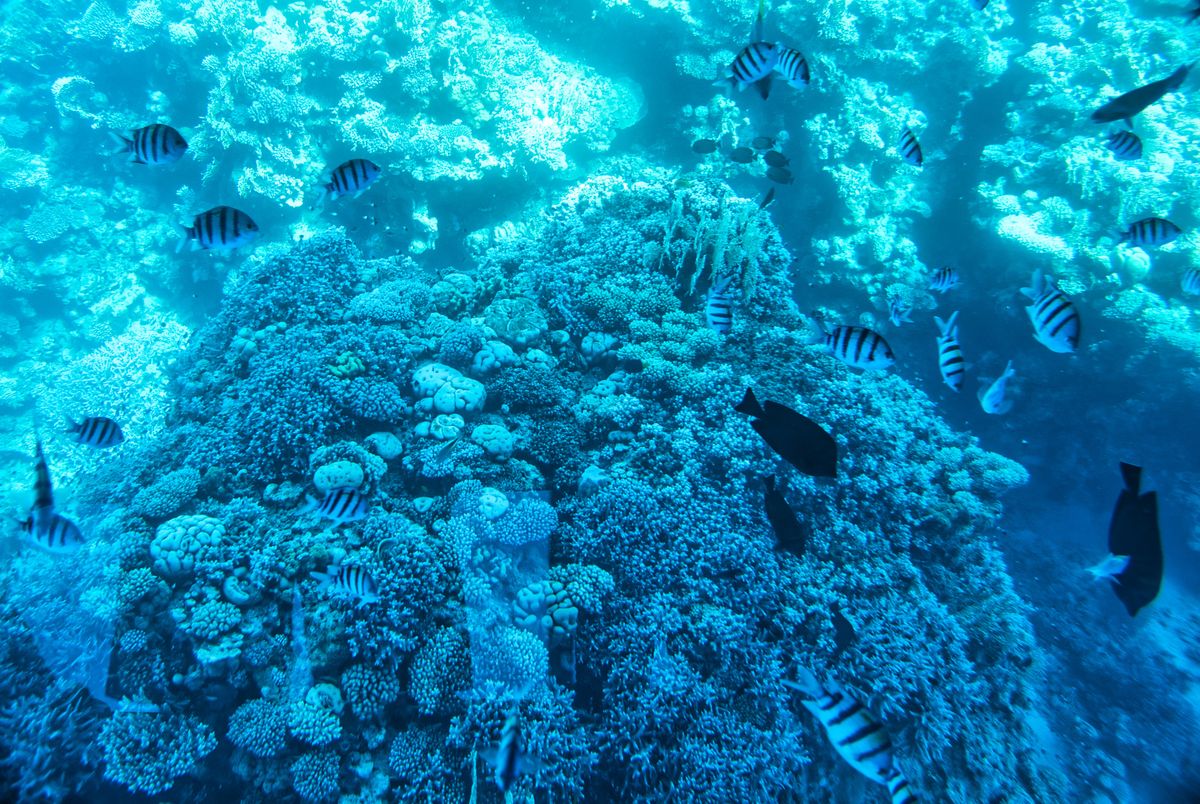
Visibility off the point at Ras Mohammed, nine in the morning, first boat out: better than thirty meters, the drop-off at the reef wall going from turquoise to navy in about four kicks, the water two degrees warmer on the wrist than the chop at the surface would have you expect. Batfish counted on one slow pass along the wall, wide flat bodies stacked three and four deep: I stopped counting past forty because they kept circling back through the frame and I couldn't tell fish from repeat fish. Bohar snappers held in a column off the reef crest, packed close enough that for maybe ten seconds the current behind them went still.
This is the reef people mean when they say the Red Sea is fine while everywhere else the coral is cooking. Ras Mohammed's coral cover reads close to full on this wall, no bleached patches, no algae overgrowth where a living colony should be, and it's tempting to file that under untouched and move on. The actual mechanism is more specific and less comforting than that. These reefs sit at the northern end of a long migration route out of the Indian Ocean, and the larvae that made it this far had to survive the hottest stretch of water in the whole Red Sea first, down south, before they ever reached this coastline. What's left is descended from the genetic lines that could already take heat most corals can't, living now several degrees under their own bleaching threshold instead of hovering right at it like reefs almost everywhere else. That's a real and rare advantage. It is not the same as immunity. A coral that shrugs off a hot summer can still be killed by a dropped anchor, a runoff pipe, or a marina built where the current used to flush the bay, and Ras Mohammed has all three within reach even inside a protected boundary.
What I'd want on a second dive here is a slack-tide count away from the mooring line, to see how much of that batfish number is genuine reef density and how much is fish that have learned where the boats and the scraps show up. Verdict: one of the healthiest reef walls I've logged, for a real and narrow genetic reason, and healthy is still doing a lot of work covering for the boat traffic on top of it.
The Blue Hole, Dahab
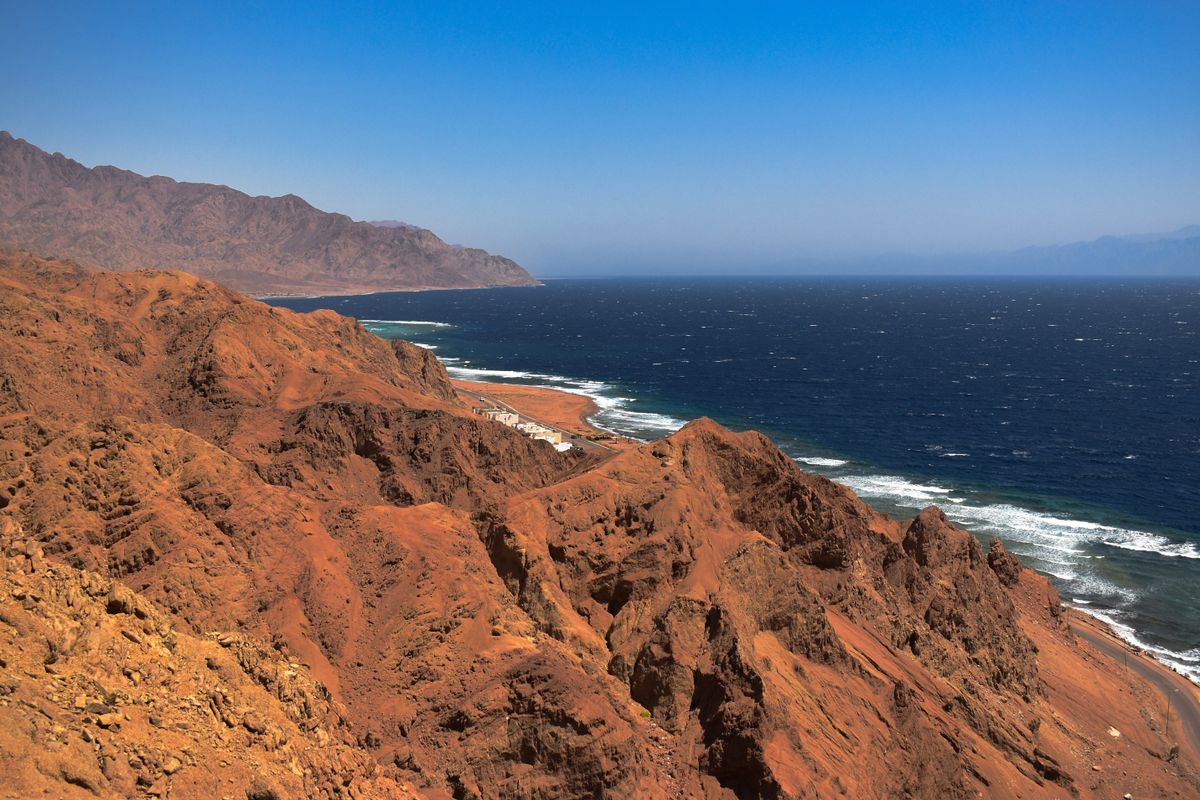
Walk from the car park to the entry steps at the Blue Hole: under two minutes, stone cut into the reef flat the whole way, no boat required, the water going from ankle-deep over the shore ledge to a blue that doesn't show a bottom within about five meters of walking in. The rim itself is unremarkable from land, a horseshoe of reef around a hole in the seafloor, the kind of feature that would rate one line in a dive guide anywhere else on this coast. Around it the cliffs run red-brown down to the waterline, no shade, no built-up front beyond a row of café cushions and dive-shop signs, the whole approach smaller and quieter than the reputation.
Guides here still quote the number without being asked, somewhere between 130 and 200 divers dead at this one site over the years, and the framing that comes with it is usually 'cursed,' as if the hole itself does something. It doesn't. Past the entry saddle, where the hole opens into the sea, the reef wall drops away to an archway near 55 meters, 180 feet, that from the surface or even from twenty meters down reads as a short swim-through instead of the technical dive it actually is. Divers on ordinary recreational air, untrained and unequipped for that depth, have gone looking for the arch anyway, and between nitrogen narcosis clouding judgment at depth, a current through the saddle that runs inward more often than out, and a straightforward miscalculation of how much air a return from 55 meters costs, most of that death toll is recreational divers who decided the arch looked closer than it was. Technical divers on the right gas mixture do the swim-through on a fairly routine basis. The site isn't cursed. It's a deep hazard shaped like a shallow one, and unlike a curse, a depth gauge can plan around it.
The reef rim itself, away from the arch, is an easy and pleasant dive, coral coming right up to the saddle wall and reef fish going about their business forty meters above the drama nobody down there can see. Verdict: worth the trip for the shallow reef alone, and worth treating the deep arch as a completely different, far more serious dive than the one advertised on the café chalkboard.
Blue Hole: what actually kills people
The arch sits near 55 meters (180 feet), far deeper than it looks from above the saddle.
This is a technical dive, not a recreational swim-through: go in only with the training and gas mix for that depth.
Guides quote the death toll at 130 to 200 divers, nearly all of them recreational divers attempting the arch untrained.
Dive the shallow reef rim with a local guide who knows the site, and leave the arch to trained technical divers.
The site isn't cursed. It's a deep hazard shaped like a shallow one.
A Bedouin Camp, After Dark
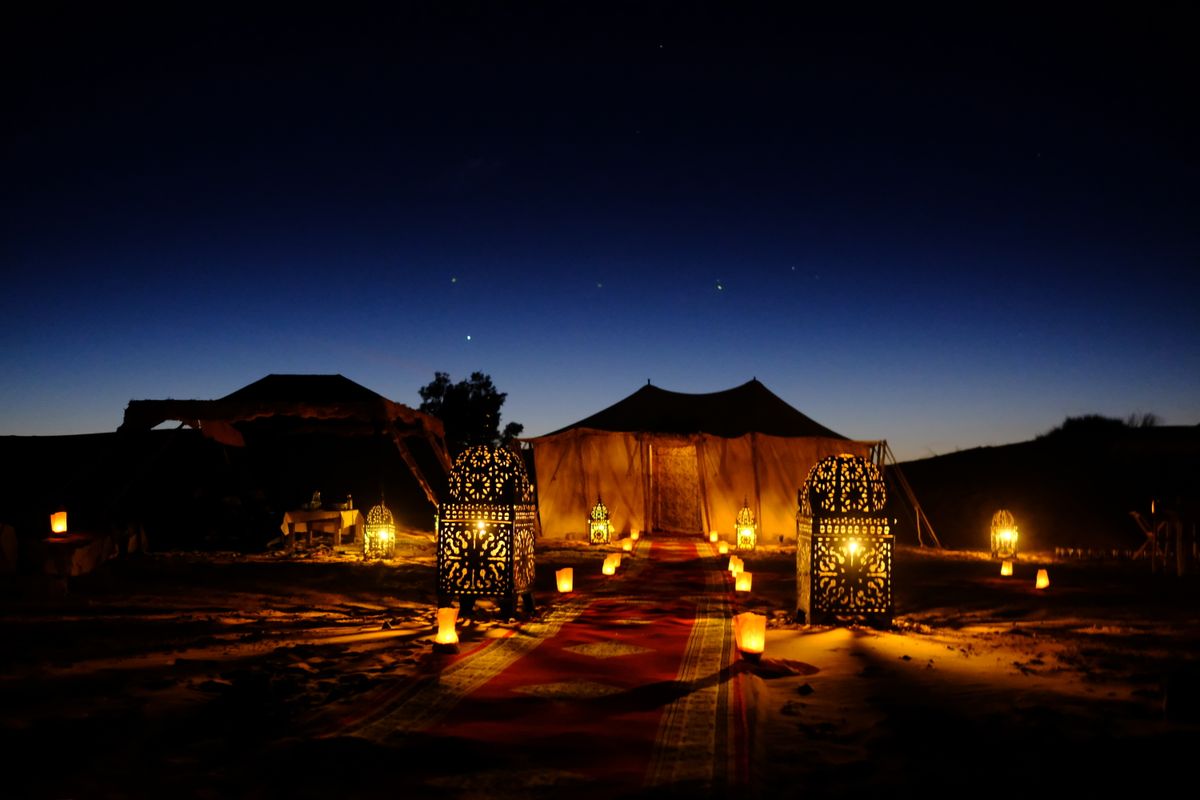
Temperature at the camp, tracked on the same dive-bag thermometer I'd used at Ras Mohammed two days before: thirty-three degrees at sunset, fifteen by the second round of tea, an eighteen-degree drop inside three hours that nobody in a swimsuit that morning had packed a layer for. Fire built low and wide rather than tall, flat stones set as a windbreak on the side the breeze came from, tea poured and re-poured through a strainer that never left the pot. No sound past the ring of tents but the fire and, twice, a truck a long way off.
Behavior around the fire, logged for one evening: one guest asked our host three separate times whether there was WiFi, phone held up each time as if reception might have improved since the last question. Two others photographed the same star for what looked like eleven minutes before establishing between them it was a planet. A third produced a portable speaker at the exact point the guide began a story, played six seconds of music, and put it away unprompted when nobody reacted. Nobody in the group asked the guide's name until breakfast the next morning.
None of that is a complaint, exactly. It's what a species count looks like when the species is off-duty and further from a signal than it's used to being. The camp itself does what it says, tea, fire, a flat patch of sand under more stars than most of the group had a frame of reference for, with no attempt to sell the desert as more mystical than it already is on its own. Verdict: the sky is the genuine attraction here, not the theatre around it, and the theatre knows better than to compete with it. ■