Valley of the Kings: Three Tombs, a Ticket Puzzle, and the 6 AM Alarm
A logistics breakdown of tomb tickets, the extra-cost deep dives, and why everyone tells you to be at the gate by six.

Day One: Getting to the Valley
The Valley of the Kings sits on Luxor's West Bank, across the Nile from the hotels, the corniche, and the cruise ship docks on the East Bank. Not far. Fifteen minutes by road once you're across the river, longer if your driver decides to stop at an alabaster workshop first.
Three ways across. A taxi over the bridge south of town runs 150-200 EGP ($5-6 USD) one-way if you agree the price before getting in. A private tour van booked through your hotel costs 350-450 EGP ($11-14 USD) round trip, with waiting time built in. Or the local route: public ferry from the corniche for 5 EGP (about $0.15), then a shared service taxi on the other side for another 10-15 EGP ($0.30-0.50). The ferry is faster than it sounds. The service taxi involves waiting for it to fill up with actual locals going to actual jobs, which takes exactly as long as that implies.
Tickets are sold at a central ticket office on the West Bank, not at the tombs themselves, so budget an extra stop before you see the valley at all. The standard general ticket runs 260 EGP (about $8.50 USD) for foreign adults and covers three tombs, your choice, from whichever set is open that day. Egypt rotates which tombs stay accessible to spread out foot traffic and cut humidity damage to the paintings, so the same three won't be on offer every visit. Ask which are open before picking. The ticket seller will tell you; the guidebook you packed will not.
A licensed Egyptologist guide costs 400-600 EGP ($13-19 USD) for a half day at the valley, arranged through your hotel or a local agency the day before. Worth it for context, since there's no signage inside the tombs beyond a small placard at the entrance. Skip it if you'd rather read the wall panels at your own pace and don't mind not knowing what you're looking at.
Getting there without a driver
Public ferry from the corniche: 5 EGP (~$0.15)
Shared service taxi from the West Bank dock: 10-15 EGP (~$0.30-0.50)
Total time: about 40 minutes, versus 15 by private taxi
Nobody at the ticket office asks how you arrived
The Three Tombs (and the Two That Cost Extra)
Not the tomb you're thinking of
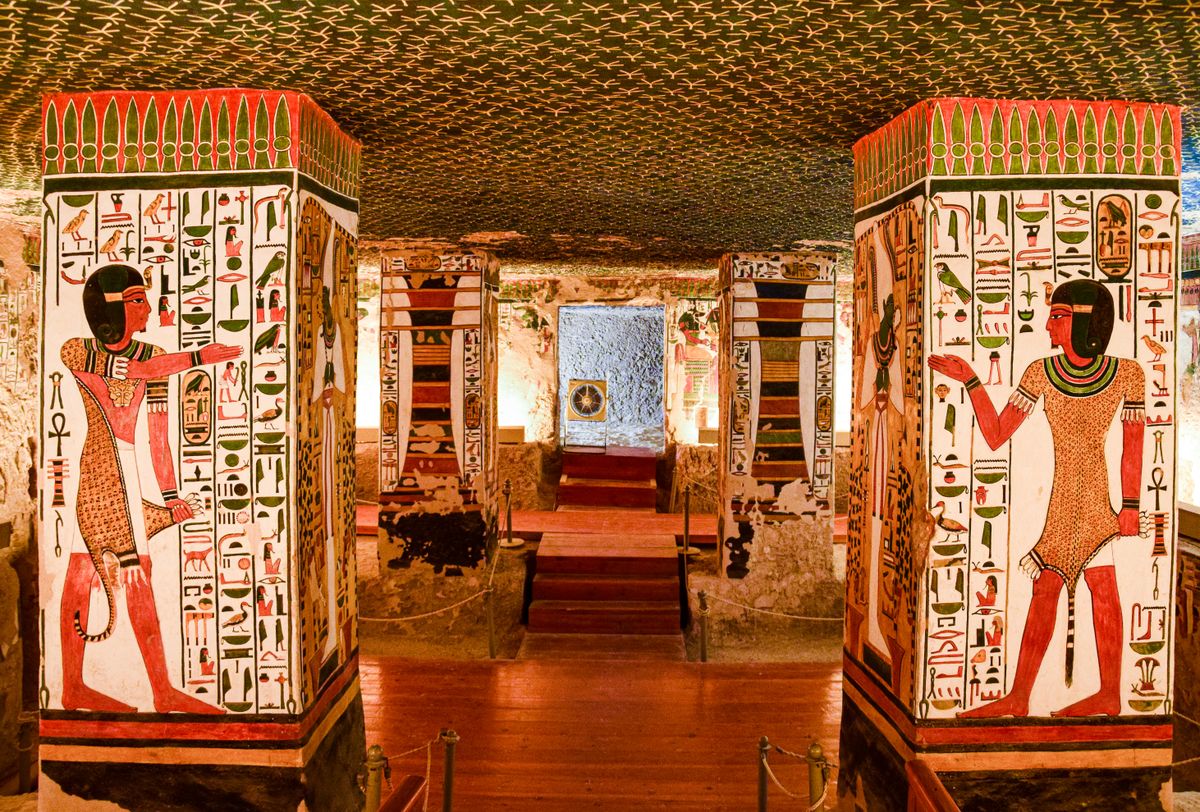
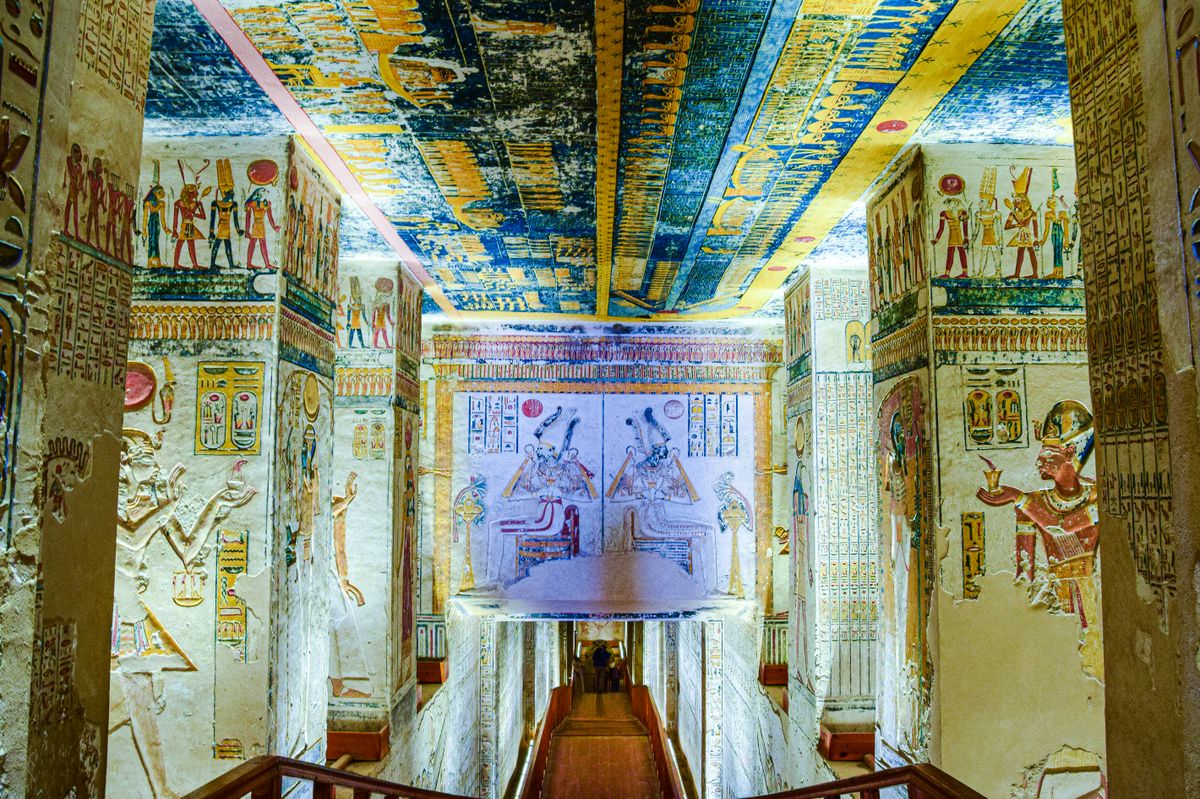
Nefertari's tomb, the one with the famous painted ceiling everyone means when they say 'the best tomb in Luxor,' isn't in the Valley of the Kings. It's in the Valley of the Queens, a separate site a short drive away, with its own ticket and its own daily visitor cap. Easy mix-up. Don't turn up at the wrong valley.
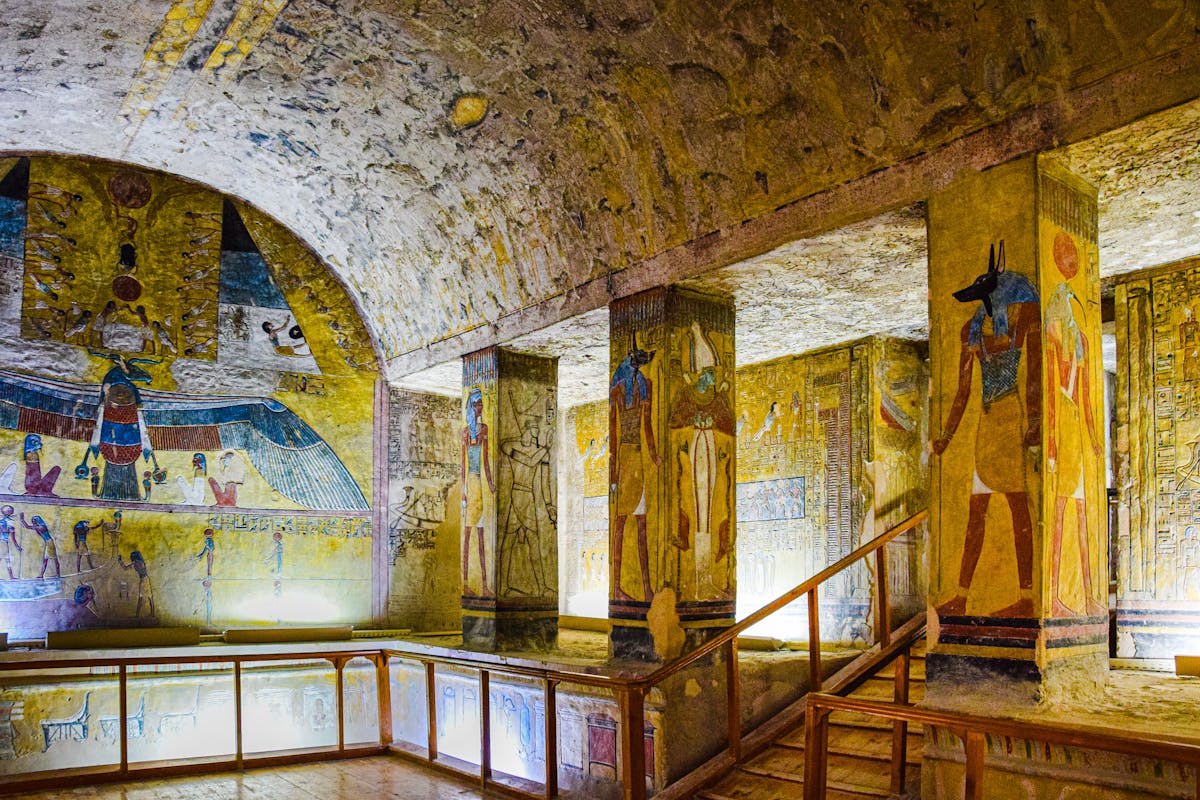
I used my three general-ticket tombs on Ramesses IV, Ramesses IX, and Merenptah, the set open that week. All three are large, deep, and painted floor to ceiling in the same blue-and-gold star-ceiling scheme, and all three will likely be closed to future visitors on a rotation nobody can predict from home.
Tutankhamun's tomb (KV62) isn't part of the general ticket. Separate line, separate ticket, 300 EGP ($9.50 USD) on top of whatever else you're paying. It's also, notoriously, the smallest and least dramatic tomb in the valley, since Tutankhamun died young and unexpectedly and got a hastily finished burial. Go for the fact that you're standing where Howard Carter stood in 1922. Don't go expecting the ceiling art from the postcards; that's mostly the other tombs.
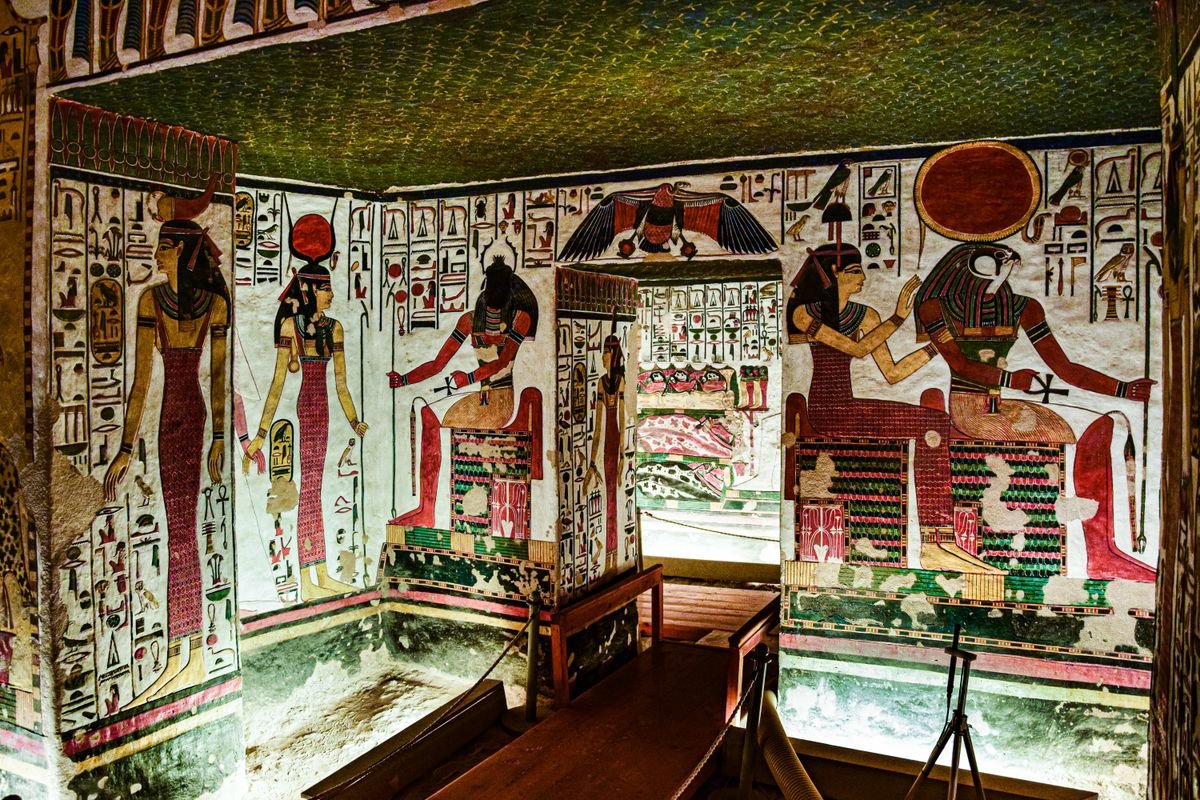
Seti I's tomb (KV17) is the deep dive the name promises: the longest, deepest tomb in the valley, corridors running over 130 metres into the hillside, ceilings painted with full astronomical charts. It's its own separate ticket too, and a serious one: 1,000 EGP ($32 USD) when I went, sold in limited numbers per day. Steep. Also the best 45 minutes I spent in the valley, corridor after corridor, no crowd because the price filters for it.
As of my trip, photography inside any tomb required a separate permit, 300 EGP ($9.50 USD), bought at the same central ticket office and checked loosely by the guards inside. Phones only, no flash, no tripods. Worth confirming before you go, since Egypt has changed tomb photography rules more than once; what I paid for might now be free, bundled in, or banned outright.
Seti I's tomb costs four times the general ticket, and it's worth every pound.
6 AM, the Heat, and the Final Numbers
The Valley of the Kings opens at 6 AM, and there's a reason beyond good light for photos: by 11 AM the ambient temperature outside can hit 40°C (104°F) in summer, and inside the tombs, unventilated stone corridors with no air conditioning, it isn't much cooler. Every guide in Luxor tells you the same thing: arrive at opening, be done by 10, back on the boat or in the hotel pool before the real heat lands.
Bring water, more than you think you need. Nothing is sold past the entrance gate; the closest shop is back at the ticket office, a walk you don't want to make twice in the heat. I went through 1.5 litres in under two hours, most of it on the uphill walk to Seti I's tomb entrance, rationing sips between tombs like it was a submarine movie.
Heat reality check
No shade past the entrance gate. No refunds if you overheat and bail after one tomb. Bring a hat and water, and don't plan a full day here; three hours is plenty.
The Valley of the Kings, one adult, one morning
Skip Tutankhamun's tomb, Seti I, the photography permit, and the guide, and you're in for 660 EGP (about $21.50) all in: general ticket plus transport. Still worth the trip. Add both deep-dive tombs, the permit, and a guide, and the total climbs to the full 2,760 EGP, about $88.50, for one morning, which sounds steep until you remember what's actually down there. Either way: be at the gate at 6, not 6:15. ■