The Okrąglak Circuit: Kazimierz, Graded Stone by Stone
An amber gemologist puts Kazimierz's Saturday flea market and the Okrąglak's hatch windows under the loupe, one claim at a time.

Plac Nowy: The Saturday Table
Loupe Notes
Go before ten. By noon the good glassware is already sold and the tables refill with the same three suppliers' stock.
Ask the price twice, in two different ways. The second answer is usually the honest one.
Bursztyn on a tag means nothing without a loupe. Ambroid, pressed amber, and plastic all wear the same word.
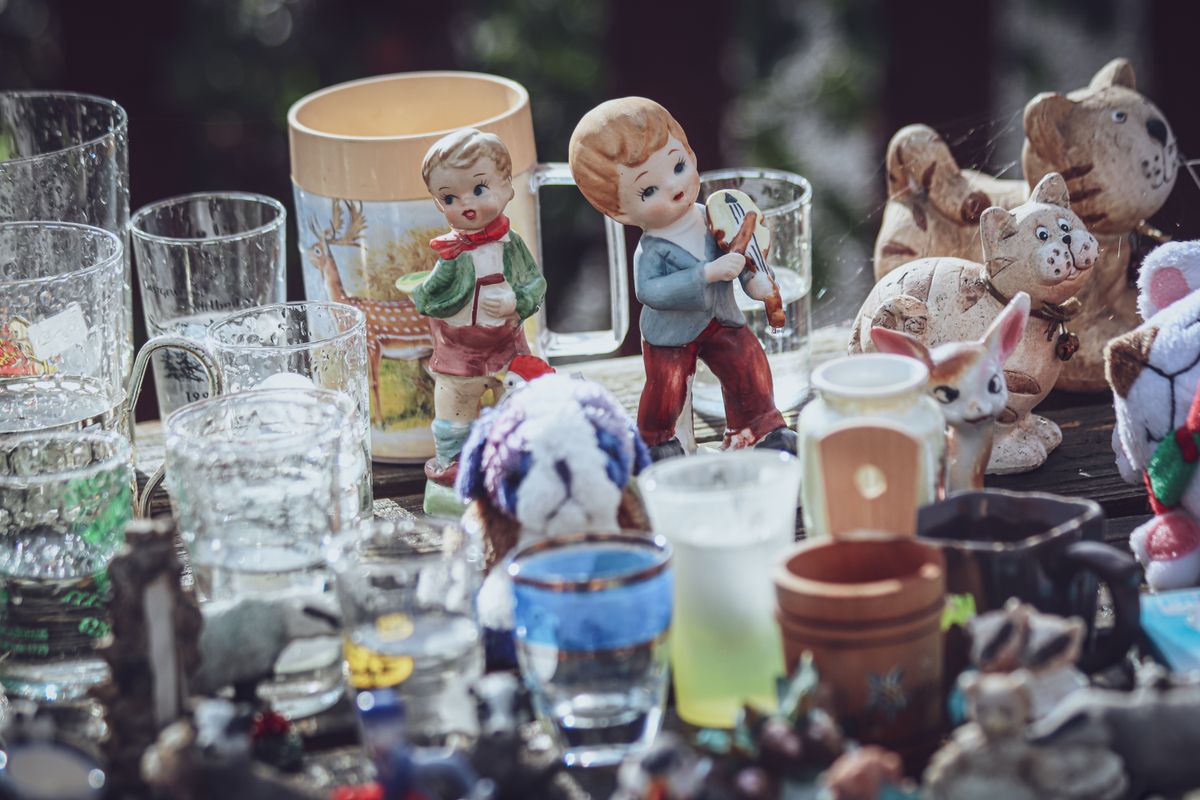
Item: a folding table's worth of stock, chipped Bolesławiec jugs next to a shoebox of amber-colored bracelets. Clarity grade: unrated, everything here is asking to be taken at its word. Flaw note: half the prices were written for a buyer who won't ask a second question.
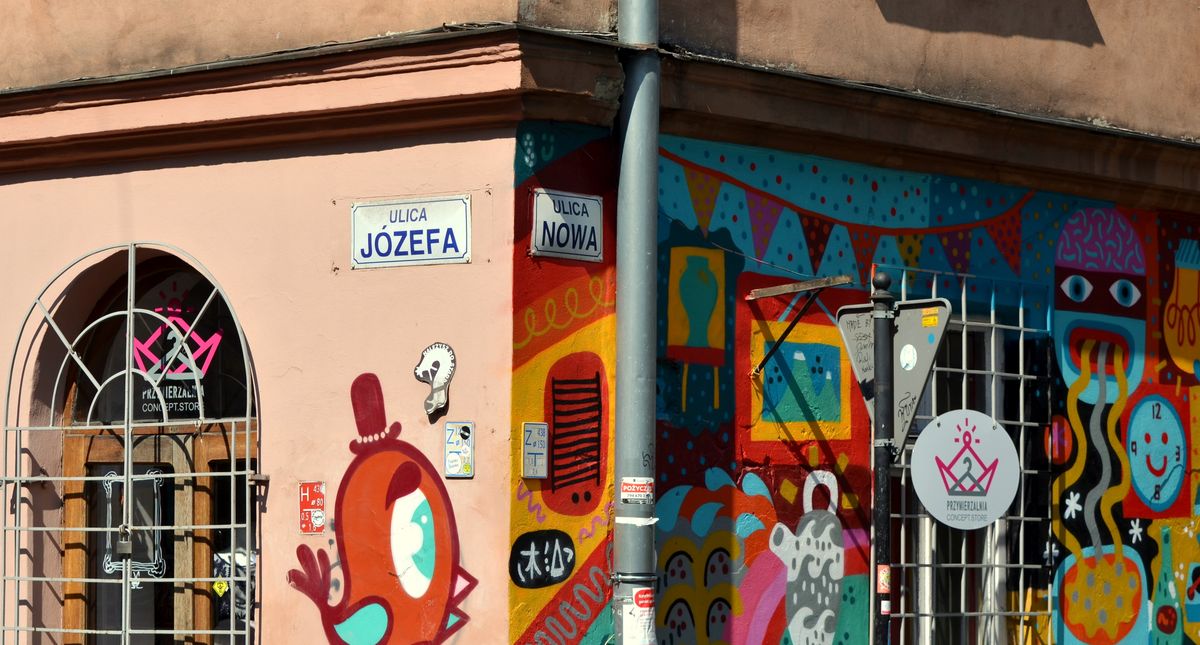
The stalls start at the corner of Józefa and Nowa and spill into Plac Nowy proper, tables set close enough that a woman selling Soviet-era pocket watches shares an elbow with a man selling nothing but doorknobs. I count nine tables before I find one worth stopping at: glassware stacked three deep, a shoebox of loose amber-colored beads, and a stand of figurines that all wear the same too-bright glaze, which usually means one wholesale supplier rather than nine separate grandmothers' attics.
The bracelet on top of the shoebox is marked bursztyn bałtycki, Baltic amber, priced at a hundred and fifty złoty. Under a loupe it isn't amber at all: no natural inclusions, a seam where two pieces were pressed together under heat, and a weight too light for its size. I tell the woman running the table this, flatly, the way I'd tell a customer at my own stall in Gdańsk. She doesn't argue. She drops it to forty złoty without blinking, which tells me the hundred and fifty was never really about the bracelet.
Two tables along, a decanter is marked as Bohemian crystal for two hundred złoty. It's pressed glass, not cut, the facets too uniform and the ring when I tap it too short and flat for lead crystal. The seller shrugs when I say so and tells me it photographs like crystal, which is true and also not the same claim as being crystal. I leave it on the table.
Verdict: four carats out of ten for the table's honesty across the square, and a full ten for the theater of watching a price talked down to what it should have been in the first place.
Verdict: three carats for the bracelet, ten for the confidence of the price tag it wore.
— Appraiser's ticket
The Okrąglak: What the Hatch Actually Sells
Item: zapiekanka, ordered with mushroom and yellow cheese from a hatch on the Okrąglak's east side. Clarity grade: described on the board as the full open-face baguette, priced accordingly. Flaw note: what came back through the window did not match what was described.
The Okrąglak sits in the middle of Plac Nowy, a round brick building that used to be a kosher slaughterhouse and now sells food through a ring of hatch windows instead. On a Saturday the queue for the busiest hatch runs long enough that you can smell the melted cheese before you can read the menu board. I order what the board calls a zapiekanka, the long toasted baguette half with mushrooms and cheese that gives the whole circuit its name, and I pay eighteen złoty for it before I've even seen it made.
The Day's Ticket
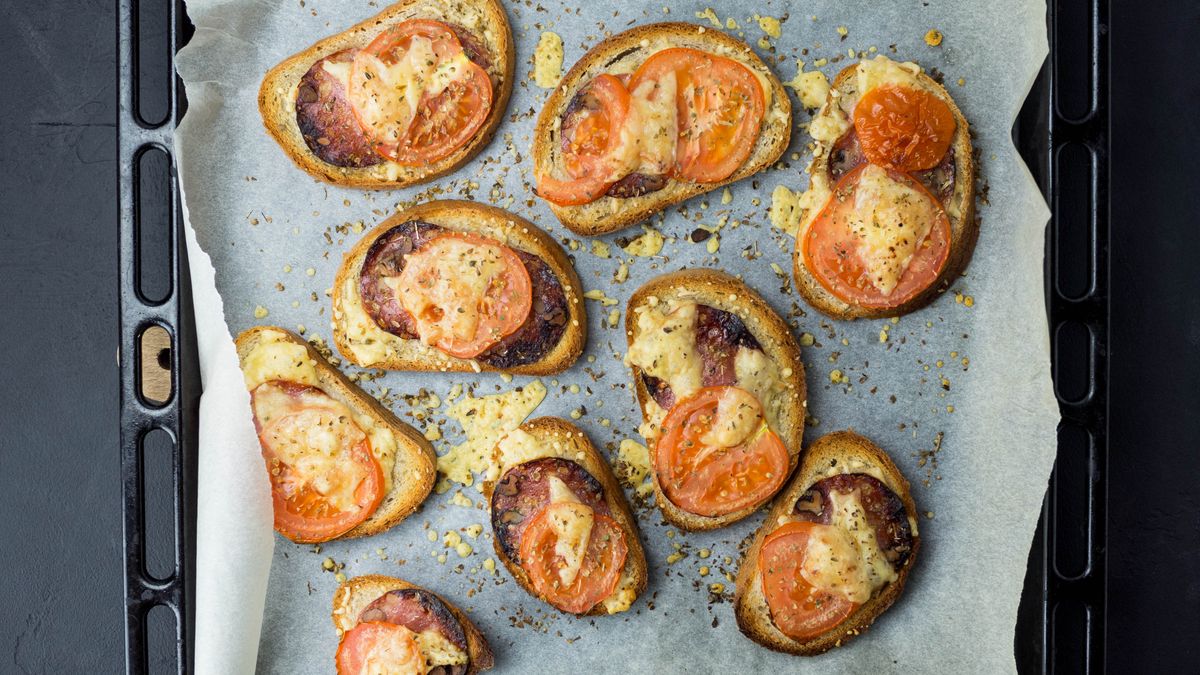
What comes back through the hatch is not a baguette half. It's four small toasted rounds, mushroom and cheese melted across the top, the kind of thing you'd get from a bread roll cut into disks rather than a baguette split lengthwise. I ask the woman at the window if this is the zapiekanka from the board. She says the baguette bread ran out an hour ago and this is the same thing, just smaller pieces. It isn't the same thing. A zapiekanka is graded on its shape as much as its toppings, the long open face is the whole point of it, and four rounds at the full eighteen-złoty price is a different item wearing the old one's name tag. I say so. She takes two złoty off and throws in a napkin, which is about as close as a hatch window gets to an apology.
Two hatches down, a different stall still has baguette bread. The real zapiekanka comes out the length of my forearm, mushrooms sliced thin enough to sit flat, cheese browned at the edges rather than just melted, and it costs the same eighteen złoty the first hatch charged for four rounds. Under the loupe, so to speak, this is what a fair price looks like: the format promised on the board matches the format handed through the window.
Verdict: two carats for the round toasts sold under a baguette's name, nine for the real zapiekanka two hatches along, and a full ten for the two-złoty discount that came with an honest word instead of an argument. ■