Malbork Castle, Biggest by Land and Rebuilt Since 1962
Malbork Castle is the world's largest by land area, and more than half of it was destroyed in World War II before the rebuilding began.

Brick
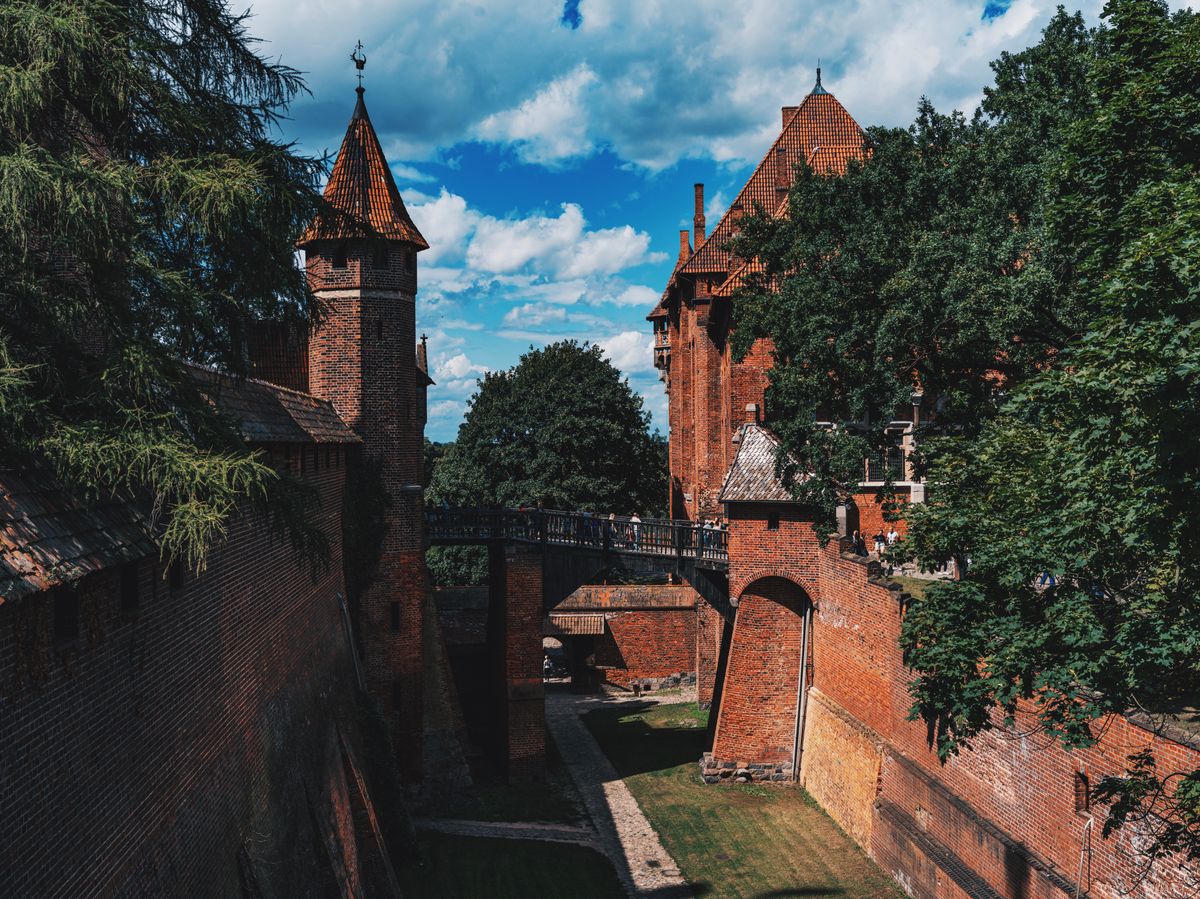
The wooden bridge over the dry ditch, a brick arch beside it.
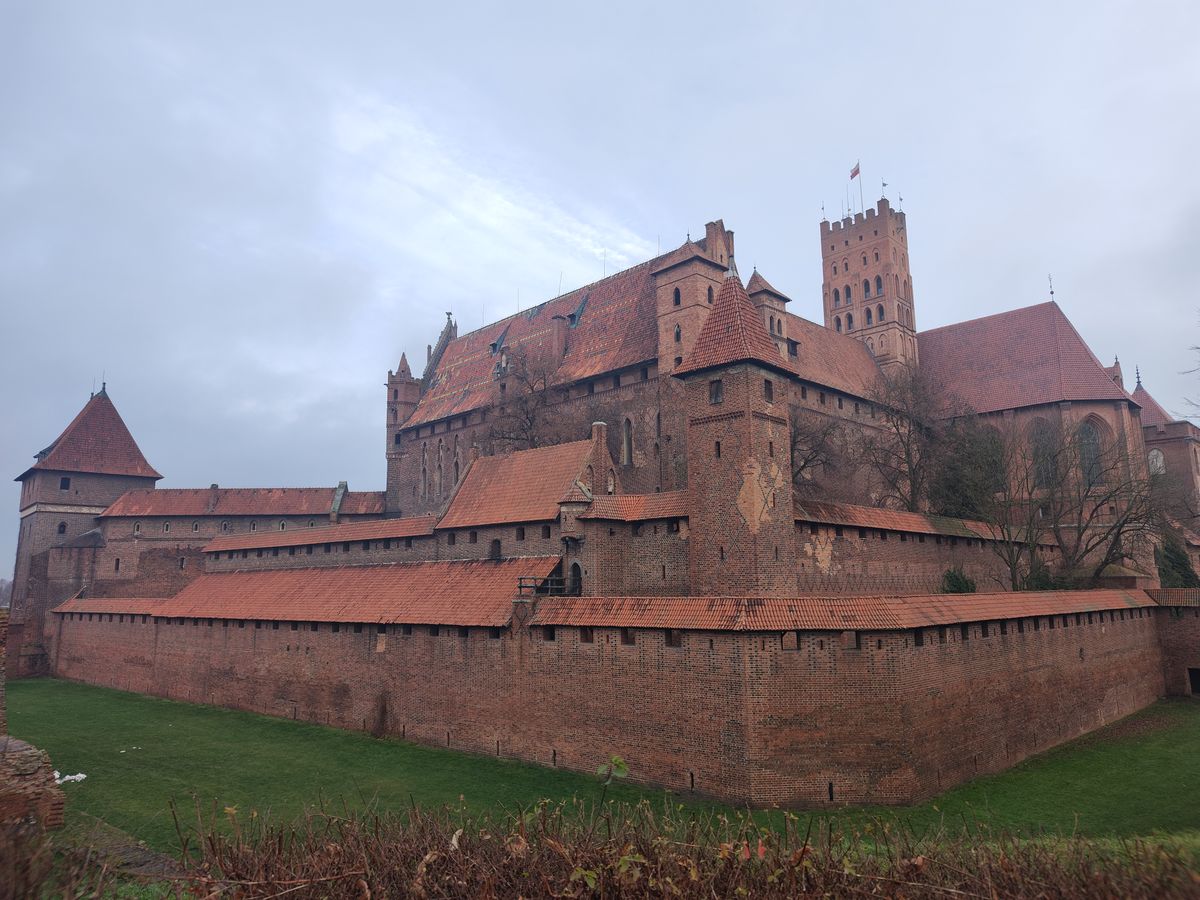
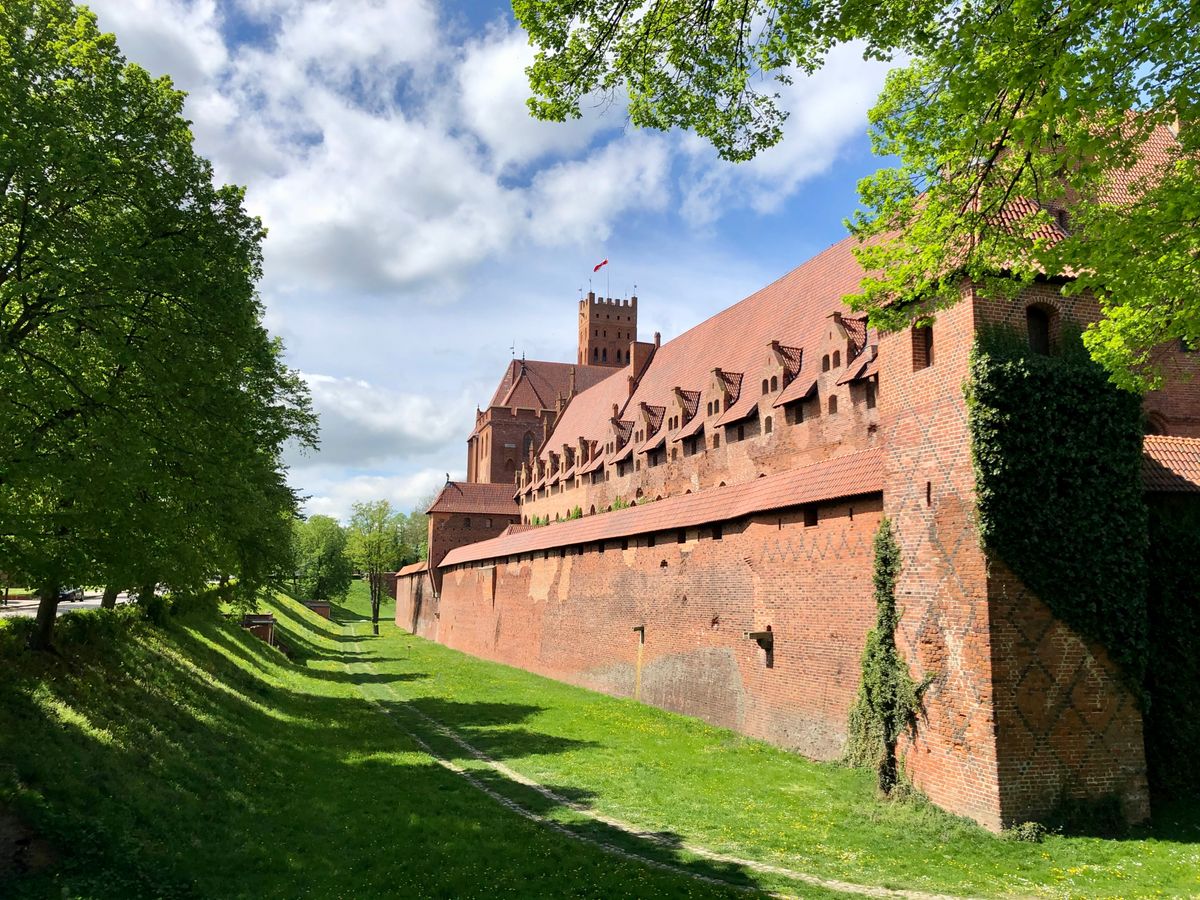
Brick, rust to oxblood, matte finish; flaw note: ivy at one end of the long wall.
Malbork is a town in northern Poland. The direct train from Gdańsk, the port city on the Baltic, takes 28 minutes. People come for the castle, which is the largest in the world by land area. It was built by the Teutonic Order, a German Catholic order of crusaders, and on the walk in I assumed, because it looks so complete, that I was about to see a medieval fortress as the crusaders left it.
I crossed the dry ditch on a wooden bridge between a round tower and a brick arch, behind a guide who held a closed umbrella over her head so that her group could follow. Inside the walls are three separate castles, the High, Middle and Lower Castles. All three stand on the southeastern bank of the river Nogat.
Of the ground UNESCO lists as a World Heritage Site, the built-up part alone covers 18.038 hectares. It is also the largest brick complex in Europe, and building it took 132 years, from 1274 to 1406. Down in the dry ditch below the outer wall, near the corner where the ivy climbs, I found a diamond lattice of darker bricks laid into the red, easy to miss from the path above.
Amber
Amber, honey to dark orange; flaw note: the workshop is a reconstruction.
Indoors, the castle shows its amber in Amber Contexts, a permanent exhibition. I went first to the amber maker's workshop there, reconstructed from a 15th-century engraving, and stayed in front of it longer than anyone else in the room. The exhibition goes back much earlier too, to Truso, a trading centre on the southern Baltic coast in the 9th to 11th centuries.
At the cases I looked at the amber the way I look at stones on my stall: cloud first, then inclusions, then cracks. The museum says amber became very popular in the State of the Teutonic Order, which at that time held a monopoly on trade in the raw material. A man beside me, Tomasz, said the darker pieces looked like toffee, and I told him that was the right colour word.
Material: brick. Built over 132 years. Treatment: reconstruction, ongoing since 1962.
Rebuilt
Brick and red roof tile, one even red; flaw note: not all of it is original.
More than half of the castle was destroyed in World War II, in fighting with Red Army forces. A restoration ongoing since 1962 has reconstructed most of it. In my trade a treated stone carries the word on its certificate, and for Malbork it would read: Treatment: reconstruction, ongoing since 1962, most of the castle.
I spent a while at a brick tower with a steep tiled roof, trying to find where old brick stops and rebuilt brick starts on it and on the long roof beside it, and I could not. The chimneys and the row of dormers (small windows set upright into the roof slope) gave me no clue either.
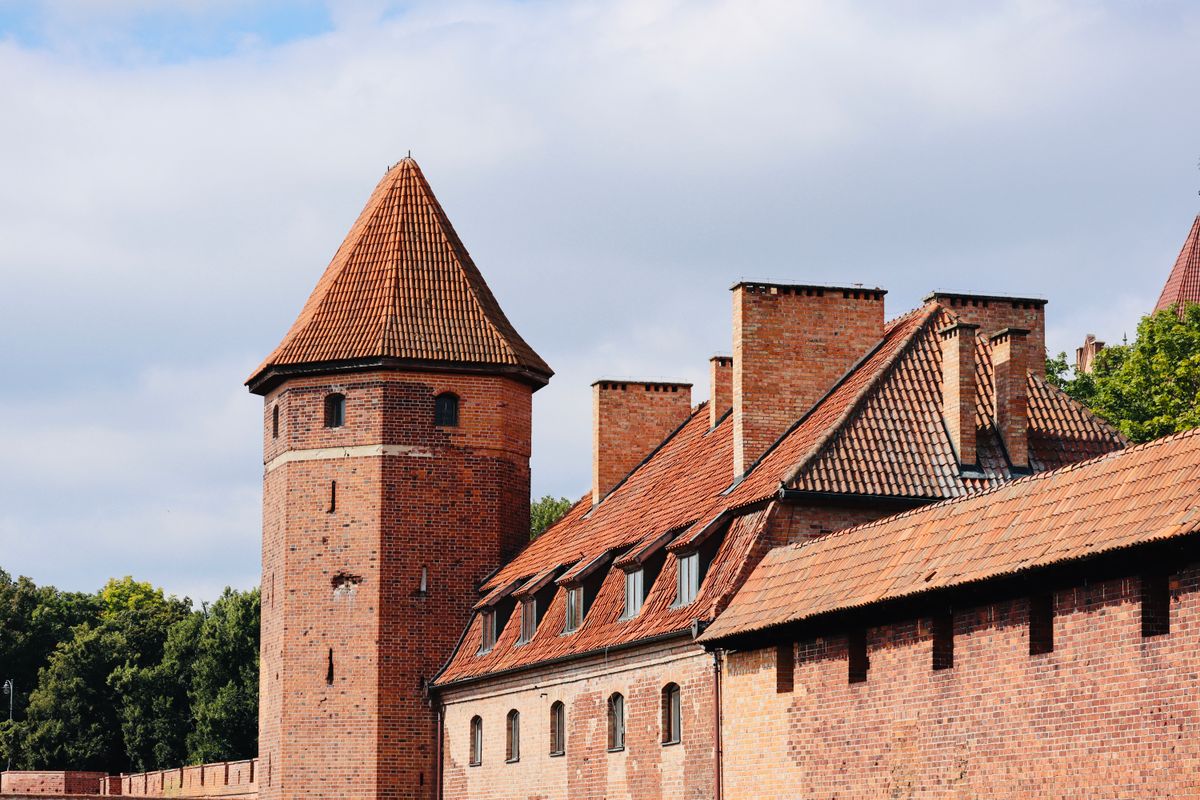
The tower and the long roof beside it.
loupe notes
Choose the Historical Route, which is the full tour of the castle. The grounds-only route does not open the interiors.
A typical visit that follows the audio guide lasts 3.5 hours.
The best view of the whole castle is from the far bank of the Nogat, over the pedestrian bridge.
From Malbork station the walk to the castle is 1.7 km, about 20 minutes.
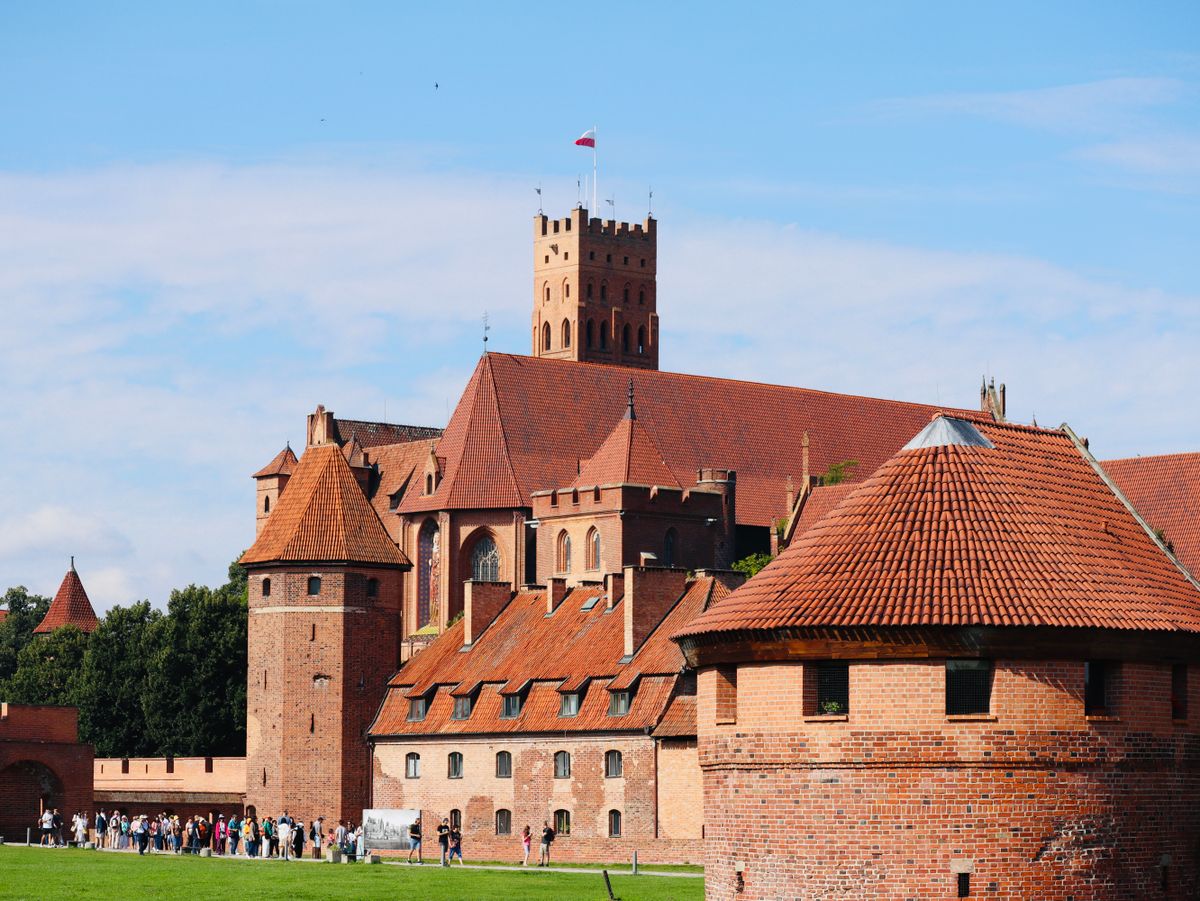
On the lawn I joined a loose line of visitors heading toward the tall square tower, listening to the audio guide, which comes with the ticket and follows your location by GPS. The Teutonic Order made Malbork its administrative centre in 1309, and the flag on that tower today is Poland's. ■