Mariacka Street, Graded Stone by Stone
A Gdańsk amber gemologist walks Mariacka Street with a loupe and grades the trade somewhere between honest and hopeful.
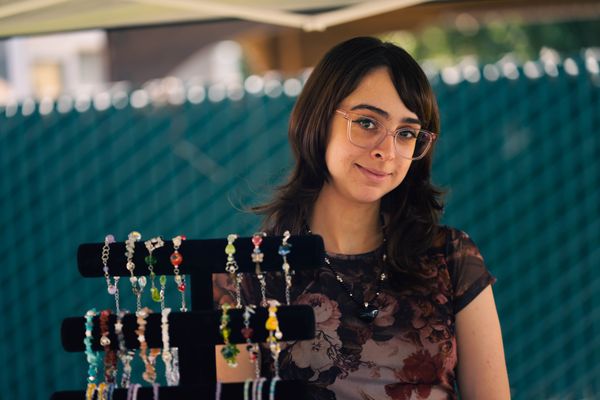
Mariacka Street
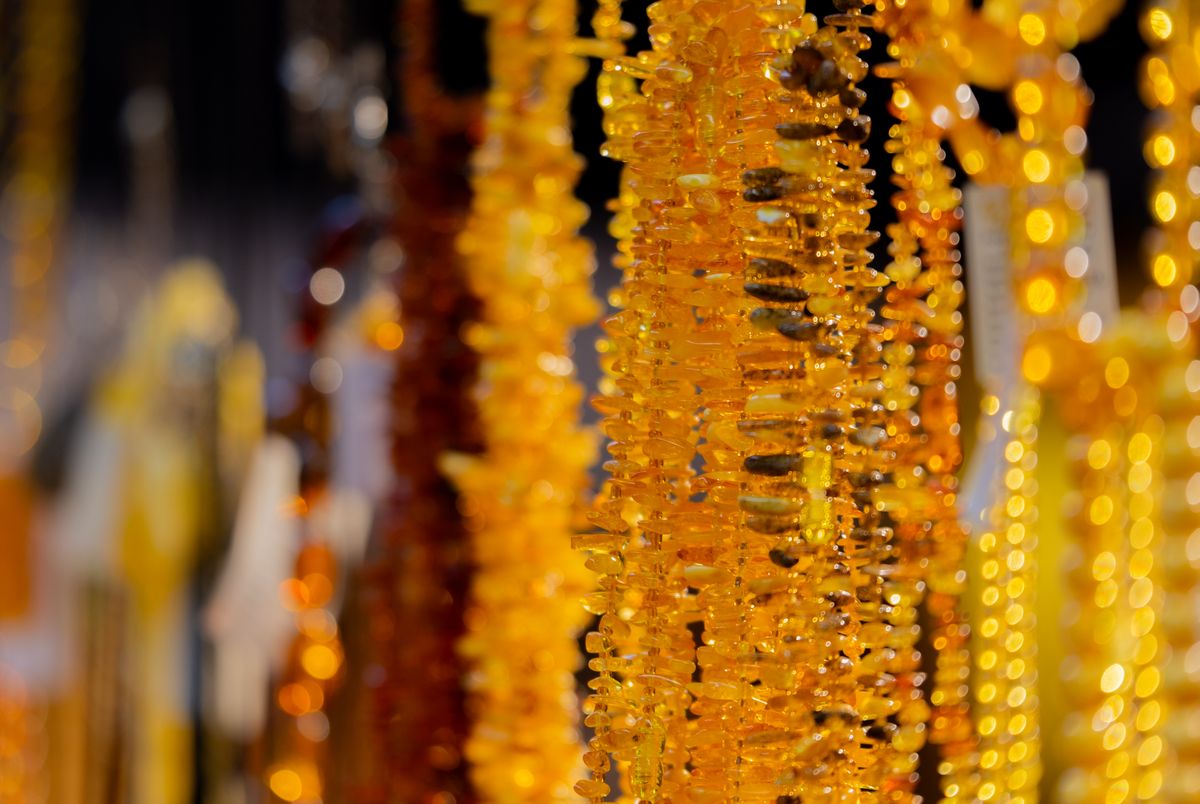
Every stall on Mariacka Street stacks its stock the same way: dense, warm, and priced like it's all one grade.
Item: cognac-toned pendant, sold as solid amber. Clarity grade: SI1, one visible seam under the loupe. Flaw note: a price tag written with more confidence than the stone can back up.
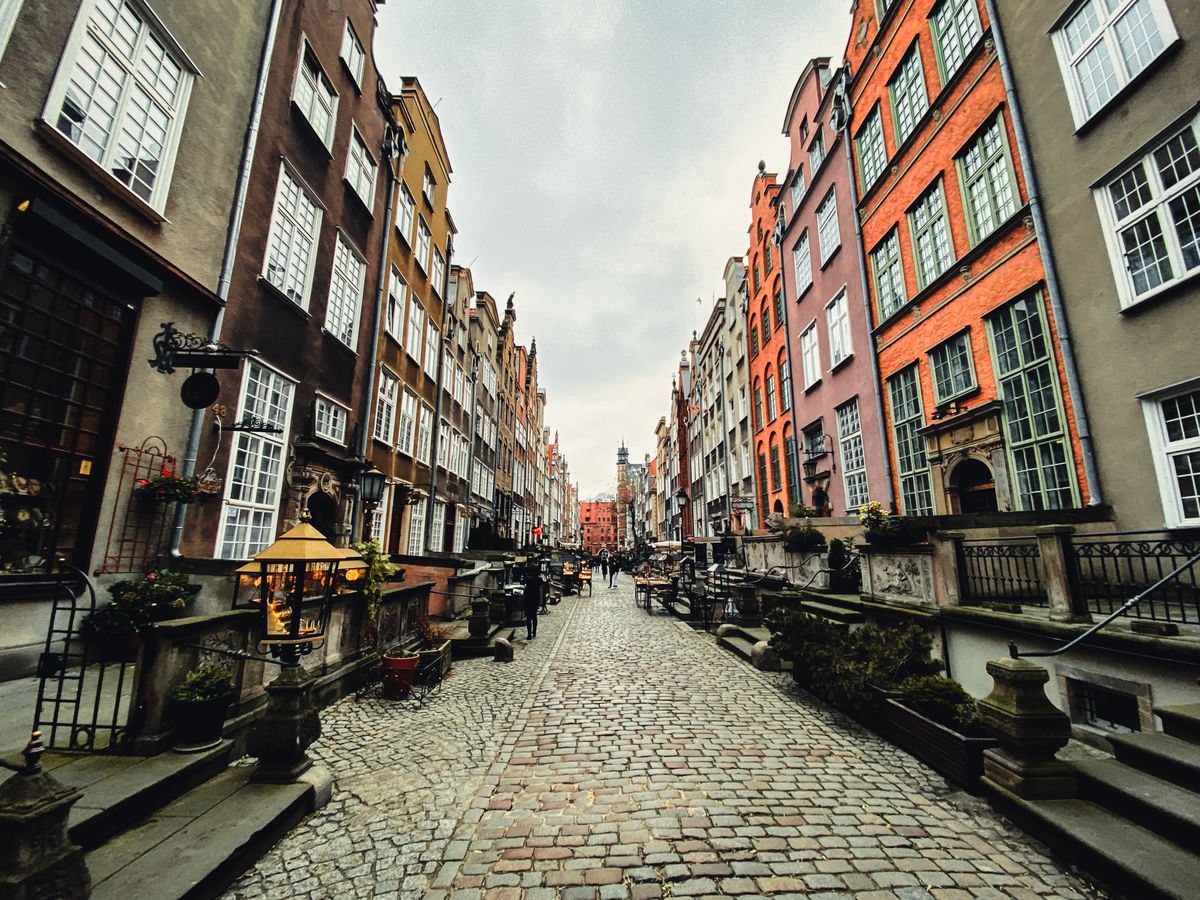
The street runs narrow and cobbled from St. Mary's Church down toward the old moat, low stone houses on both sides with their ornate entrance stoops still standing, przedproża carved with gargoyle rain spouts that have been grimacing at passersby since long before anyone here sold amber for a living. Every second doorway holds a glass case of it, warm and stacked, and every third seller has the same three-language pitch ready before you've slowed your steps.
A woman at a corner stall lifts a chunky pendant the colour of steeped tea and tells me it is a hundred years old, mined by her grandfather's cooperative before the war. I turn it under the light instead of answering her. The surface throws back a flat, waxy shine with none of the internal fire real Baltic amber gives off, and a seam runs dead straight through the centre, the kind pressure-melted scrap leaves when chips are fused and moulded under heat, never the kind fossil resin grows on its own.
I ask the price. Four hundred złoty. For fused scrap that cost her supplier a fraction of that in bulk chips, dressed in a hundred-year story it has no claim to. I tell her, flatly, that it's ambroid rather than solid amber, and she drops to two hundred and eighty without blinking, which is its own kind of certificate.
Verdict: three carats out of ten for the pendant, and all ten for the stoops it was sold beside.
A stone that needs a war story to justify its price is already grading itself.
— field ticket, Mariacka Street
Copal
Item: claimed Baltic amber, loose piece, no certificate offered. Clarity grade: eye-clean, suspiciously so. Flaw note: the absence of flaws is the flaw.
The next seller hands me a teardrop pendant with a beetle suspended dead centre, wings spread symmetrically, posed like it knew the camera was coming. That is the first flag. A real insect trapped in resin fights before the sap closes over it, legs bent, wings folded wrong, sometimes a trail of tiny air bubbles where it struggled. This one sits too neat, too central, and too large for a stone this size, which is the classic tell for an insect dropped into cast resin or young copal rather than one caught by accident forty million years ago.
I ask for salt water, which is an unusual request at a market stall but not an unreasonable one, since genuine Baltic amber floats in brine strong enough to hold an egg up, while glass and most plastic sink straight to the bottom. He doesn't have any mixed, so I fall back on older tests. Rubbed hard against wool, the pendant should raise enough static to lift shredded paper off the counter, and it does; the Greek word for amber, elektron, is the reason the phenomenon got called electricity in the first place, so this isn't a parlour trick, it's the oldest one amber has. Then I ask him to hold a lighter to a scrap edge for a second, carefully, and it gives off a sweet, resinous, faintly pine smell rather than the acrid plastic stink copal or celluloid produce under flame.
Copal is the trap most buyers walk into with their eyes open. It's tree resin too, only young, sometimes decades old rather than tens of millions of years, softer under a hot needle and cheaper to source, so plenty of stalls sell it as amber to anyone who doesn't ask for a test first.
Verdict: six honest carats, once you take off the two it was trying to borrow from a beetle that never had to fight for its life.
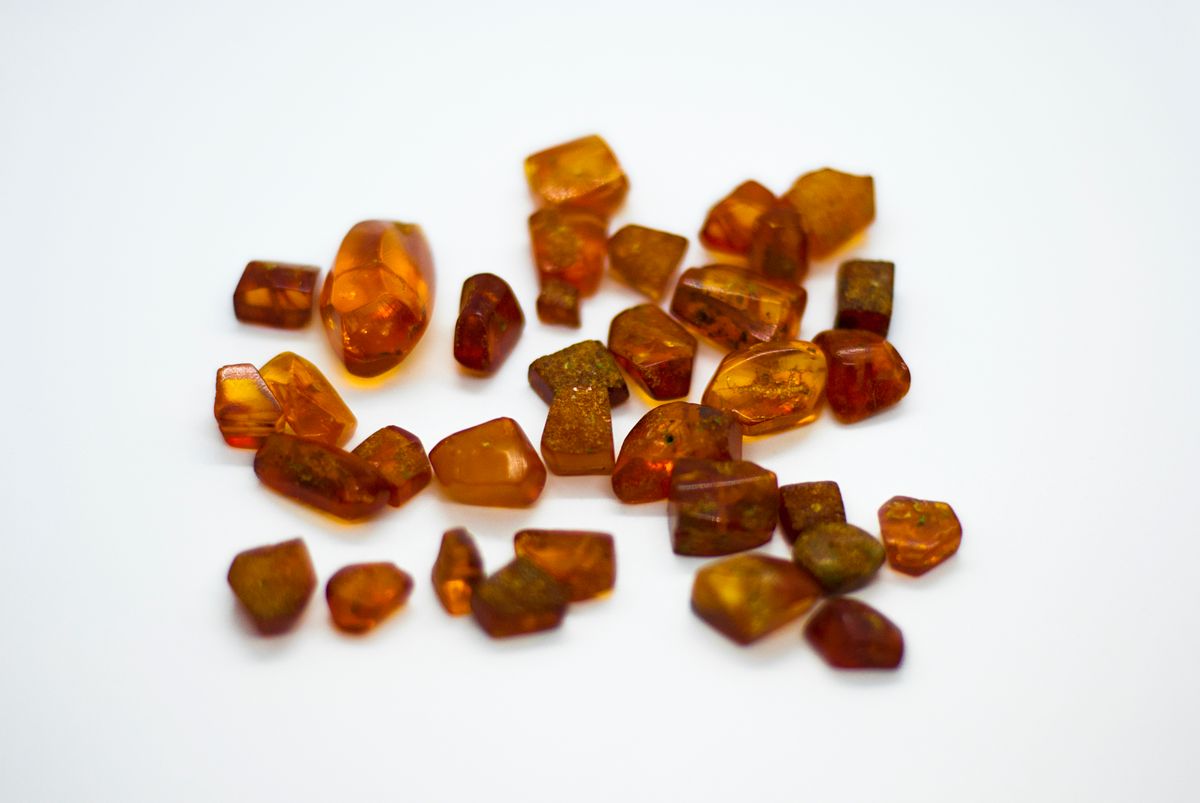
Rough stock before cutting: colour and clarity both get graded long before a piece becomes jewellery.
Loupe notes
Float test: real Baltic amber floats in water saturated with salt; glass and most plastic sink.
Heat test: a heated pinprick smells of pine resin, never of burning plastic.
Static test: briskly rubbed amber lifts small paper scraps, the same property behind the word electricity.
Inclusion check: genuine insects show bent legs, folded wings, small bubbles, never a perfectly centred, oversized bug.
Paperwork: sellers on Mariacka Street affiliated with the Polish Amber Association can issue a certificate; hesitation at the request is information too.
Długi Targ
Item: the street itself, end of day, aggregate lot. Clarity grade: included, generously, with tourists. Flaw note: none that actually matter.
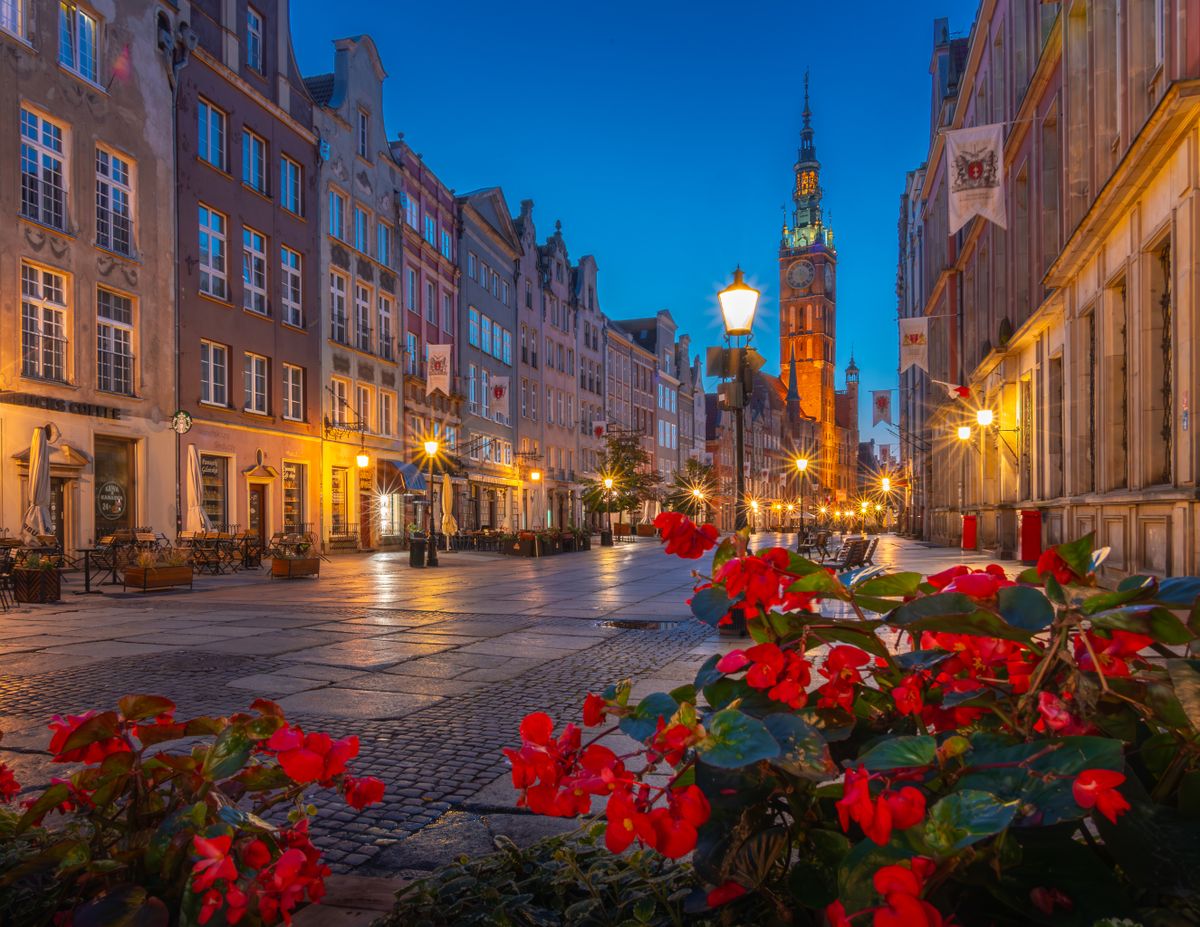
By early evening the crowd on Mariacka thins and I walk down toward Długi Targ, the long market square that has nothing to do with amber directly and everything to do with why the amber trade exists here at all. The Main Town Hall's tower stands over the square lit gold against a sky going the colour of the pendant I turned down two streets back, and the old merchant-house facades along both sides look freshly painted even though most of them are reconstructions standing in for buildings the war took.
Red geraniums sit in window boxes at the base of the square, ordinary and slightly overplanted, the kind of detail no one photographs on purpose but everyone's photo includes anyway. Gdańsk built its fortune on a resin that washes up on a Baltic beach for free and leaves with a price tag attached three streets later, and there's nothing sentimental about that arithmetic, just consistent.
Verdict: the street grades out around seven and a half carats overall, strong colour, decent clarity, minor inclusions of hustle that any buyer with a loupe and enough patience can see straight through. ■