Dahab by the Dollar: A Sinai Dive Week, Itemised
Ten shore dives, one night on Bedouin kilims, and a $25 visa decision at the airport. An itemised week on the Gulf of Aqaba, where the reef is world-class and the receipts stay small.

The $25 Question
Visa fine print
The free Sinai-only stamp covers the Aqaba coast (Sharm, Dahab, Nuweiba, St Catherine) for 15 days.
It does not cover Ras Mohammed boat trips or anything west of the Suez tunnel. Full visa: $25 USD, paid at the bank counter before immigration.
Bring the $25 in cash. The counter's card machine works roughly as often as the queue is short.
Sharm el-Sheikh airport, 1 PM, and the first budgeting decision arrives before baggage claim. Egypt offers Sinai arrivals a free 15-day entry stamp. It sounds like a gift. It is a trap with terms and conditions: the stamp locks you to the Aqaba coast, and any dive boat that noses into Ras Mohammed National Park will be leaving without you. I paid $25 USD for the full visa at the bank counter and filed it under insurance.
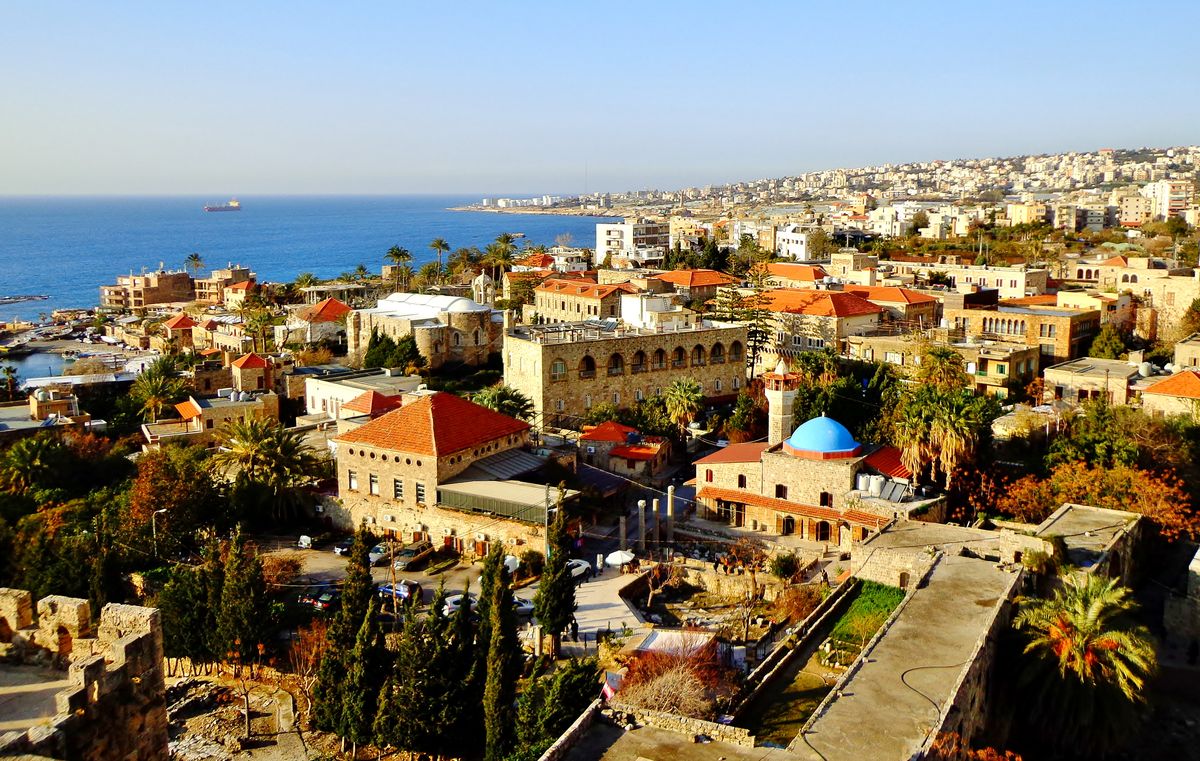
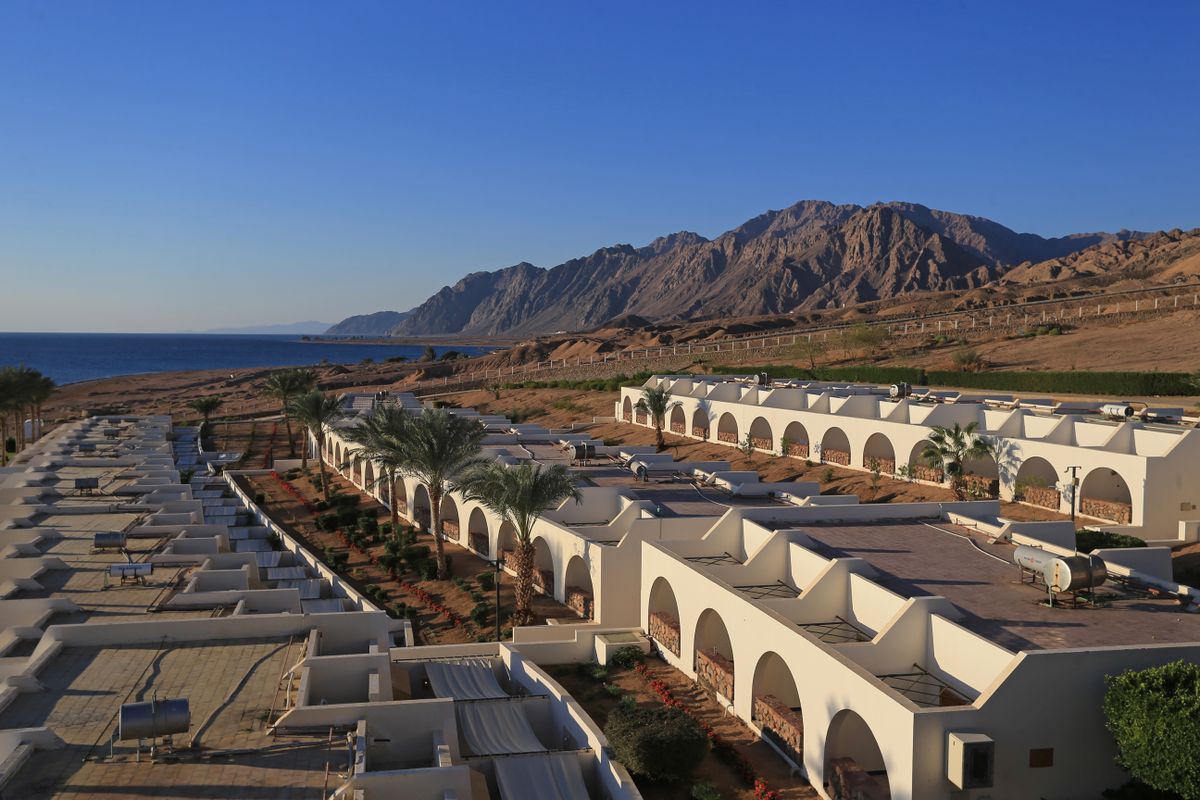
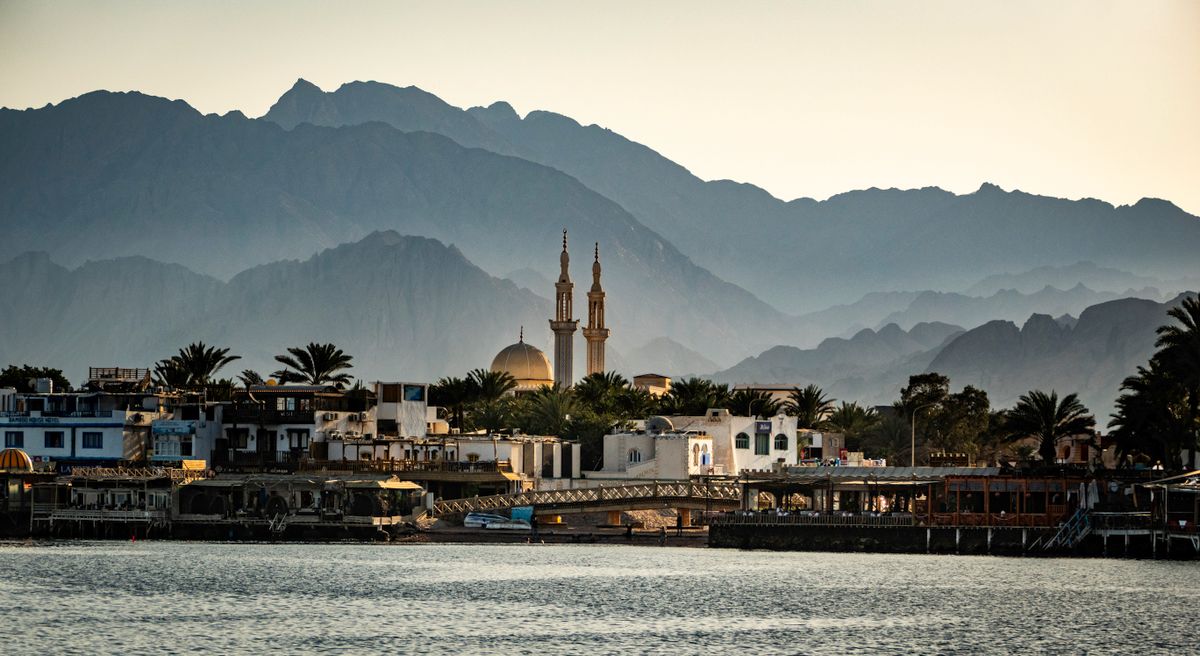
Dahab is 88 kilometres north. Pre-booked private transfer: 1,500 EGP ($30 USD), one hour, two police checkpoints, a driver who took both at 90 km/h. A seat in a shared shuttle runs about 700 EGP ($14) if you enjoy waiting for the van to fill. There is no public transport option a person carrying dive gear should attempt.
Dahab Dive Math
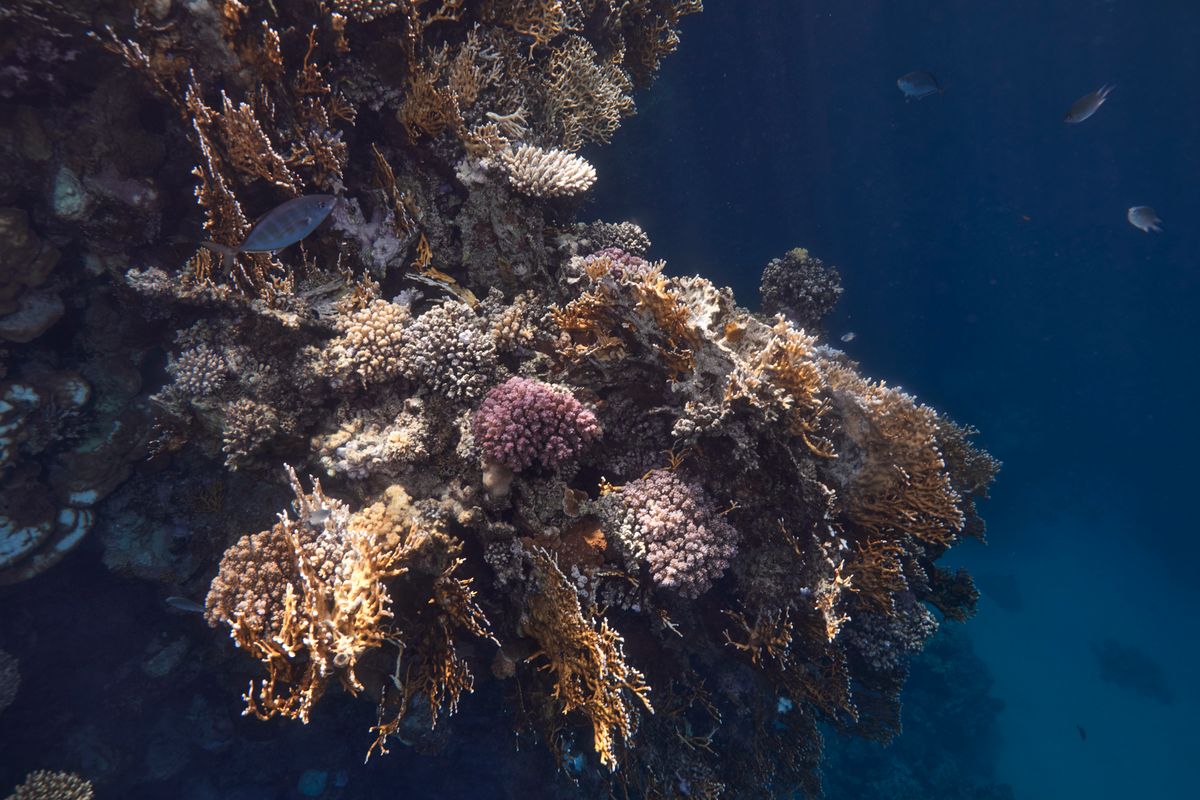
Dahab's pitch is simple: the diving is shore-based, so the boat is deleted from the invoice. You walk in off the beach. A guided shore dive with full equipment cost me 1,500 EGP ($30 USD); a ten-dive package brought that down to 12,500 EGP ($250), or $25 a dive. In most of the Caribbean, $25 gets you a rash guard.
The house sites earn it. Lighthouse, at the north bend of the bay, is a 200-metre walk from the dive shops and works from 3 metres down. Eel Garden is a sand slope where a few hundred garden eels retract in unison like a badly rehearsed crowd wave. The Islands, south of town, is a coral maze that took 55 minutes off my dive computer without my noticing. October water temperature: 27°C. I wore a 3mm suit and the guides wore expressions of concern in 5mm ones.
Surface intervals are also underpriced. King Chicken, a plastic-chair institution two streets back from the water, does a quarter chicken with rice, salad, and tahina for 130 EGP ($2.60). A falafel sandwich near the mosque is 25 EGP, or about fifty cents. The seafront restaurants charge triple for the same fish plus fairy lights; set your ambience budget accordingly. Carry cash for all of it. Card acceptance is decorative, and the town's ATMs run dry around the weekend.
Dive week, itemised
The Blue Hole, Audited
Reality check
You do not need the Arch. The wall at 25 metres is world-class, and 56 metres is not a rounding error.
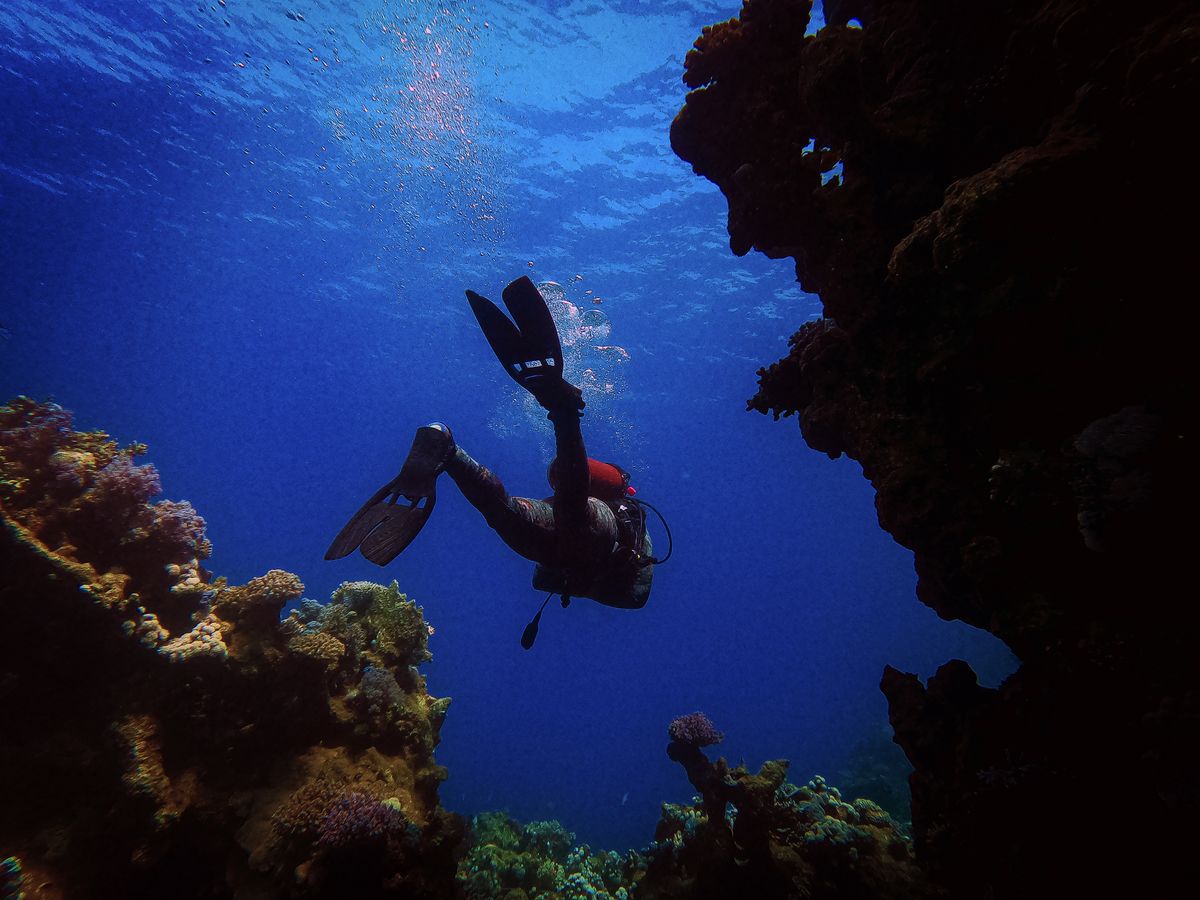
The Blue Hole sits 25 minutes north of town by jeep, on a coastal track that treats suspension as optional. It is a sinkhole in the reef table, more than 100 metres deep, and the most infamous dive site in the world, which the memorial plaques bolted to the cliff do not let you forget. Nearly all of those divers were chasing the Arch, a tunnel through the reef at 56 metres. The recreational limit is 40. I read the plaques, did the arithmetic, and stayed on the wall.
The standard plan mostly avoids the hole itself. You enter at The Bells, a chimney in the reef a few hundred metres up the coast, drop through it to 26 metres, and drift south along a wall of fire coral and soft coral until the reef opens into a saddle at 7 metres and you cross into the Blue Hole from the side. The wall is the show. Indigo on your left shoulder, coral on your right, 40 minutes of it.
Topside, the rim is lined with Bedouin cafés running on cushions and an honour system. Lunch came with the trip; fresh mango juice was 80 EGP ($1.60) and the wifi password was longer than the menu. Freedivers hang off buoys out in the middle doing on one breath what I had just done with a tank, and I still felt smug about the tank.
Twenty-five dollars a dive. The reef has not been told what everyone else charges.
One Night in Wadi Gnai
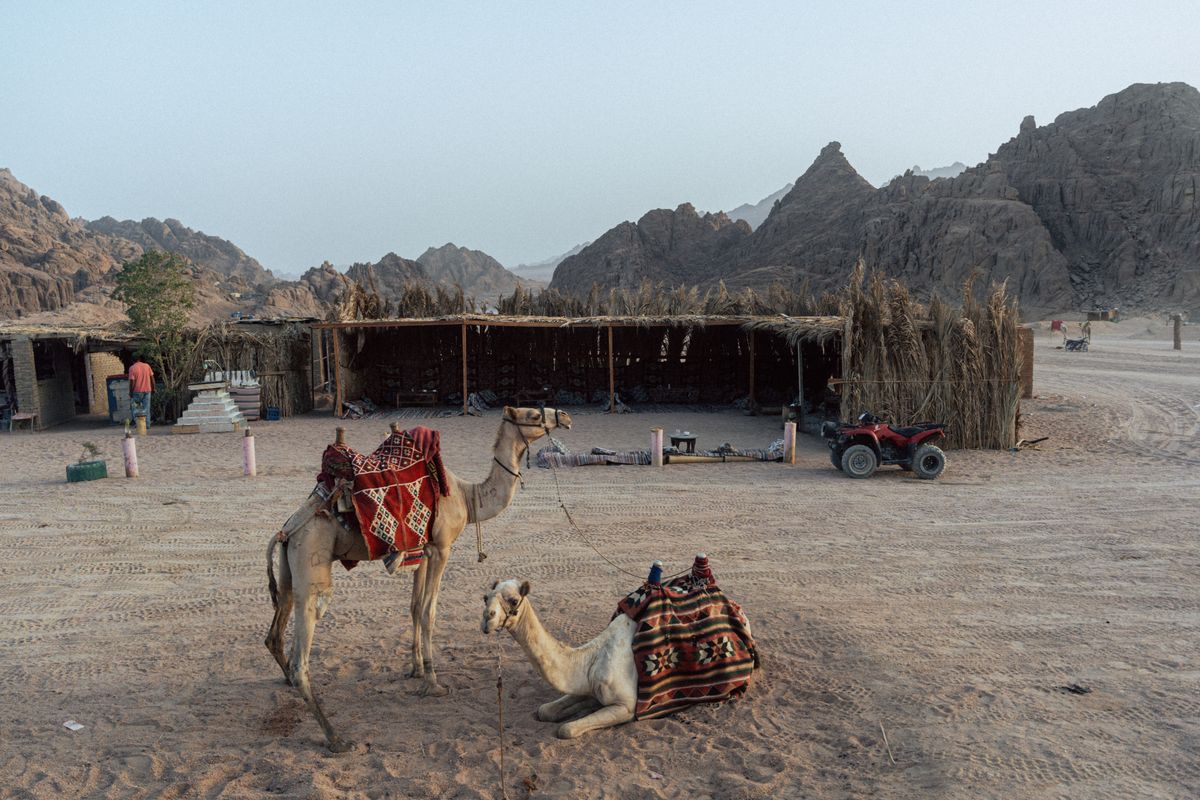
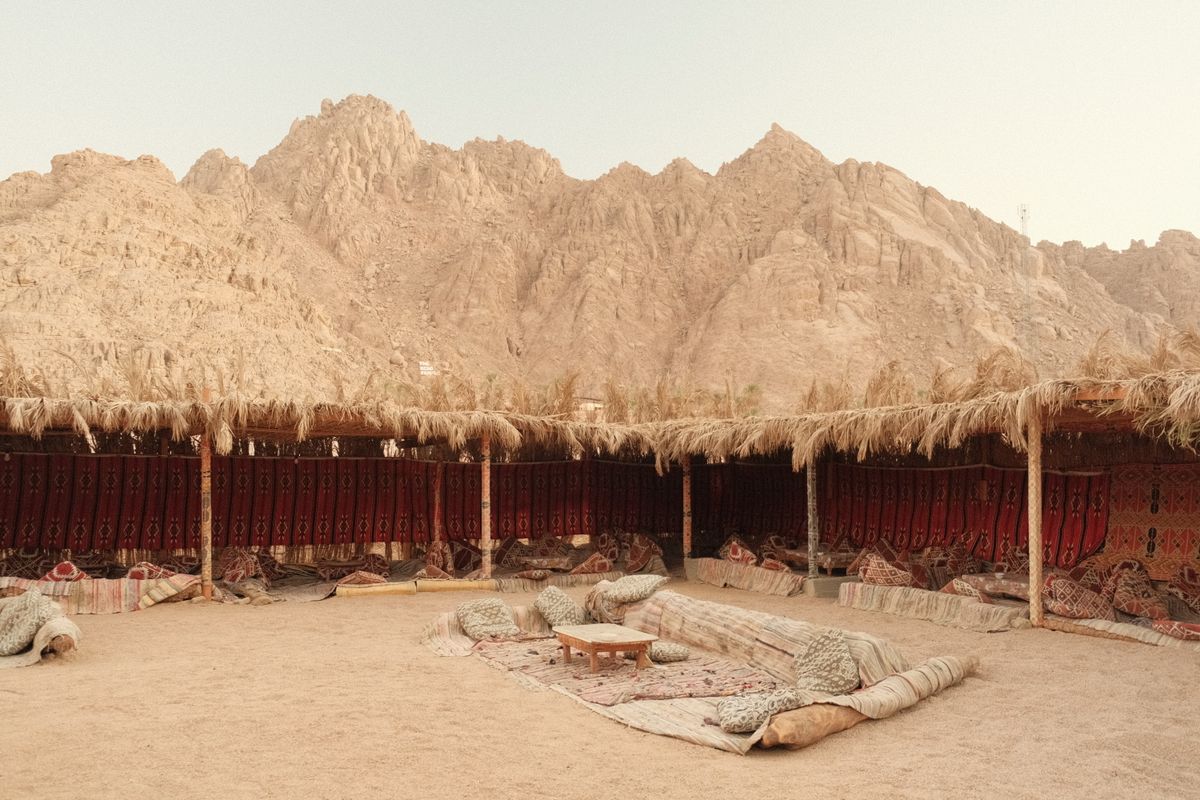
Every dive shop in Dahab has a cousin who runs desert trips, so booking took one sentence at the front desk. Overnight at a Bedouin camp in Wadi Gnai, 10 kilometres south of town: 2,500 EGP ($50 USD), covering camel transfer, dinner, breakfast, blankets, and tea in quantities I eventually stopped auditing. The camel takes about 90 minutes. The pickup truck takes 20. I took the camel out and the truck back, which I recommend in exactly that order.
The camp is a palm-thatch shelter and a majlis of red kilims at the base of a granite wall, and that is the complete inventory. Dinner was chicken and rice cooked over the fire, salads, and flatbread baked straight in the coals and then whacked clean of ash. Tea arrived sweetened to syrup with a wild mint the Bedouin call habak. I counted five glasses, then stopped counting on purpose.
After dinner the generator went off and the sky did the thing deserts do. I will spare you the paragraph; there were a lot of stars. What nobody budgets for is the temperature. The granite radiates its heat away by midnight, and the provided blankets are rated, generously, for a mild evening. Sleep in your fleece. Breakfast was eggs, bread, cheese, and more tea, and the truck had me back in Dahab by 9 AM, in time for a dive.
The Ledger
Seven days, all in (flights excluded)
That comes to $655 for the week, or $94 a day with ten dives, a desert night, and the most infamous dive site on earth included. Strip out the diving and Dahab runs under $50 a day, but then you would be in Dahab not diving, which is a spreadsheet error of its own. The wind still arrives at 11 AM sharp, the only punctual thing in Egypt. The ATMs still empty by Friday. The reef still has no idea what it is worth. I have already priced the return trip. ■