The Marrakech Haggle: A Souk-by-Souk Price Log

Jemaa el-Fnaa: The Haggle Starts Before You've Bought Anything
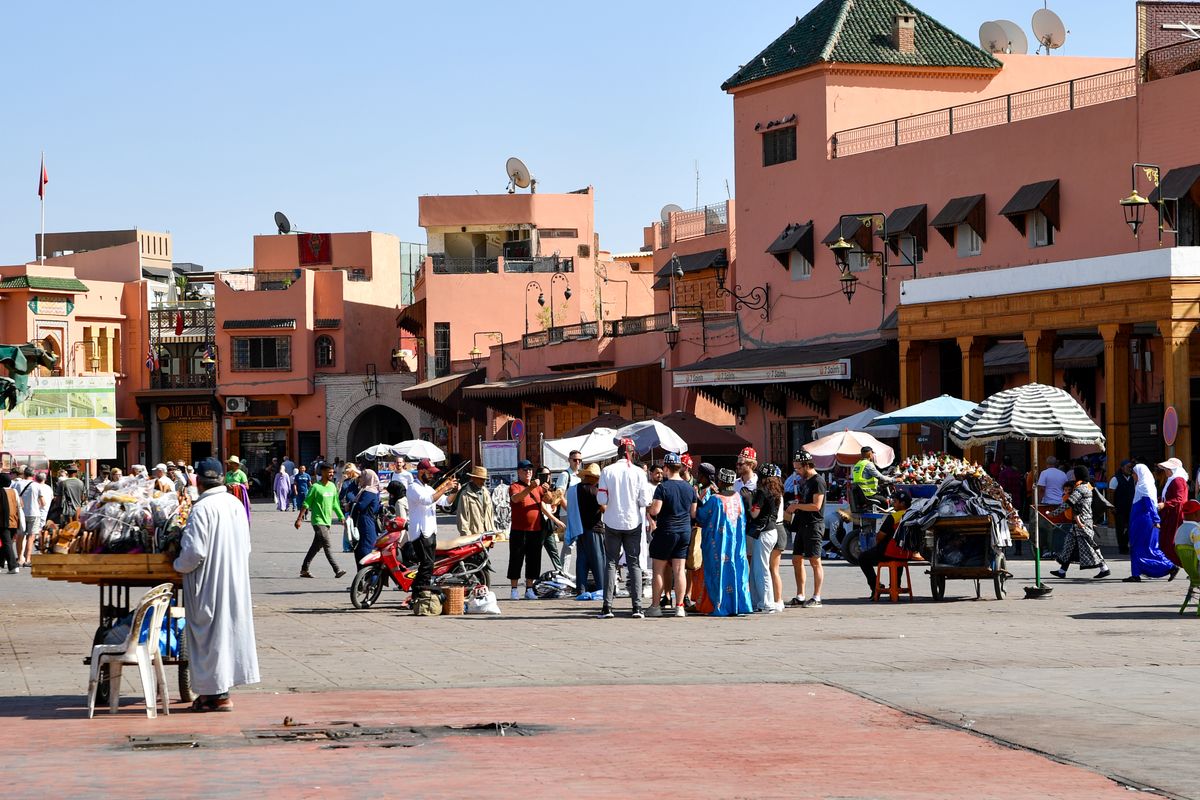
Marrakech medina has no entry gate and no ticket. Walk in from Jemaa el-Fnaa square and you're already inside a UNESCO World Heritage Site, inscribed in 1985, though nobody selling leather bags near the entrance mentions that part. The square itself carries its own UNESCO tag, a Masterpiece of Oral and Intangible Heritage, declared in 2001 for the storytellers and snake charmers and drum circles that show up most evenings like clockwork. None of that history stopped a snake charmer from asking me 50 MAD ($5 USD) for a photo of a snake I never touched. I handed him 10 MAD ($1) and kept walking before he could recount.
A man named Youssef found me within four minutes of getting out of the taxi from Menara Airport. Official orientation walk, he said, two hours through the medina's main arteries. His opening price: 200 MAD ($20). I countered 100 MAD ($10). We settled at 120 MAD ($12), and it turned out to be the best twelve dollars I spent all week, mostly because he pointed out which alleys loop back to the square and which ones just look like they do.
Orange juice at the numbered stalls along the square's edge is one of the only fixed prices in Marrakech. 4 MAD ($0.40) a glass, posted on a board, no negotiation required or possible. After twenty minutes of haggling over everything else that morning, a fixed price felt like a small mercy.
The Spice Souk: Where Saffron Opens the Negotiation
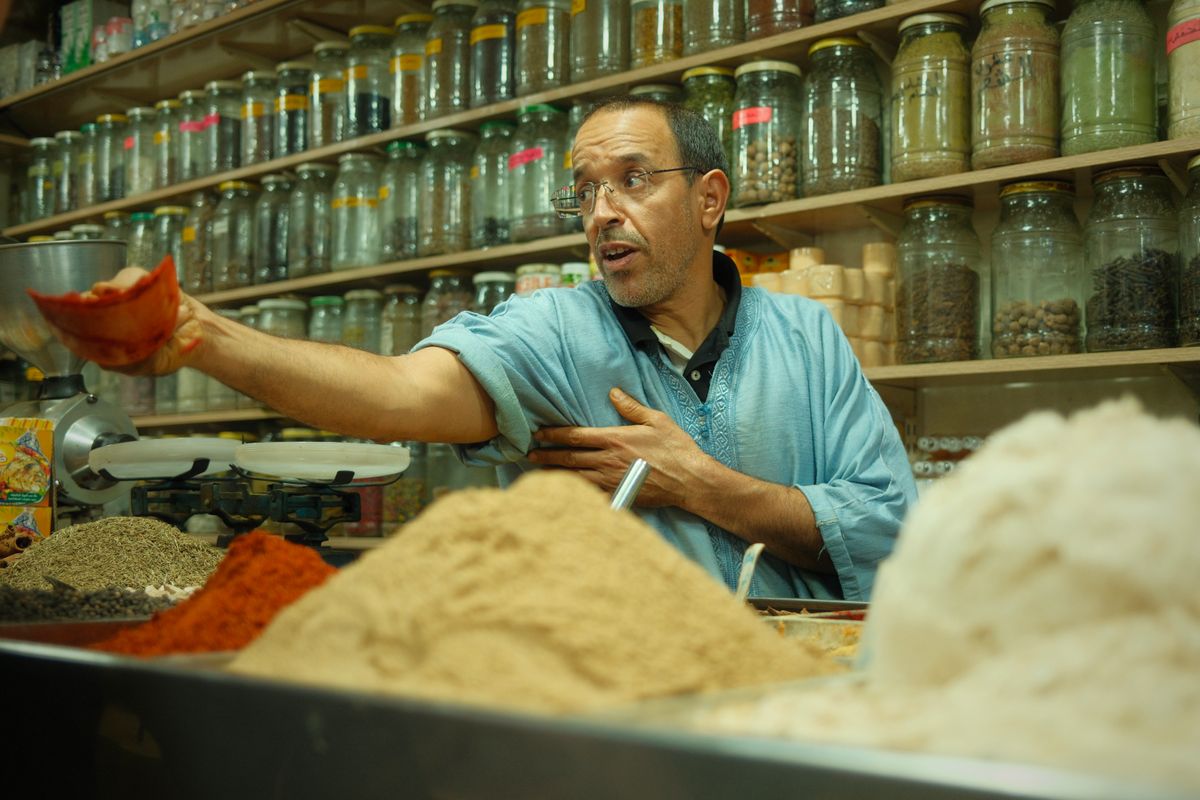
Reality check on the first price
The first number a vendor gives you is an opening bid, not a price. Counter low, expect a counter-counter, and treat the mint tea as leverage he's using on you, not free hospitality.
The spice souk sits in its own sub-district of the medina, one of several trade-guild quarters that have kept sellers of the same goods clustered together for centuries. Carpets in one alley, metalwork in another, spices in a third, and you learn the pattern fast once you've walked past your third identical row of stalls looking for the one you actually wanted. Hassan Amrani has run a stall here for, by his own count, eleven years. His opening price for a 100-gram tin of saffron: 400 MAD ($40).
I'd priced saffron at two other stalls that morning, so I knew roughly where the real number lived. My offer was 120 MAD ($12). Hassan laughed, offered tea, and we settled at 170 MAD ($17) after about six minutes of back and forth, most of it spent on him showing me the difference between real saffron threads and the dyed corn-silk substitute two stalls over sell as the same thing. Ras el hanout, the spice blend that varies stall to stall, came in separately at 60 MAD ($6) for a bag with no haggling at all. He quoted it once and I paid it, because by then his prices on the things he wasn't upselling had earned some trust.
The souk roof here is a lattice of reed matting that throws stripes of light across the spice cones, cumin and paprika and turmeric stacked into little pyramids by color. A postcard would use light like this. It's also ten in the morning, and I'm already sweating through my shirt, since Marrakech in July does not do subtlety with heat.
The first number a vendor gives you isn't a price. It's an opening bid.
Souk des Tapis and Souk Haddadine: Carpets, Lanterns, One Long Sit-Down
Carpet negotiation runs on its own clock, and Abdellatif Ouazzani made sure I understood that before he unrolled a single rug. Sit down first, he said, gesturing at a low stool, tea's coming whether you buy or not. His opening price on a hand-knotted Berber rug, roughly two meters by one and a half: 4,500 MAD ($450). He unrolled nine more while I drank the tea, each one narrated with more history than the last.
We landed on 1,800 MAD ($180) after three separate rounds and about forty minutes, one of which Abdellatif spent on the phone with someone he called his cousin, ostensibly checking whether he could go any lower. Whether that call was real is not a question I have an answer to. The rug is real, it's on my floor now, and forty minutes of tea and theater is a strange unit of currency to have spent on a purchase, but it's the one the souk runs on.
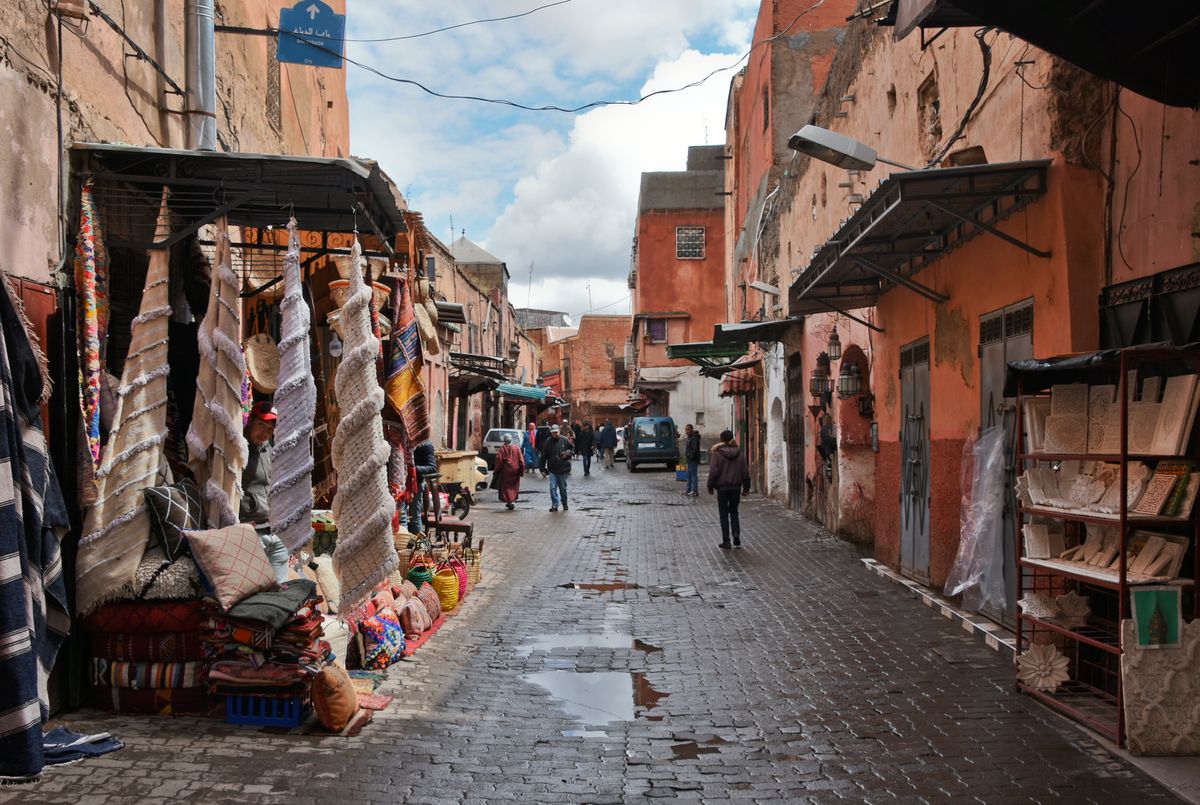
One day, medina souks
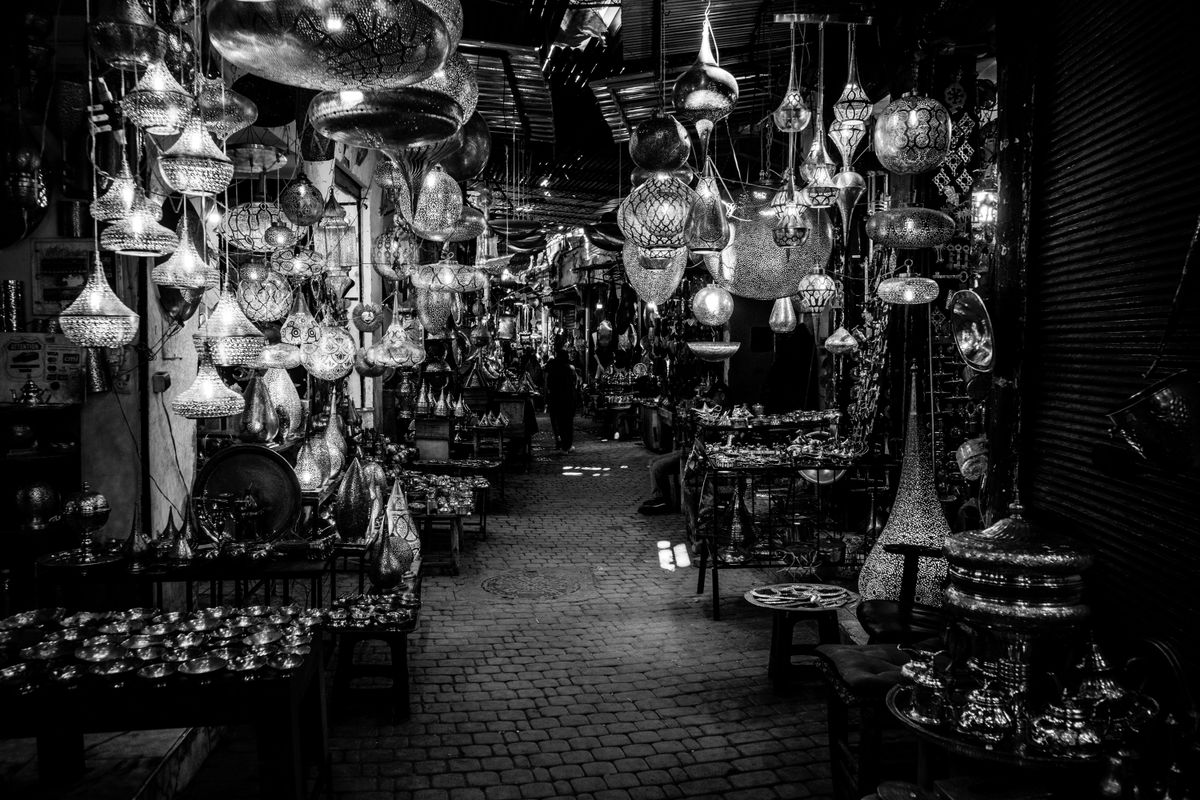
The metalwork souk, Souk Haddadine, runs louder, actual hammering on tin and brass rather than the hushed carpet-room routine. A lantern seller there, no tea offered, no stool, quoted 450 MAD ($45) for a punched-tin lantern about the size of a football. I offered 150 MAD ($15). We settled at 180 MAD ($18) in under five minutes flat, which after the rug negotiation felt almost rude in its speed.
I still don't know if 1,800 MAD was a good price on that rug or a very average one dressed up by forty minutes of tea and a phone call to an uncertain cousin. Abdellatif didn't look unhappy when I paid, which tells you something, though probably not as much as I'd like it to. Either way the rug is on my floor, the lantern is on a hook by my door, and the saffron ran out three weeks ago, which is its own kind of answer. ■