Limestone and Low Tide: A Field Day Through El Nido's Lagoons

Bacuit Bay, Boarding at Eight
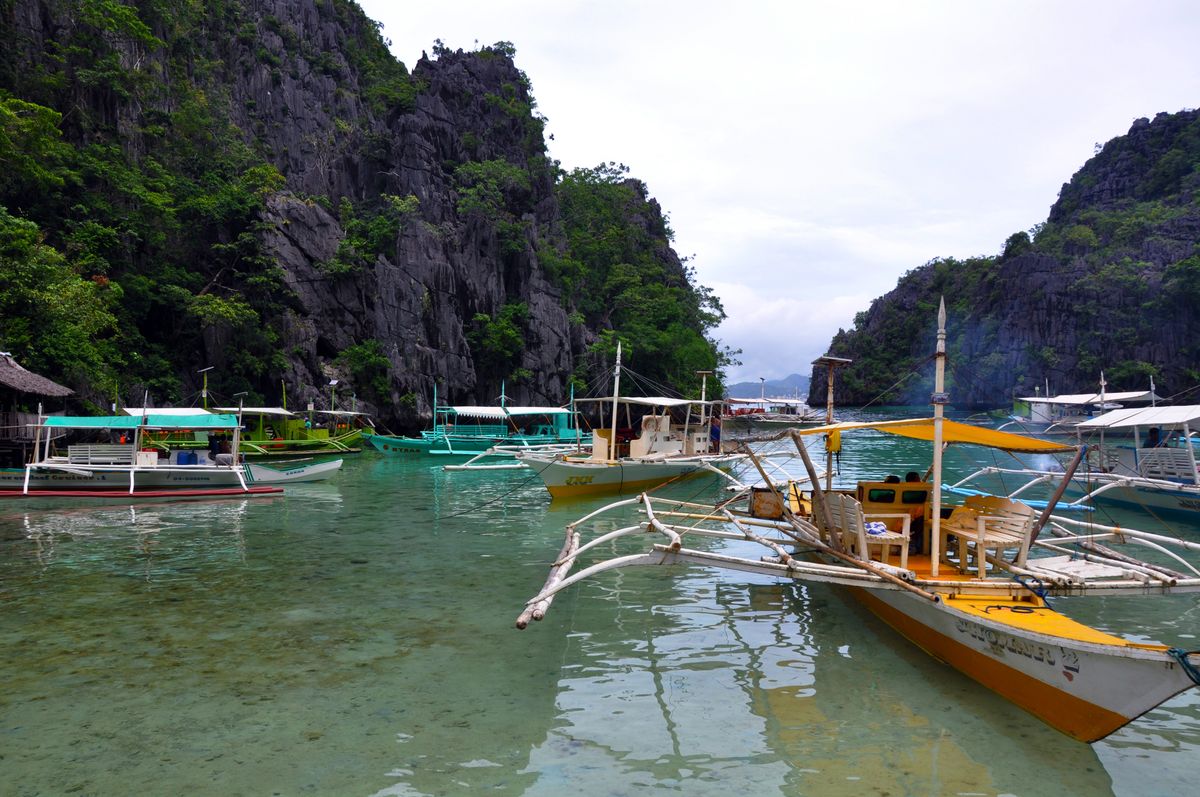
El Nido pier, eight in the morning: eleven bancas queued at the concrete ramp, outriggers painted the same turquoise-and-orange combination on all but two, engines idling loud enough to drown the tricycle traffic behind us. Visibility off the pier, maybe five meters, cut by diesel sheen and prop wash. Not a reading I'd trust. A boarding reading.
Our guide, Jun-jun, called the manifest twice before untying: eight passengers, one banca, four stops fixed by the co-op that runs Tour A regardless of which shopfront sold you the ticket: Small Lagoon, Big Lagoon, Shimizu Island, 7 Commandos Beach. Before boarding, everyone queues at the El Nido Eco-tourism Development Fee window, PHP 200, a ten-day pass stapled into a booklet nobody reads past the first page.
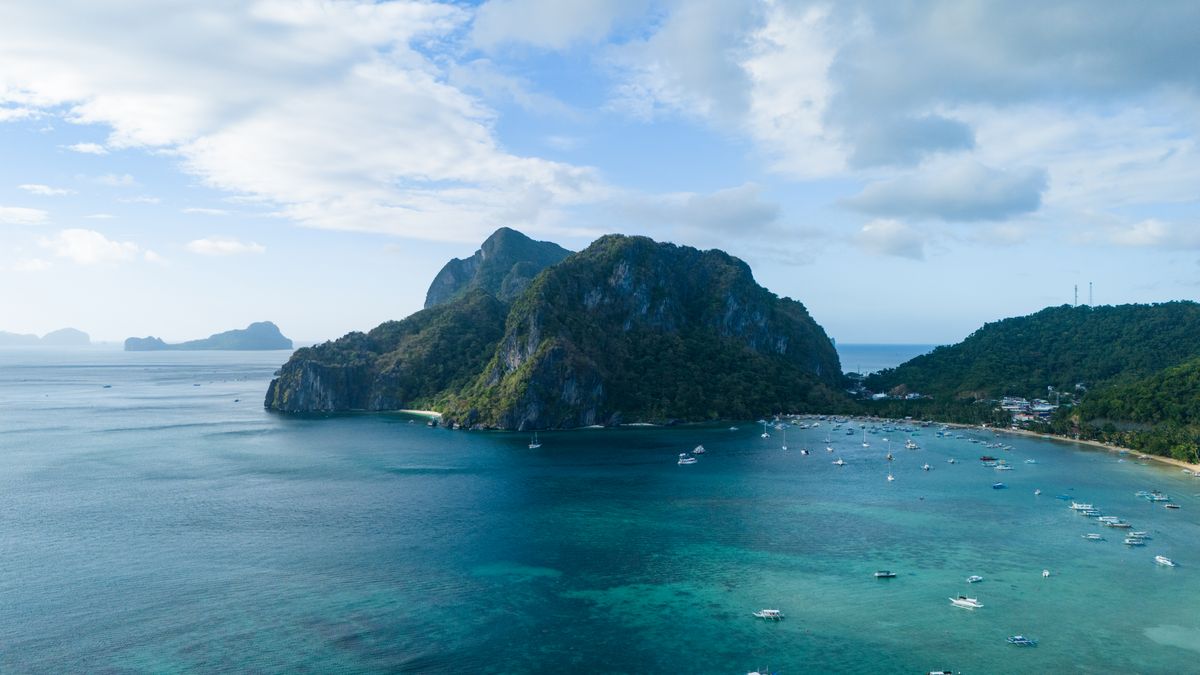
Eleven boats, roughly ninety people, converging on four fixed stops inside a bay maybe eight kilometers across: a paddling schedule closer to a shift roster than a wilderness itinerary. Bacuit Bay isn't remote. It's managed. The limestone above the waterline still looks unmanaged, reef stacked into cliffs long before anyone needed a life vest, and that's the part worth the seasickness pill.
Small Lagoon, Big Lagoon
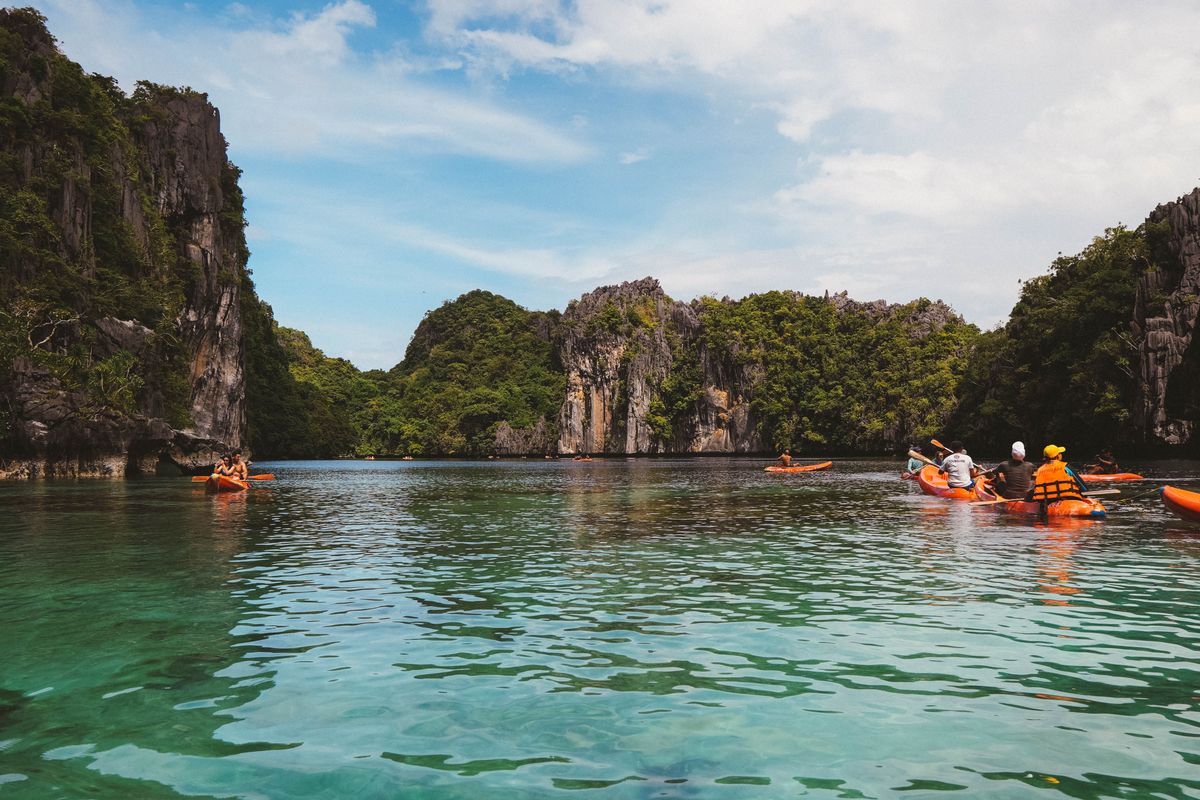
Small Lagoon entrance, ten-fifteen: a gap in the limestone maybe three meters wide at the waterline, too narrow and too shallow at low tide for the banca, kayak or swim only. Six kayaks stacked outside the crack, queued like cars at a single-lane bridge.
Inside, the water reads a green I don't have a clean name for, more jade than turquoise, and I watched two separate guides tell their groups it's the coral doing that. It isn't. There's no living coral in either lagoon; the walls are bare limestone dropping into a silted, sandy floor, and the color comes from how shallow, still water scatters light over pale marl. Pretty myth. Wrong animal.
Big Lagoon let the banca in without a kayak transfer, tide reading high enough over the sandbar that splits the two lagoons, maybe a meter of clearance where at low tide there'd be a sand break dry enough to walk. I'd want to see that bar at low tide too, walk it instead of floating over it, before I trusted my own read on how much of this system drains and refills on a six-hour cycle.
Two lagoons, one shared myth, and the only crowd control anyone's actually enforcing is the width of the entrance channel.
The lagoon's color is limestone talking, not the reef everyone credits.
Shimizu Island, Underwater Count
The sunscreen check
Palawan's local ordinance bars the oxybenzone-and-octinoxate sunscreens sold in most airport pharmacies. Boat crews check bottles before you go in and hand out a mineral alternative if yours fails, PHP 50 a sachet. Bring reef-safe stock from Manila if you'd rather not pay island prices for it.
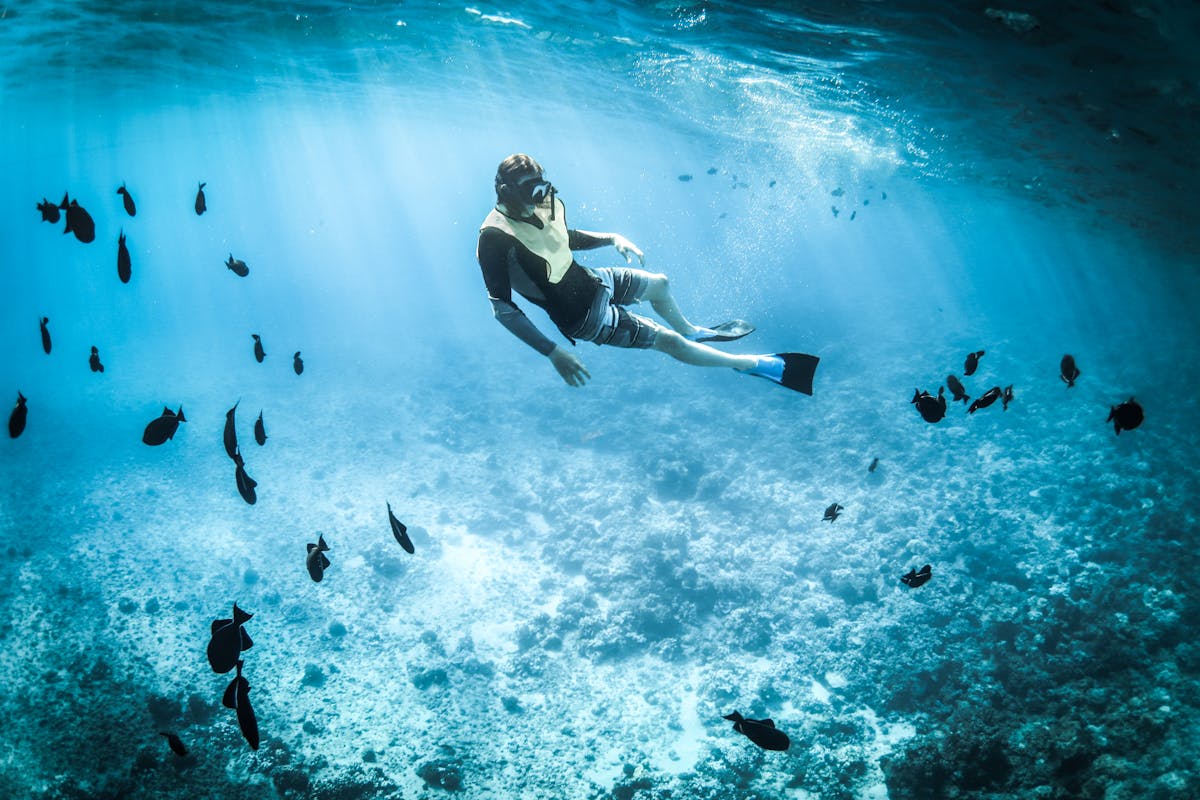
Shimizu Island, midday: fin-kicked off the banca's ladder, thermometer read thirty degrees at the surface, visibility eight to ten meters, better than the pier by a wide margin. Coral cover patchy, maybe forty percent live over a rubble-and-sand bottom, but what's alive is doing fine: staghorn thickets holding their color, a resident school of what looked like fifty or sixty juvenile jacks working the reef flat's edge in a tight, nervous ball.
A roped-off patch near the mooring line holds a giant clam nursery, a dozen or so juvenile Tridacna out-planted a few years back by a hatchery program the boat crews are visibly proud of, and that half the guests photograph without asking what they're looking at. Count for ten minutes at the rope: fourteen fins kicked directly over the clams, three near-contacts, zero actual touches. Specimen behavior: curious, clumsy, ultimately restrained.
Shimizu isn't the healthiest reef I've logged this year, but it's recovering, not collapsing, and the clam patch is the first stop all day where the crowd actually slowed down to look instead of just floating over it.
7 Commandos Beach, Lunch, and the Run Back
7 Commandos Beach, one o'clock: sand hot enough to send everyone hopping between shade and shoreline, eleven banca lunches going onto charcoal grills along the tree line, one crew per fire, working a shared kitchen nobody had to negotiate.
The beach takes its name from seven Filipino and American soldiers stationed here during the Japanese occupation, a fact printed on a sun-bleached sign most people walk past on the way to the buffet line. Lunch was grilled tilapia, pork skewers, a mountain of garlic rice, and pineapple cut into spears, served on banana leaf and eaten with hands, the same spread every Tour A crew in the bay was plating that day.
Tour A, Itemized
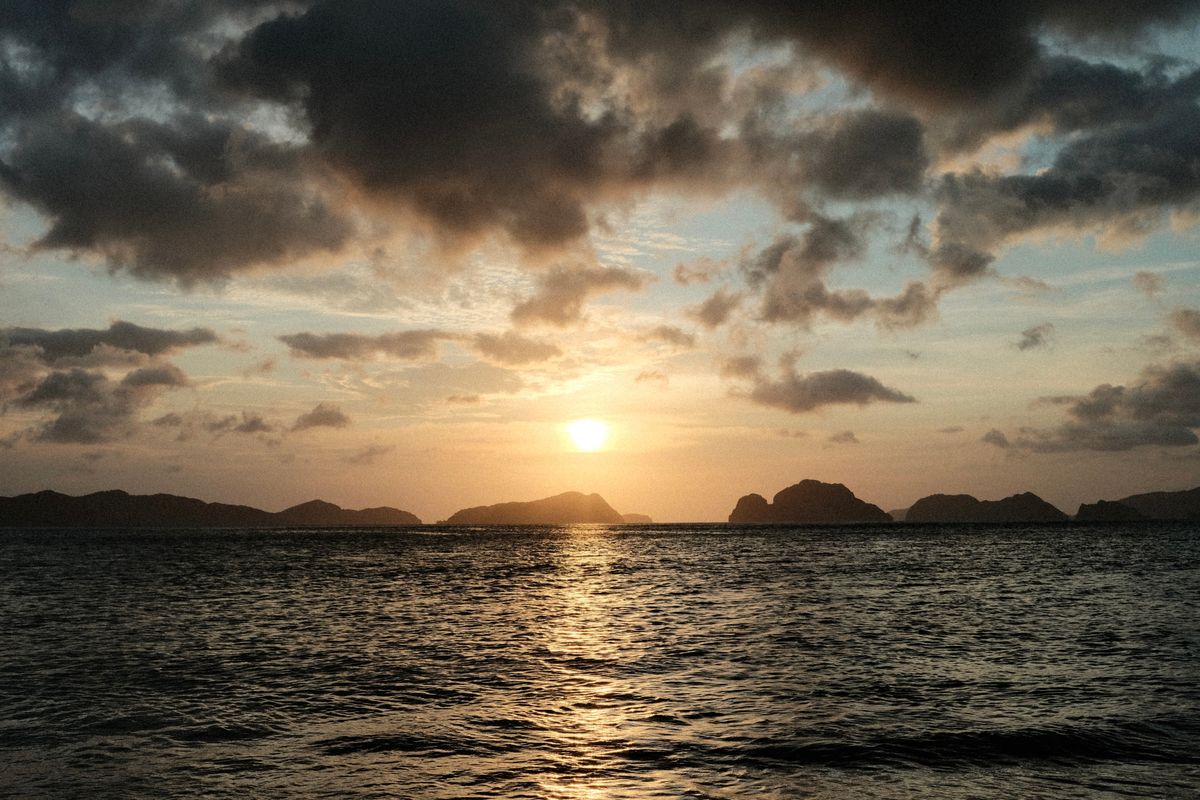
The run back into El Nido went straight into the sunset, karst islands going flat black against orange cloud, water calm enough that nobody in our banca said anything for a while, then somebody's phone rang loud enough to reintroduce the whole boat to itself. I didn't come away from Tour A with anything to say about myself. I came away with a stopwatch reading of forty seconds between the last clam-patch camera flash and the first one at the sunset, which tells you what the day was actually for. ■