Cubao to Baclaran, Inspected Leg by Leg
A Manila jeepney driver and mechanic rides his own circuit end to end, running boarding, engine, and fare economics through the same checklist he uses on his own vehicle.
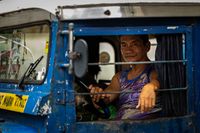
Leg One: Cubao Terminal, Boarding Check
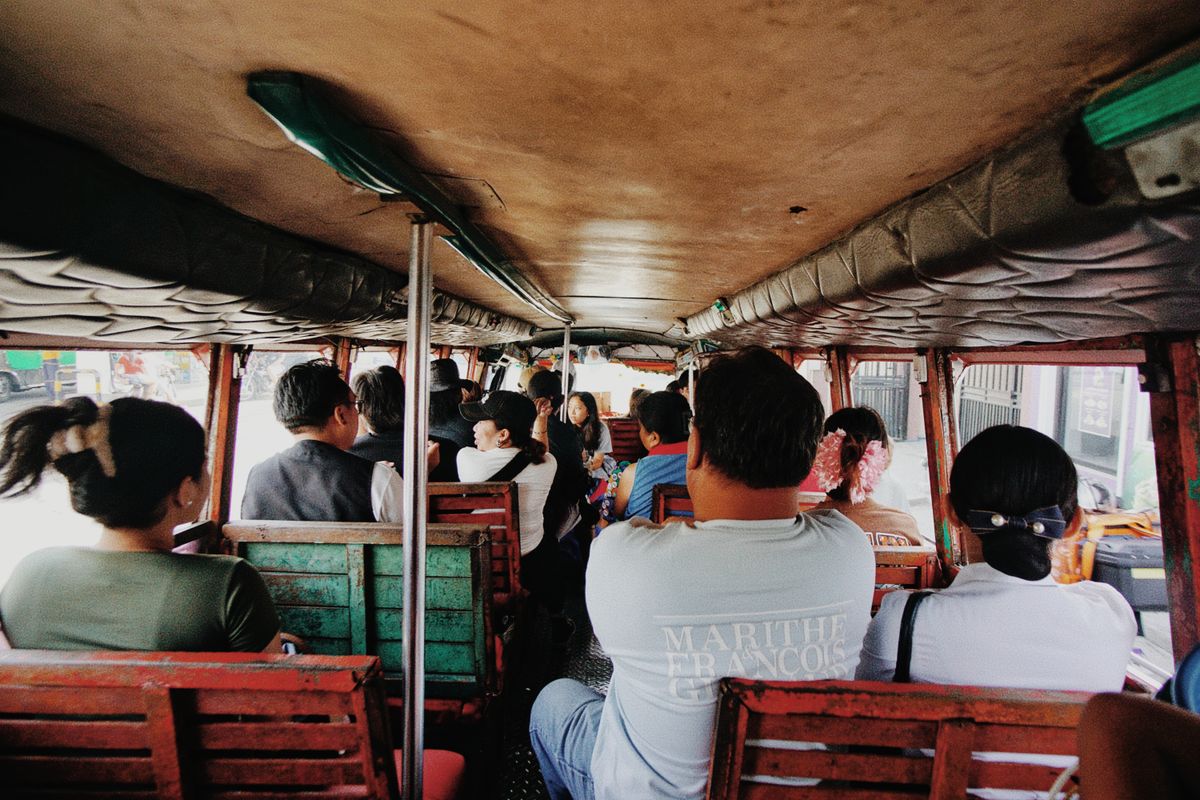
Two benches facing each other down the length of the jeepney, the whole boarding system running on everyone already knowing their job.
Checklist item: passenger-loading efficiency, the gap between a jeepney slowing down and a jeepney back at speed. I picked up a Cubao-Baclaran unit off Aurora Boulevard, right where the Araneta Center jeepneys, buses, and pedicabs fight for the same stretch of curb. This one was one of roughly 55,000 jeepneys working Metro Manila's routes, primer gray in patches where the paint had given up years ago. The driver never came to a full stop. He eased the wheel toward the shoulder, four people stepped onto the running board while the jeepney was still rolling, and he was back in second gear before the last foot cleared the step.
That's the whole design working the way it's supposed to. A jeepney has no door to swing shut and no fare box for the driver to babysit while traffic stacks up behind him. Coins get folded into bills and passed hand to hand down the row, past knees and market bags, until the stack lands in the driver's palm without him taking his eyes off the road ahead. Someone near the back calls out the stop, someone in the middle repeats it forward, and half the time the fare arrives before the request does.
One of my fellow passengers boarded holding a covered basket that turned out to have two live chickens in it, passed his fare forward with his free hand, and never broke stride finding a seat. Nobody blinked. That's not chaos, whatever a first-time rider calls it watching from the curb. Four strangers coordinating a boarding, a payment, and a livestock delivery inside eight seconds, with zero verbal instruction, reads closer to a pit crew than a mob.
I've serviced clutch linkages that failed under less coordination than what happens on a jeepney bench during a single boarding. Nobody trains for it and nobody gets thanked for it, and it still runs cleaner than plenty of systems that come with a manual. Passenger-loading efficiency: would pass registration, no notes.
mechanic's notes
Flag a jeepney with your hand out and palm down, waved low. Palm up reads as a different signal to some drivers.
Pass fares forward without comment, name your drop-off point once and let the row relay it.
Carry coins and small bills. A driver mid-route can't always break a large one for you.
The placard in the windshield lists the two endpoints only, not the streets between them. Ask before boarding if you're unsure of the road it runs.
Leg Two: EDSA Service Road, Idle Check
Checklist item: idle quality, no misfire under load. An engine tells you what's wrong with it before the driver says a word, you just have to listen past the traffic noise. Ours stumbled at a red light on the EDSA service road near Guadalupe, a stutter every second or third beat that reads like a fouled plug or drifting timing, not a dying engine. The driver gunned it once crossing the intersection and the stutter smoothed straight out. Load fixes a lot of idle problems. It doesn't fix all of them.
Jeepneys don't run the main EDSA carriageway anymore since the busway claimed it for buses only, so routes like this one work the service road the whole way, stoplight to stoplight, sharing it with the same motorcycles and delivery vans as everyone else. The rhythm is stop for a stretch, crawl for a stretch, stop again, and an idle that can't hold steady through that cycle wears out a starter twice as fast as one that can.
Parked at the curb near the next terminal was another unit, engine off, driver reclined across the front seat with his cap pulled down and one arm crossed over his eyes. A passenger next to me muttered something about drivers who nap on the clock. I'd ask about his shift length before I'd ask anything else. A long boundary run with no relief driver doesn't leave much room to trade fatigue for caution, and a short stop between trips costs a lot less than a driver who nods off at speed on EDSA. Cause first. The blame question doesn't fix anything.
Idle quality on this leg: rough at rest, clean under load, same as half the drivers running this circuit by the end of a shift. Would pass registration, with a note to check it again next inspection.
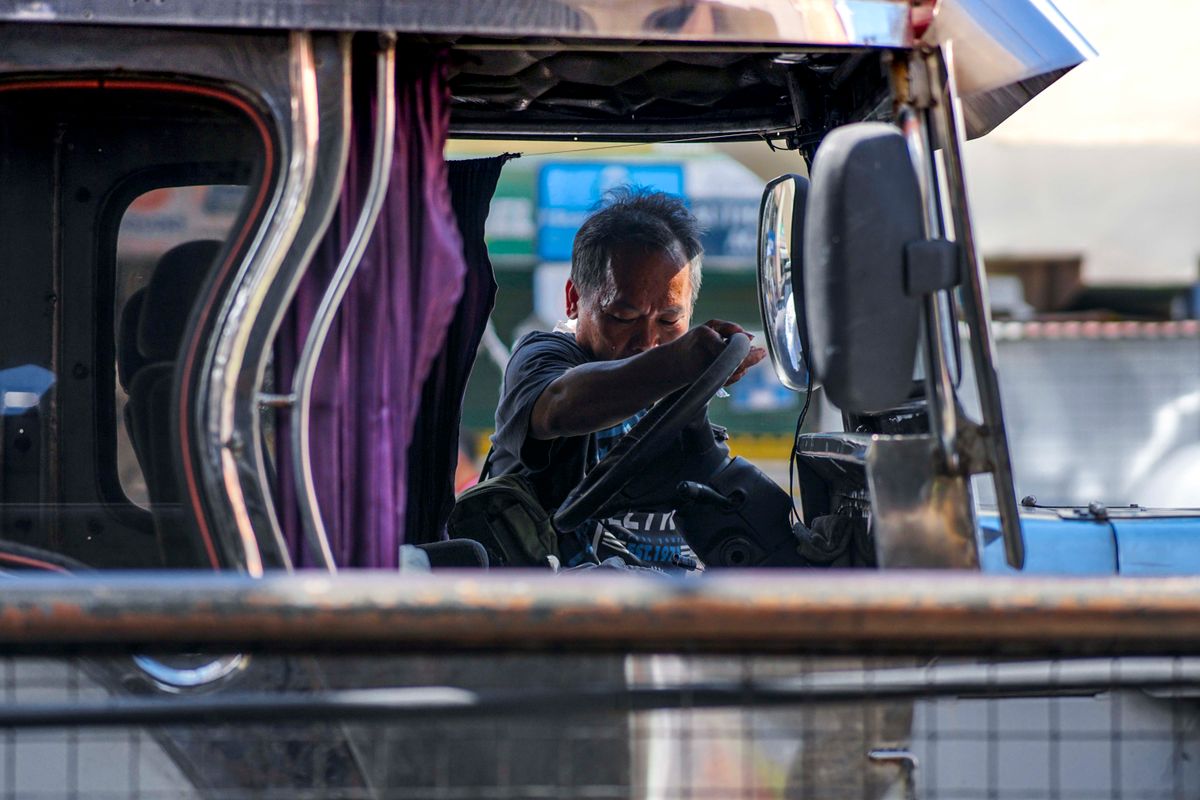
A rough idle is a signal, not laziness, same as a napping driver.
Leg Three: Baclaran, Fare and Finish Check
Checklist item: fare-matrix compliance, exterior condition, whether the whole system still earns its plates. Baclaran is where this route ends, spilling passengers out at the edge of the market that's run along Roxas Boulevard longer than most of the jeepneys serving it. The conductor side of me counts fares here. The mechanic side counts paint jobs.
Since 2017 the government's Public Utility Vehicle Modernization Program has pushed operators off the old diesel units and onto modern or electric jeepneys built with standardized parts, GPS, CCTV, and Euro-4 or electric engines. A modern unit runs about 2.6 million pesos, not money most operators have sitting around, so the government backs the switch with a subsidy scheme drivers call 5-6-7-8: a 5 percent subsidy, a 6 percent loan rate, seven years to pay it off, and an 80,000 peso equity subsidy on top of that. It's still a loan a lot of traditional operators haven't taken.
These are the fares since the LTFRB's March 19 hike this year, up a peso or two from before, and that three peso gap holds no matter which corner you board at. A modern unit and a traditional one covering the same stretch of road charge off the same matrix, so which fare you pay comes down to which jeepney rolls up first, not which route you picked.
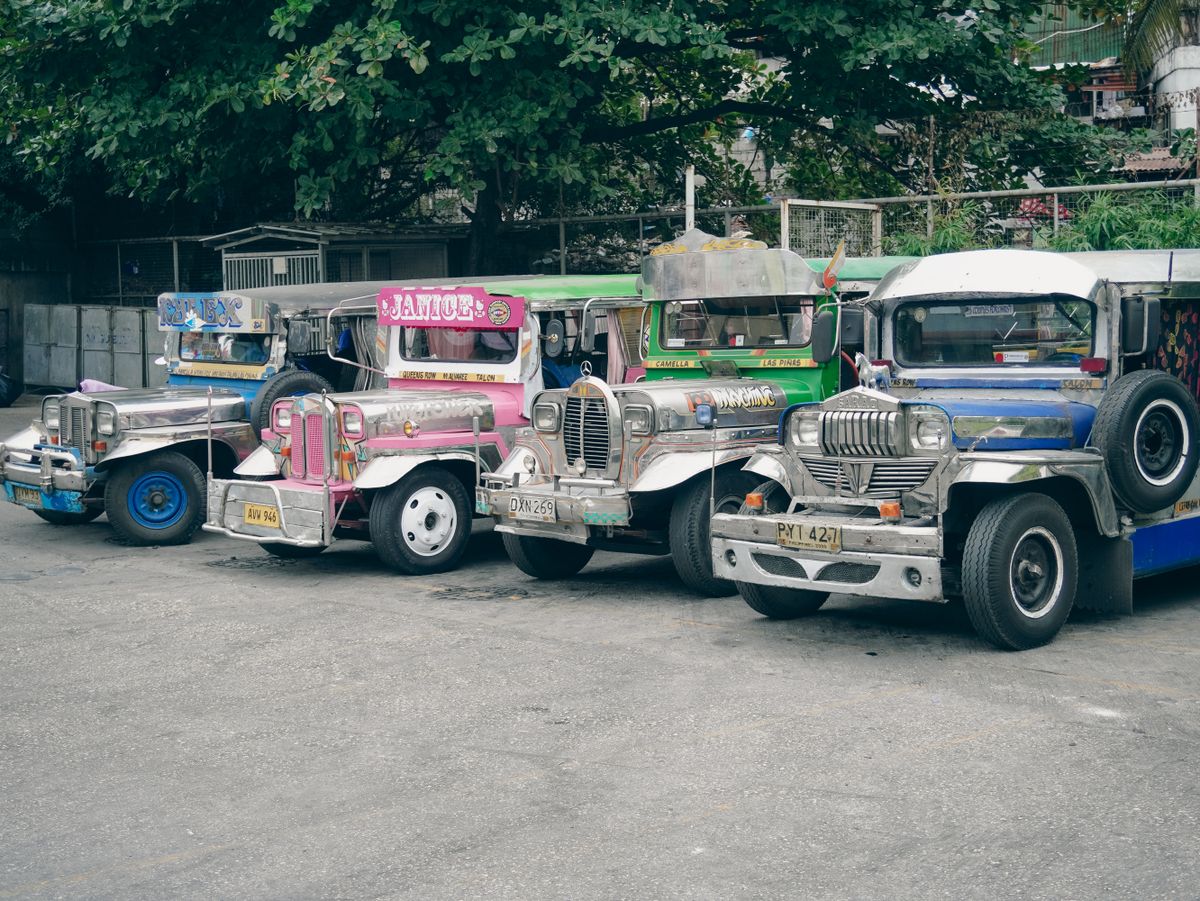
What the traditional units still carry that most of the modern replacements don't is the paint. Jeepneys started as surplus US Army jeeps left behind after the war, stripped down and rebuilt to carry a bench of passengers instead of a squad, and the decoration tradition grew out of every operator wanting theirs to stand out from the next stripped-down surplus jeep parked at the same terminal. Chrome horses on the hood, a name lettered across the windshield visor, a saint riding above the driver's seat, sometimes a string of disco lights wired into the dash for night runs. Painters like Vic Capuno, working out of San Pablo south of the city, have built careers on exactly this kind of decoration, none of it required by any inspection sheet I've ever filled out. Every one of these units is running on borrowed time under the modernization program, and I'm not going to call that a tragedy or pretend it isn't happening. It's a phase-out with a timeline, not a eulogy.
What it actually costs to ride
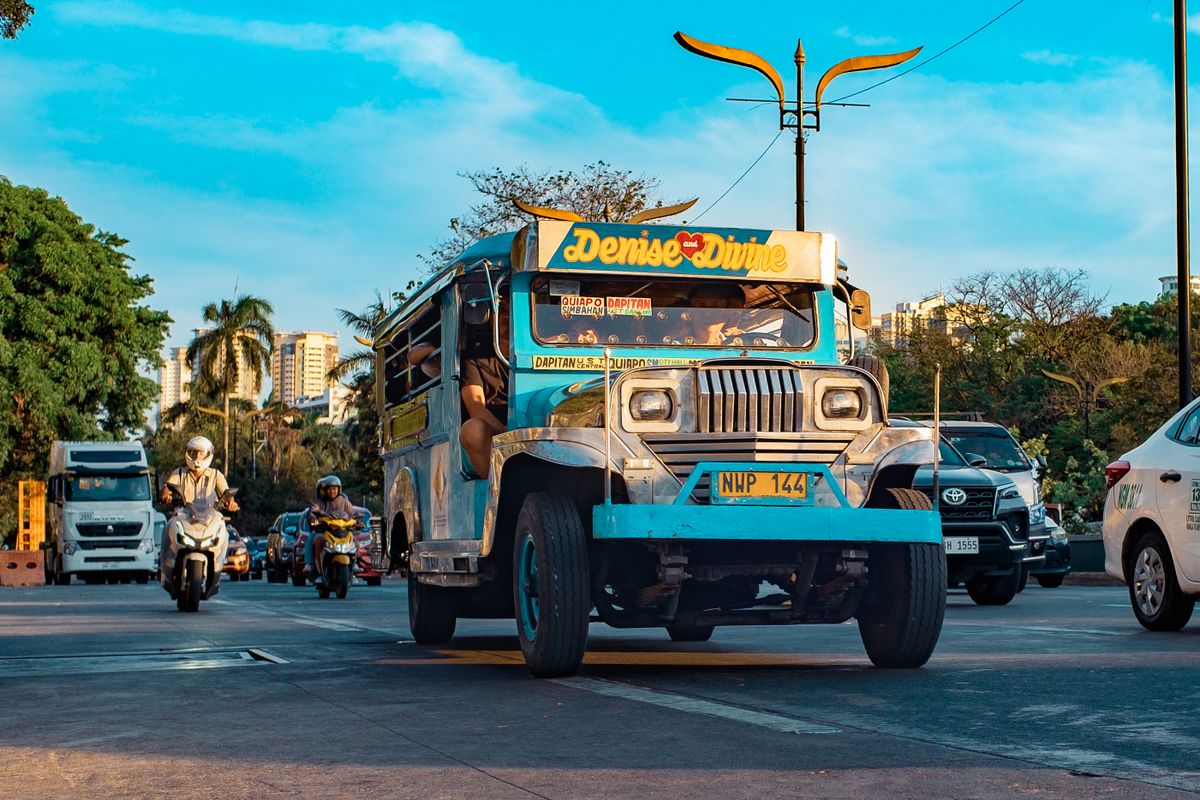
Boarding held together without a hitch, the engine ran rough at idle and clean under load same as most of the fleet, and the fare matrix does what it's supposed to whether the plate is diesel or electric. Multiply this one ride by however many of the tens of millions of jeepney trips happen across the country on an average day and the hand-to-hand system is still carrying the country to work. The paint job won't survive the decade. The system underneath it would still pass registration. ■