Reading the Andasibe Rainforest by Ear and by Eye
Fara Rakoto follows the indri's call from Analamazaotra into the wilder Mantadia forest, then reads the tourists around her the same way she reads a chameleon's one moving eye.

Specimen observed: a couple in rain ponchos so new the fold creases still showed, standing dead still on the Analamazaotra boardwalk at twenty to seven in the morning, so still that even the wet planks under them weren't creaking. They thought they were being quiet. Mostly they were being furniture. Neither had made a sound yet, which was the only reason it worked, because in about four minutes an indri was going to make it very clear who the loud ones actually were.
Analamazaotra to Mantadia
Field note. Species: Indri indri. Behaviour: pair perched high in a canopy fork off the main loop, throats working before any sound comes out, the rest of the group turning toward the same branch like a row of dishes catching a signal. Tell: not applicable. Indri is the largest living lemur alive today, built like a black-and-white teddy bear with almost no tail, and it has never once tried to be subtle about anything.
The call started low, more felt than heard, then climbed into something with no obvious source, wavering and long, closer to a whale than to any primate I have ever guided past. It ran close to ninety seconds. Indri calls carry roughly a mile through this forest, and on the second phrase the man in the poncho flinched hard enough to clap a hand over his own mouth, as if he could take the gasp back. He couldn't. Our guide didn't turn around, because guides who work this loop every week stopped finding it interesting years ago. I turned around. That's the actual job.
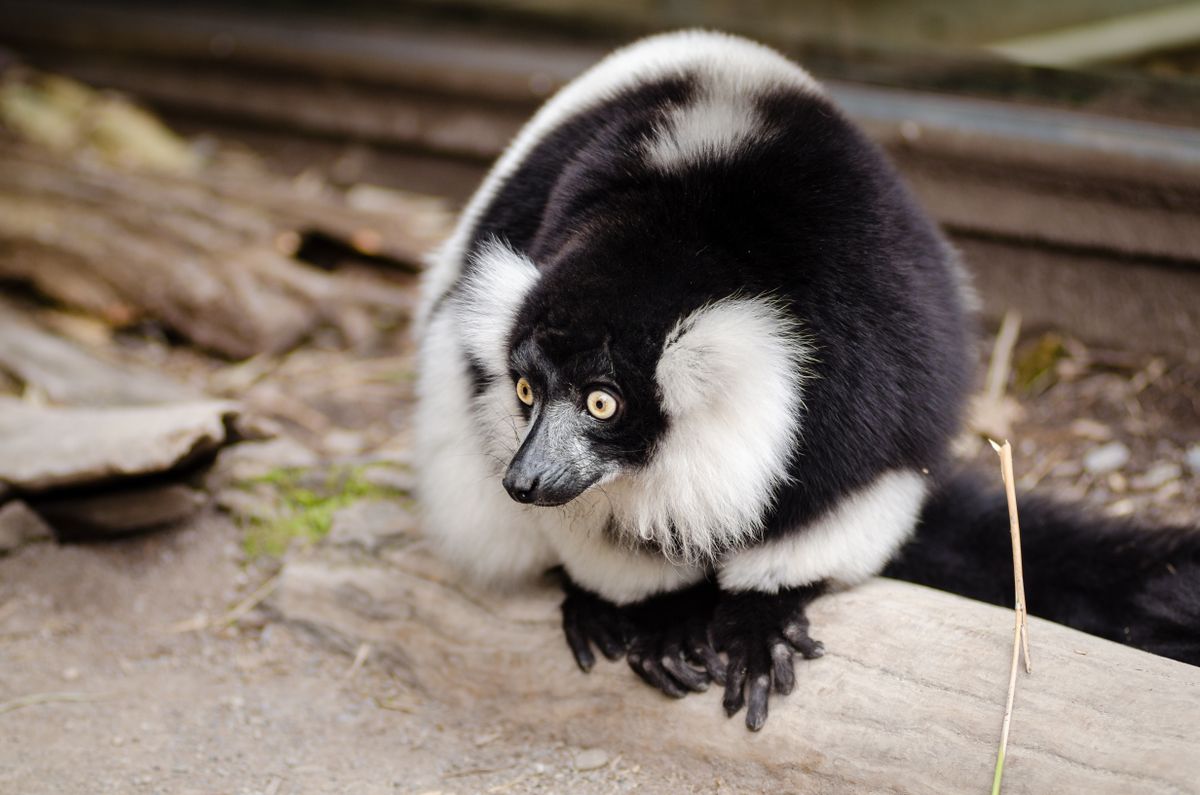
Field note. Species: Varecia variegata, black-and-white ruffed lemur. Behaviour: moving fast and high through Mantadia's primary canopy, tail doing most of the visible work, calling in a bark that carries but never wavers the way an indri's song does. Tell: the tail. An indri has almost none. A ruffed lemur trails one long enough to read from the ground, and once you know that, you stop mixing up the two species from underneath a tree.
Mantadia sits north of Analamazaotra, a rougher block of primary forest covering close to 12,810 hectares, and the road in alone tells you this isn't the manicured loop. No boardwalk, no habituated troop waiting at the gate. The ruffed lemurs here are the reason Analamazaotra has been quietly restocking its own patch with the species since 2007, a program run jointly with Mantadia, because the southern reserve had none of its own left to show anyone.
Verdict: the indri gets spotted by ear before eye, the ruffed lemur gets spotted by tail before anything else moves. Neither animal was hiding from us today. The ponchos were the ones trying to hide their volume, and the forest heard them anyway.
The midday transect
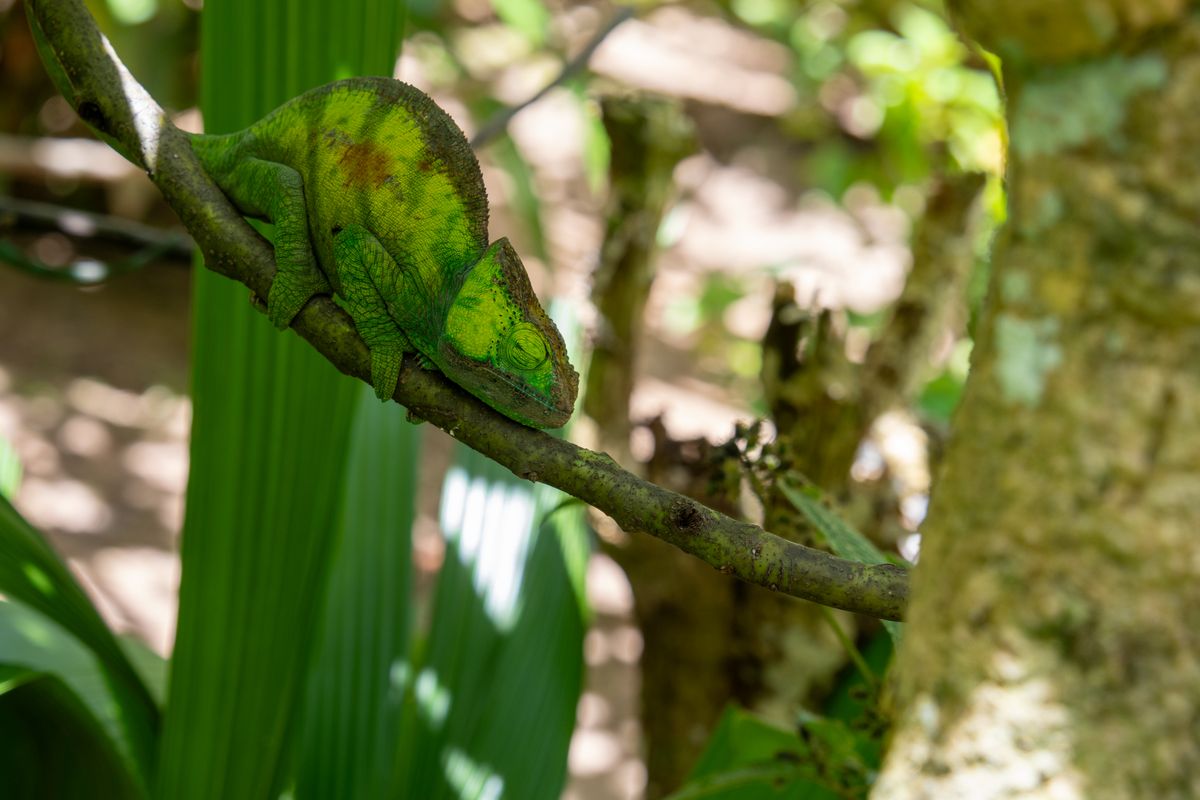
A green chameleon holds the bark's colour on the midday transect. One eye is already moving.
Field note. Species: rainforest chameleon, genus unconfirmed at range. Behaviour: locked against a lichened branch, body colour shifted to match the bark within a shade or two, breathing shallow enough to read as part of the tree on a first glance. Tell: one eye. A chameleon's eyes move independently of each other and of the body, so even a specimen holding perfect stillness everywhere else will have a single turret swivelling to track whatever just walked past it. Find the moving eye and you've found the whole animal.
Four people spent six minutes photographing a knot in a branch eleven metres from an actual chameleon, because the knot held still and the chameleon, for a while, held stiller. I let it run longer than I needed to. Then the eye moved, tracking a moth past the group's shoulders, and the woman closest said "oh my god it's alive" loud enough that the moth changed course and the chameleon, unhelpfully, didn't move again for another eleven minutes. She had spotted the tell, and only then demonstrated the other lesson of this transect: spotting something and staying quiet about it are two different skills, and most people are only ever good at one.
Verdict: nobody in that group blended into the forest today. The chameleon did, and only because it has one eye it can't fully control, which puts it exactly one tell ahead of most of the tourists I get, and behind none of them.
Field note: the only part of a chameleon that ever gives up the game is the eye it forgot to stop moving.
— Fara Rakoto
Exit trail, binoculars up
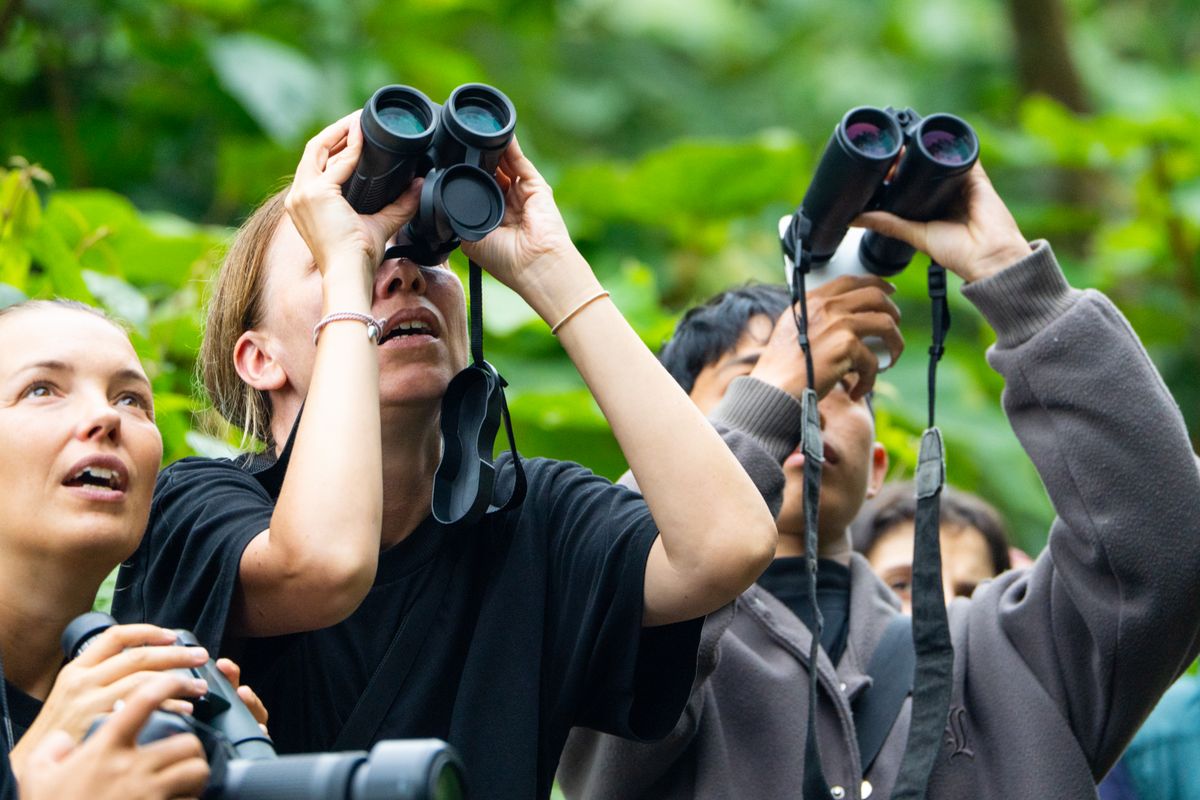
Field note. Species: Homo sapiens touristicus, sighted in numbers near the Mantadia exit trail, binoculars raised in near unison at nothing in particular. Behaviour: mimicking guide posture, guide silence, guide pace, in an evident attempt to read as experienced rather than first time. Tell: varies by individual. There is always one, the same way there is always a moving eye.
The man in the grey cap had switched his flash off before we even reached the trailhead, which was the right instinct and would have worked, except he hadn't switched off his shutter sound, so every photo of the ruffed lemur troop announced itself with a chirp that carried further than his footsteps ever did. He'd remembered to hide the light and forgotten the noise.
Behind him, a woman had copied our local guide's walk almost exactly, same short steps, same pauses at the same intervals, and it read as competent right up until she needed both hands free and the zip on her daypack went off like a small saw. Copying stillness gets you halfway there. Copying what your own gear does when you move is the part people always forget to rehearse.
Spotter's notes
Indri calls happen in the morning, reliably, so start the Analamazaotra loop at first light rather than after breakfast.
The complex runs as two sections: Analamazaotra for the habituated indri groups and over a hundred recorded bird species, including the Madagascar green sunbird, Mantadia for primary forest and the black-and-white ruffed lemur.
No flash for the lemurs or the birds, and if you can't silence your phone's shutter sound, keep it in your pocket during a call, not just muted for photos.
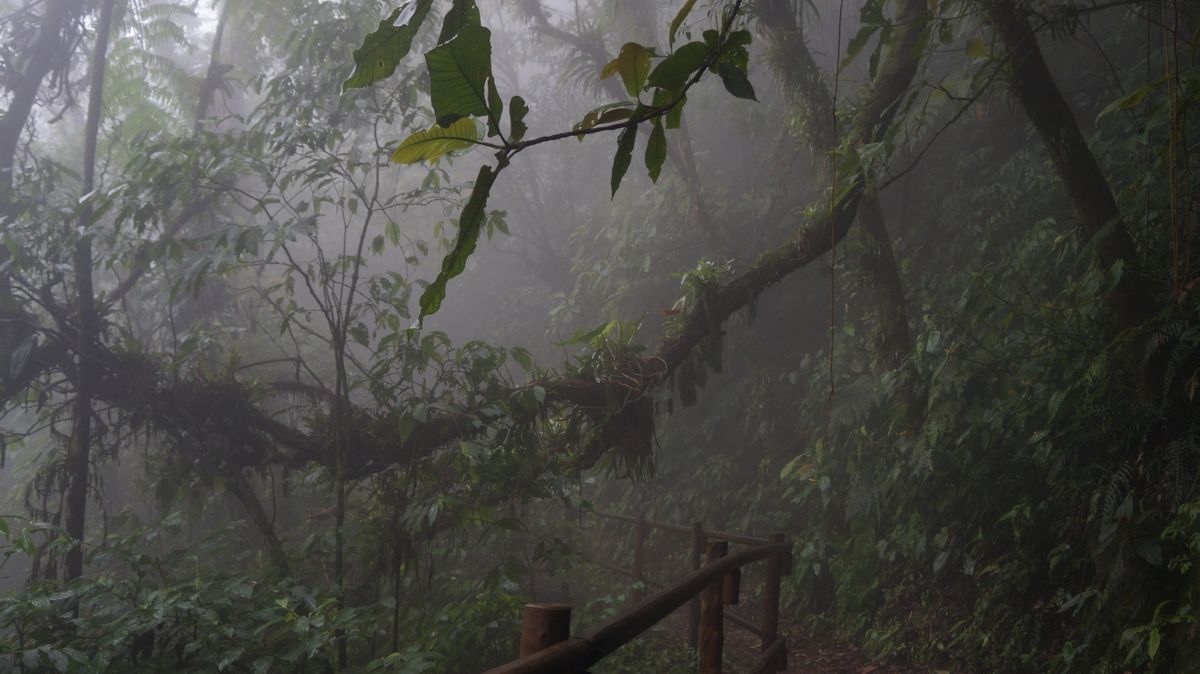
Bring a rain layer regardless of the forecast. This is rainforest roughly 150km east of Antananarivo, and the mist doesn't check the app either.
Verdict on the day: one indri call heard from roughly a mile off, one ruffed lemur tail spotted before the animal attached to it, one chameleon eye that gave away more than its owner meant to, and at least four tourists convinced they'd gone unnoticed. None of them had. I didn't tell most of them what gave them away. Some tells you keep for the next walk. ■