The Longest Day in Svalbard Finally Ends
A week in Longyearbyen spent reading polar bear signs, glacier fog, and permafrost math. It ends on the night the midnight sun finally sets.

Longyearbyen Keeps Its Pipes Above Ground
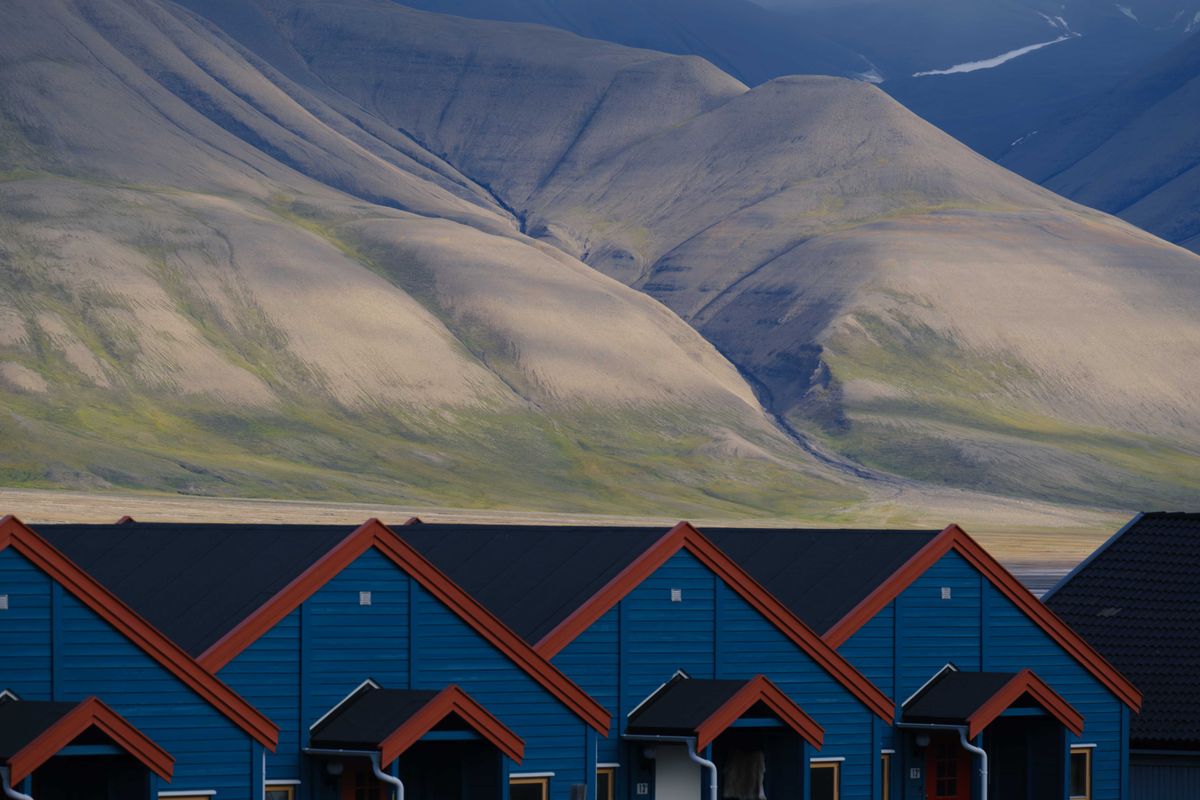
Before you leave the settlement boundary
Rifle or armed guide required outside Longyearbyen's marked boundary, no exceptions, no guidebook workaround.
Check the Sysselmesteren's (governor's office) bear-sighting bulletin before a walk, not after.
The warning signs aren't decorative. Every one marks a real line.
Four degrees Celsius, wind out of the northwest at 15 knots, cloud base low enough to shave the top off Hiorthfjellet. That was Longyearbyen's opening bulletin, delivered free of charge the moment the plane's door opened onto the tarmac at 78 degrees north. I'd flown up from Oslo expecting drama. What I got was a stiff, businesslike wind that meant it, and a sky doing the low grey thing it apparently does most of August.
The pipes gave it away before anything else did. They run above ground here, wrapped in insulated conduit and raised on stilts alongside the houses, because permafrost doesn't forgive a buried trench the way Oslo's clay does. Dig a hole in Longyearbyen and it stays a hole, more or less, for a very long time. The town's cemetery stopped taking new burials in the 1950s for the same reason: bodies don't break down in ground that never properly thaws, so the dead here are old ones, kept exactly as they were.
The guide had a line for it: when you can count every rock on Hiorthfjellet's ridge, rain's coming within the hour. It sounds like superstition until you think it through. Sharp-edged visibility like that means dry air sitting close to its dew point, with no haze to soften the outline, and dry air at that altitude usually means a front is about to shove some moisture in behind it. Local folklore, actual physics, same forecast.
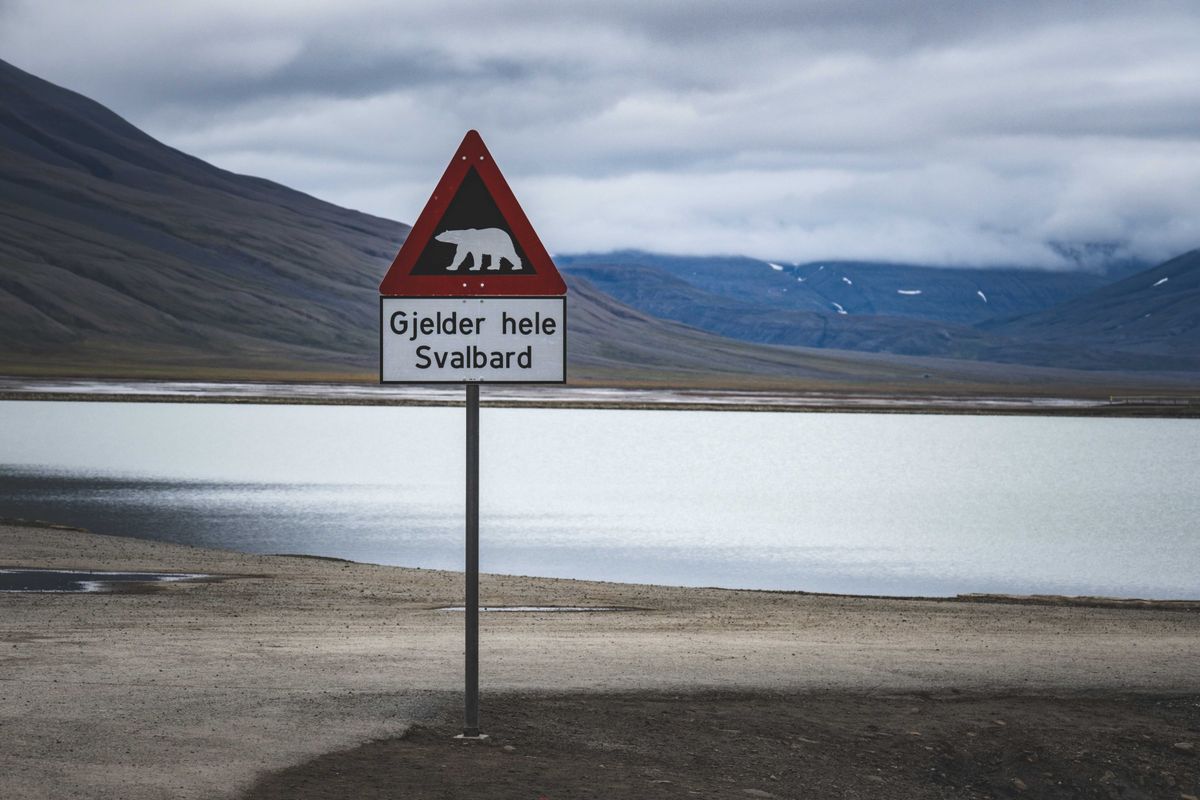
Every hotel in town runs the same fifteen-minute lecture before it hands over a room key, and it isn't about breakfast hours. Step past the settlement boundary sign on any road out of town and you're required by law to carry a rifle, or travel with someone who does. Polar bears here aren't a wildlife-viewing bonus. They're a standing forecast risk, filed the same way I'd file a cold front: low probability on any given day, non-zero, and not something you get to shrug off because the app said clear skies. Local odds, unscientifically kept: seventy percent chance any given conversation in Longyearbyen mentions the word 'bear' before it mentions the weather, which for me is saying something.
By evening the wind had backed round to the north and dropped to a light five knots, which the woman at the front desk read, correctly, as tomorrow's boat trip going ahead. Outlook: clearing overnight, glacier run confirmed for 9am.
A polar bear sign in Svalbard isn't decoration. It's a boundary line the law actually enforces.
The Glacier Sounds Before It Shows Itself
Six degrees, humidity climbing, a bank of sea fog sitting off Adventfjorden like it had nowhere better to be. Our boat left the harbour at 9am sharp into visibility the skipper rated at maybe 800 metres, which he announced over the tannoy with the flat calm of someone reading out a shipping forecast rather than an actual complaint.
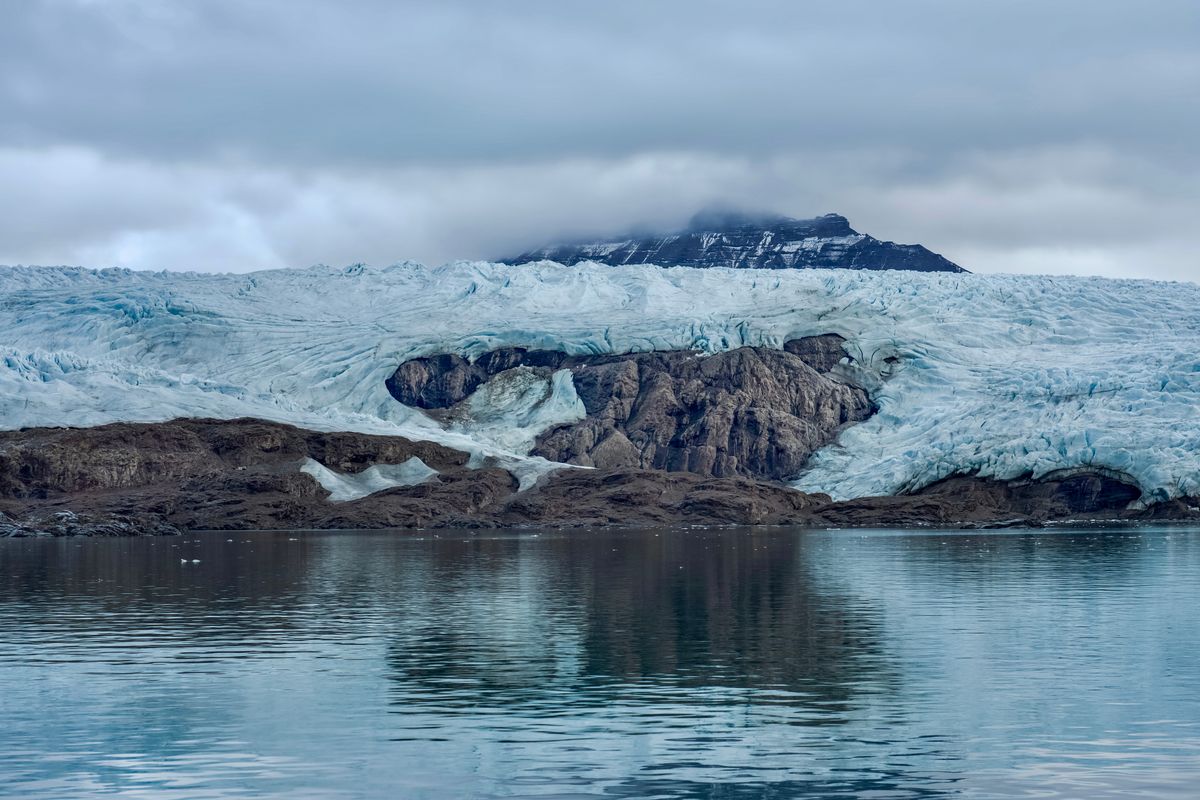
The full-day run to Nordenskiöldbreen in Billefjorden isn't cheap. NOK 1,890 a head, cash or card, life jacket included, hot chocolate extra. Worth every krone for the two hours we spent nosed up against a glacier front that has retreated close to two kilometres since the 1990s, according to the guide, who'd clearly given this exact briefing a hundred times and still sounded like she meant it.
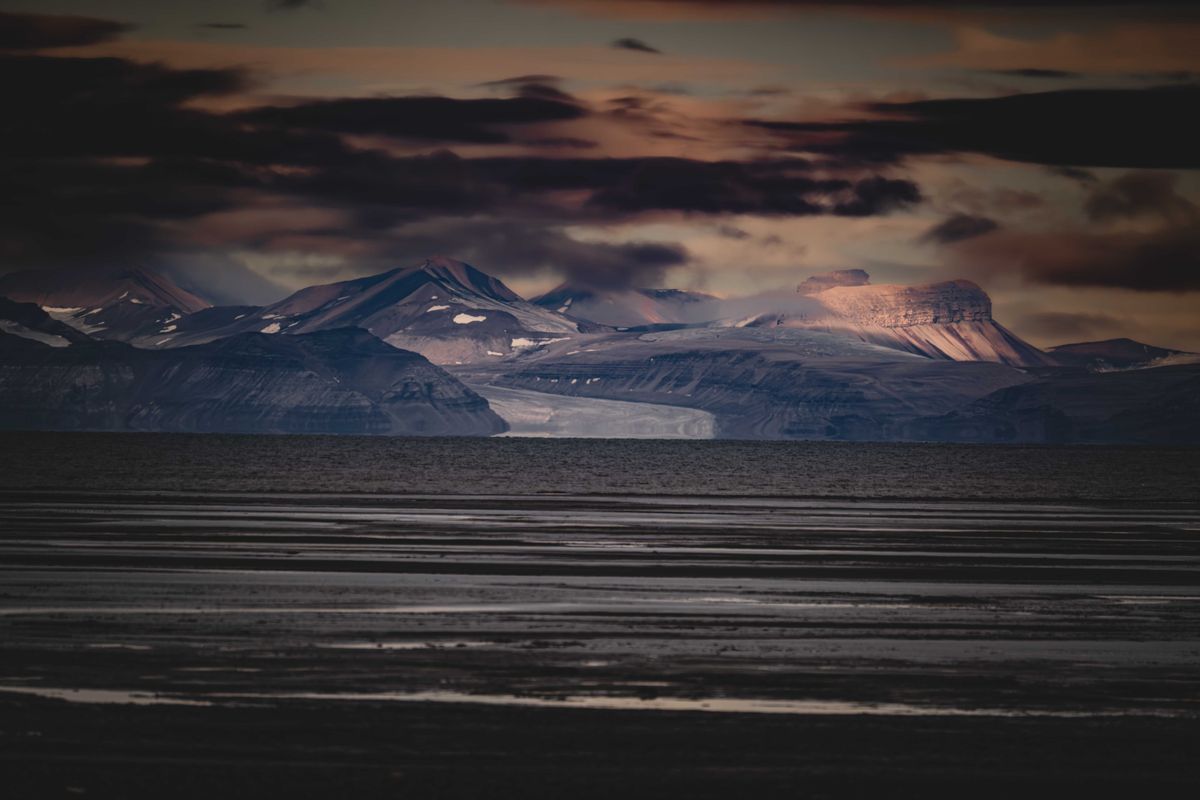
The fog burned off about an hour in, the way sea fog over cold water sometimes just gives up once the wind finds a gap, and the glacier appeared in stages: a smear of white, then a wall, then a face maybe 30 metres high dropping straight into the fjord. It talked before it showed itself properly, a low cracking sound that crossed the water a full two seconds before the ice actually let go and a slab the size of a delivery van dropped into Billefjorden.
We idled there for twenty minutes waiting for it to happen again. It didn't, not while we were watching, which is the honest average outcome of most glacier-watching and nobody's fault in particular. Outlook for tomorrow: fog forecast to return by afternoon, so the guide moved our tundra walk to first thing.
Nordenskiöldbreen day boat
The glacier talked before it showed itself, a crack that beat the actual ice by two full seconds.
What the Tundra Keeps Instead of Trees
Two degrees at 6am, wind almost nothing, the kind of still, flat light meteorologists call diffuse and everyone else just calls grey. No shadows anywhere. It's the light Svalbard runs on for most of the season, cloud acting as one enormous softbox, and after four days of it I understood why the guide kept checking the sky like it owed her money.
The ground crunched instead of gave. A metre down it's frozen solid year-round, which is what permafrost actually means, and the top thirty centimetres or so that thaw each summer are the only inch of Svalbard anything can grow in. UNIS, the university up the valley, keeps a line of white measuring stakes along one slope to track how far that thaw line creeps each year. It's crept, the guide said, without elaborating, in the tone of someone who'd rather show you the number than argue about what causes it.
A Svalbard reindeer broke that flat light entirely, coming up over a rise about sixty metres off with its head down, legs stumpy compared to any reindeer I'd seen in photos, built low and thick for wind rather than speed. It didn't run. Nothing here has much reason to run from us, no wolves on the archipelago and no obvious reason for a reindeer to know what a human on a tundra walk is even for.
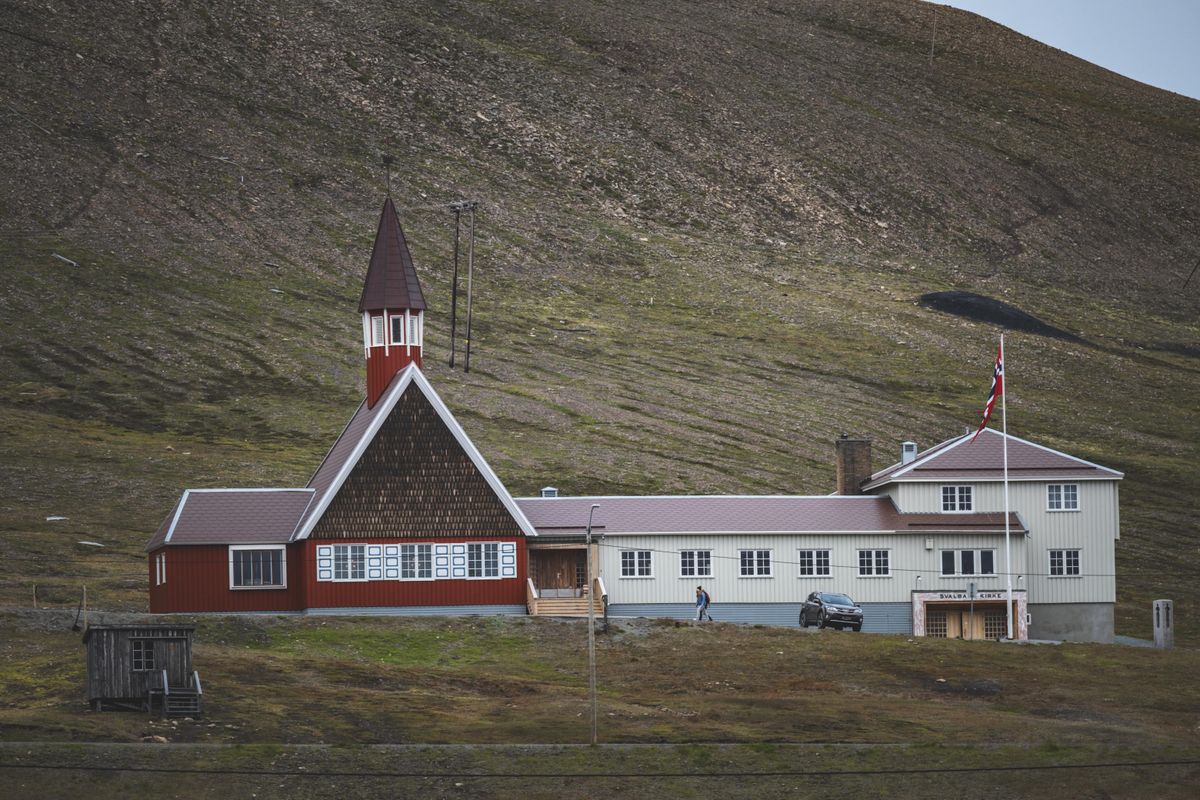
Svalbard kirke sits back toward town, the northernmost church on Earth, rebuilt in 1958 on the same permafrost everything else here negotiates with. Its doors are never locked, day or night, which the pastor apparently treats as non-negotiable rather than a security risk. A forty-minute walk further out is the Global Seed Vault, cut into the mountainside and held at a constant minus 18 degrees by the permafrost around it, no mechanical backup required if the power ever fails. Over a million seed samples, filed the way I'd file forty years of station data: not glamorous, just insurance.
By midday the cloud had thinned enough to throw an actual shadow for the first time all week, mine stretching long and strange across ground that hadn't held a proper shadow in months either. Outlook: if it held, tonight would be the first sunset Longyearbyen had seen since April.
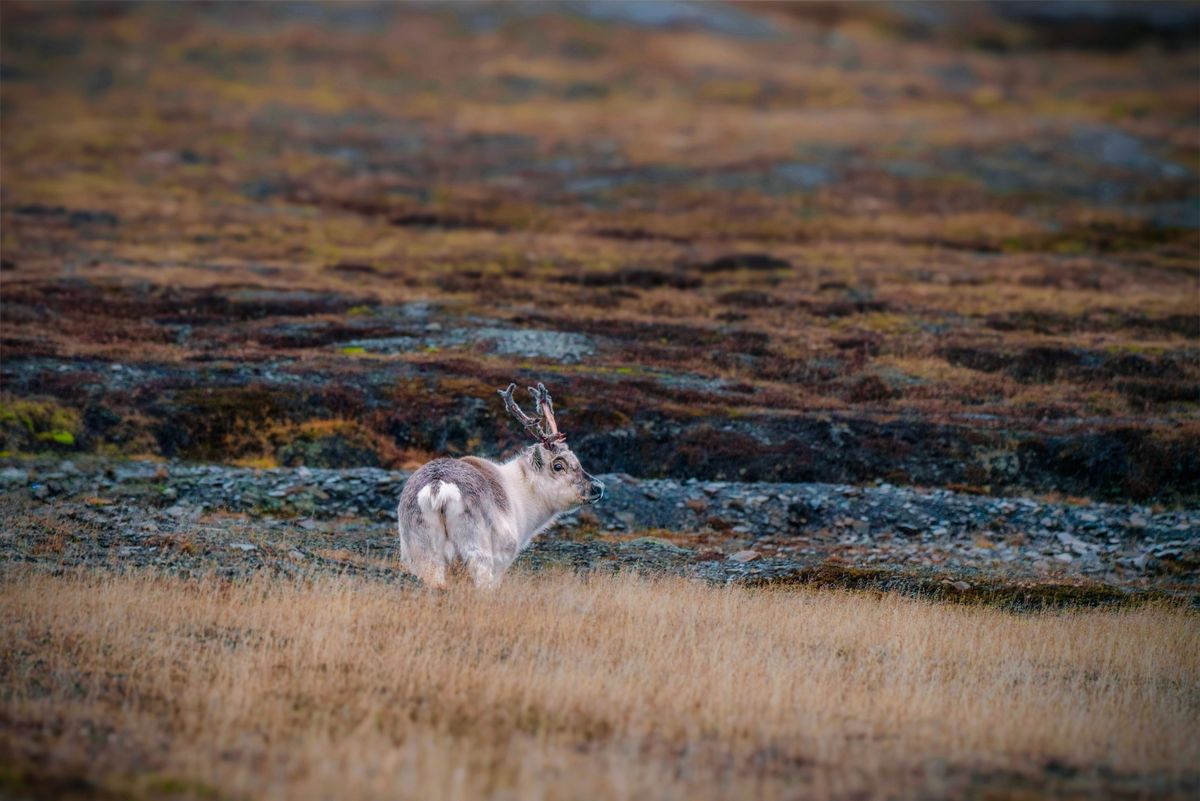
Svalbard's reindeer are built low and thick for wind, not speed, and nothing here gives them a reason to run.
The Sun Sets on Schedule, More or Less
Nine degrees, calm, a sky finally clean enough to show what it had been hiding all week. Every forecast model I'd trust back home put sunset at 23:58. Svalbard doesn't usually bother confirming its own predictions for a tourist, but tonight it did.
I spent the run-up at a dog yard on the edge of town, forty-some Alaskan and Greenland huskies chained at individual posts, each with its own barrel-shaped house and its own opinion about visitors. In August they haul carts instead of sledges, no snow left to speak of, and the guide running the yard rated every dog's mood the way I'd rate cloud cover: this one's overcast and grumbling, that one's clear and delighted, the old pale one dozing by the rocks hasn't filed a report in years and doesn't intend to start now.
It was just a sunset, the first one in four months, and nobody in the yard stopped to watch it.
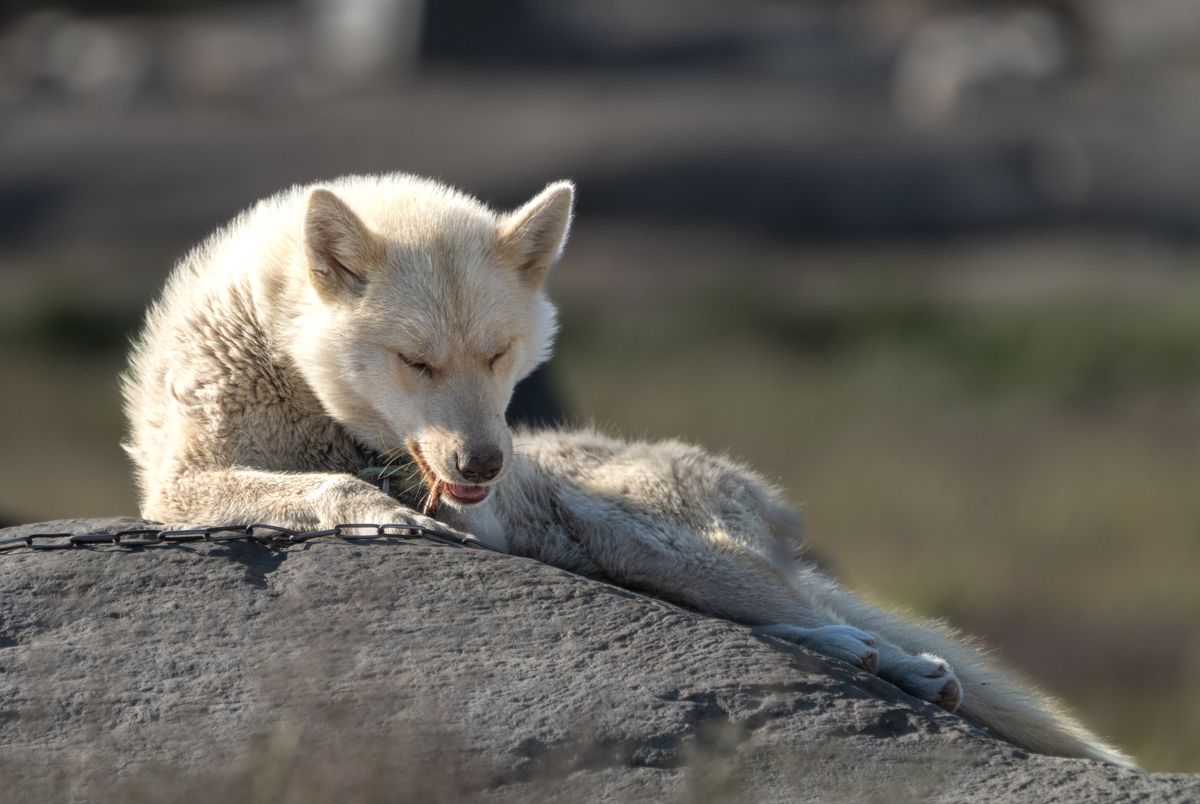
The sun went down at 23:58, more or less, sliding behind Hiorthfjellet in a long orange smear rather than dropping the way it would at the equator. Nobody in the yard stopped to watch it. The dogs certainly didn't. I did, standing at the fence with a cooling cup of coffee, and it wasn't the kind of moment that resolved into anything. It was just a sunset, the first one in four months, over in about eleven minutes, and then it was dusk for the first time since April and everyone went back to what they'd been doing. ■