Fewer Vines Than the Rhine Postcard Suggests
The Rhine Gorge looks like busy wine country, but the Mittelrhein wine region is down to 439 hectares of vines, about a fifth of its 1900 total.

Crush
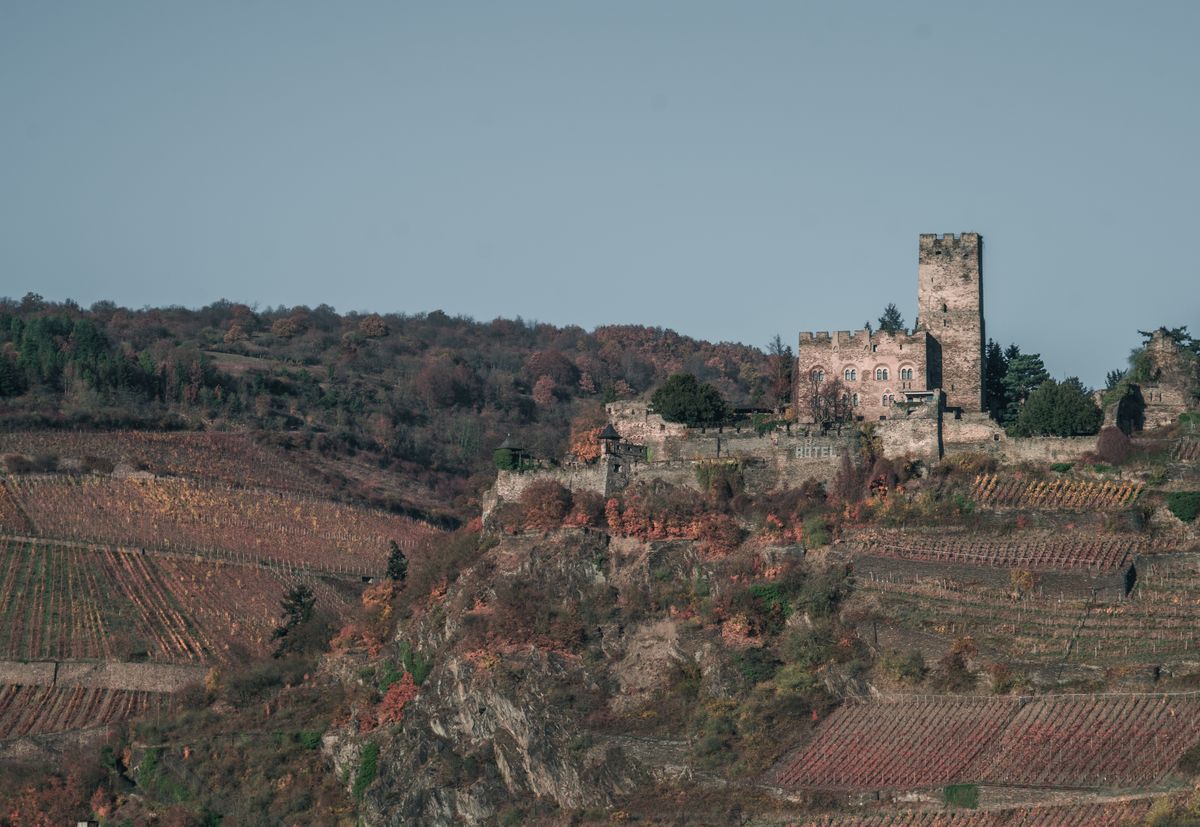
From the river, the Rhine Gorge looks like wine country going at full stretch, with castles on the rock spurs and terraced vines turning red and brown below them in autumn. This is the 65 km of the Rhine between Koblenz and Rüdesheim in western Germany, which UNESCO inscribed as a World Heritage Site in 2002 and where roughly 40 hilltop castles were built. I came for the vines, and there are far fewer of them than the view lets on.
In 1900 the Mittelrhein, the wine region along the Middle Rhine, had around 2,200 hectares of vines. It had 448 in 2013 and 439 in 2025, which means four of every five hectares are gone, and the loss comes down to the slopes: almost all the vineyards are on steep terraces, and steep-slope viticulture is difficult, labour-intensive work.
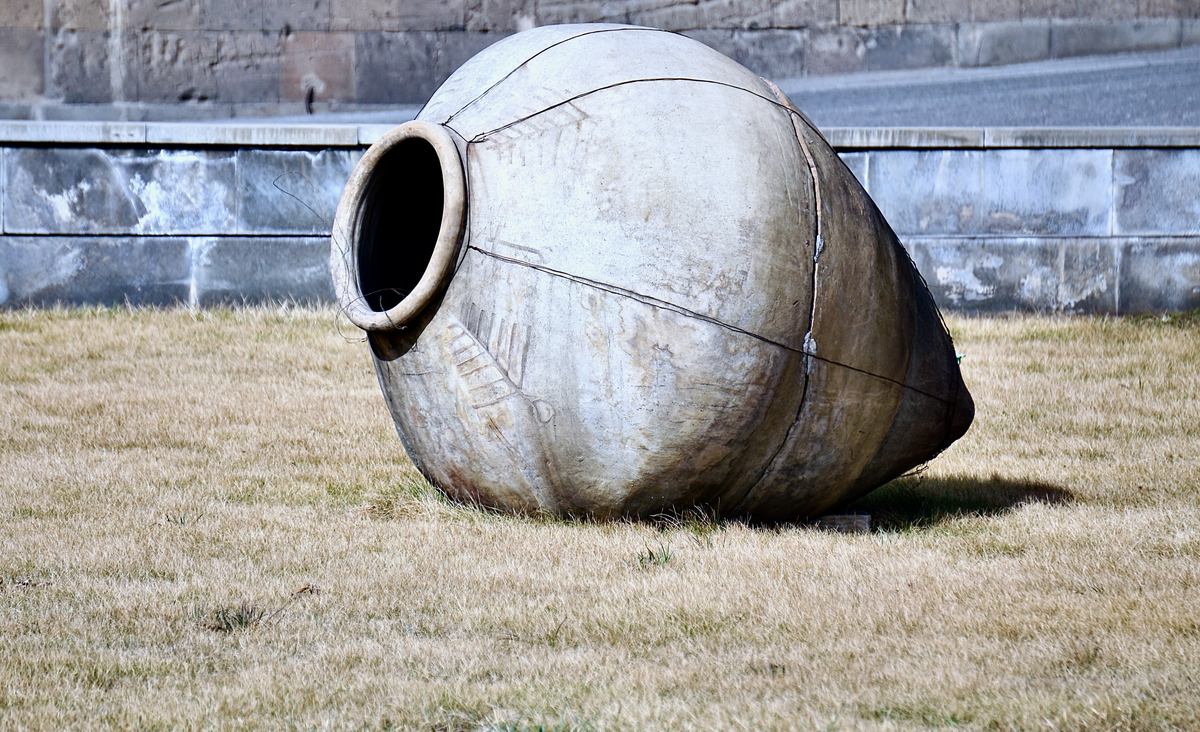
I make wine at home in the country of Georgia, fermenting it in qvevri, clay vessels buried in the ground, and on these terraces I kept working out how far each full bucket of grapes had to be carried by hand. Near Kaub, a small town on the river, a woman called Ulrike was filling one between the rows. She handed me a bunch to taste and asked whether we grow Riesling in Georgia, then went back to her row before I had finished answering. Riesling, a white grape, covers 64 percent of the Mittelrhein's vineyards.
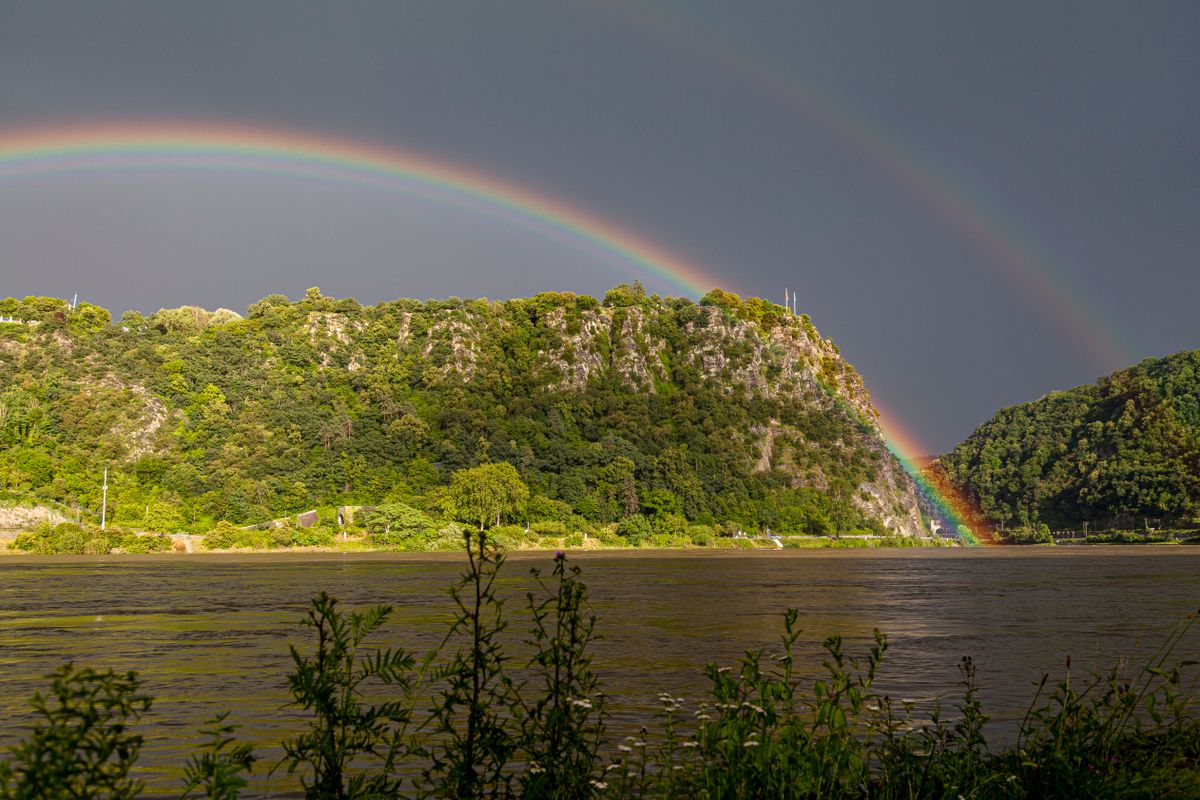
On my first trip up the river, in summer, I saw the Loreley from the opposite bank under a double rainbow. It is a steep slate rock 132 m high on the right bank of the Rhine, slate like the vineyard terraces, though this one is covered in trees. Boats have come to grief there since the first records in the 10th century, and the legend of a siren on the rock became famous after Heinrich Heine, a German poet, published his poem "Die Lorelei" in 1824.
Four of every five hectares of vines the Mittelrhein had in 1900 are gone.
Skin Contact
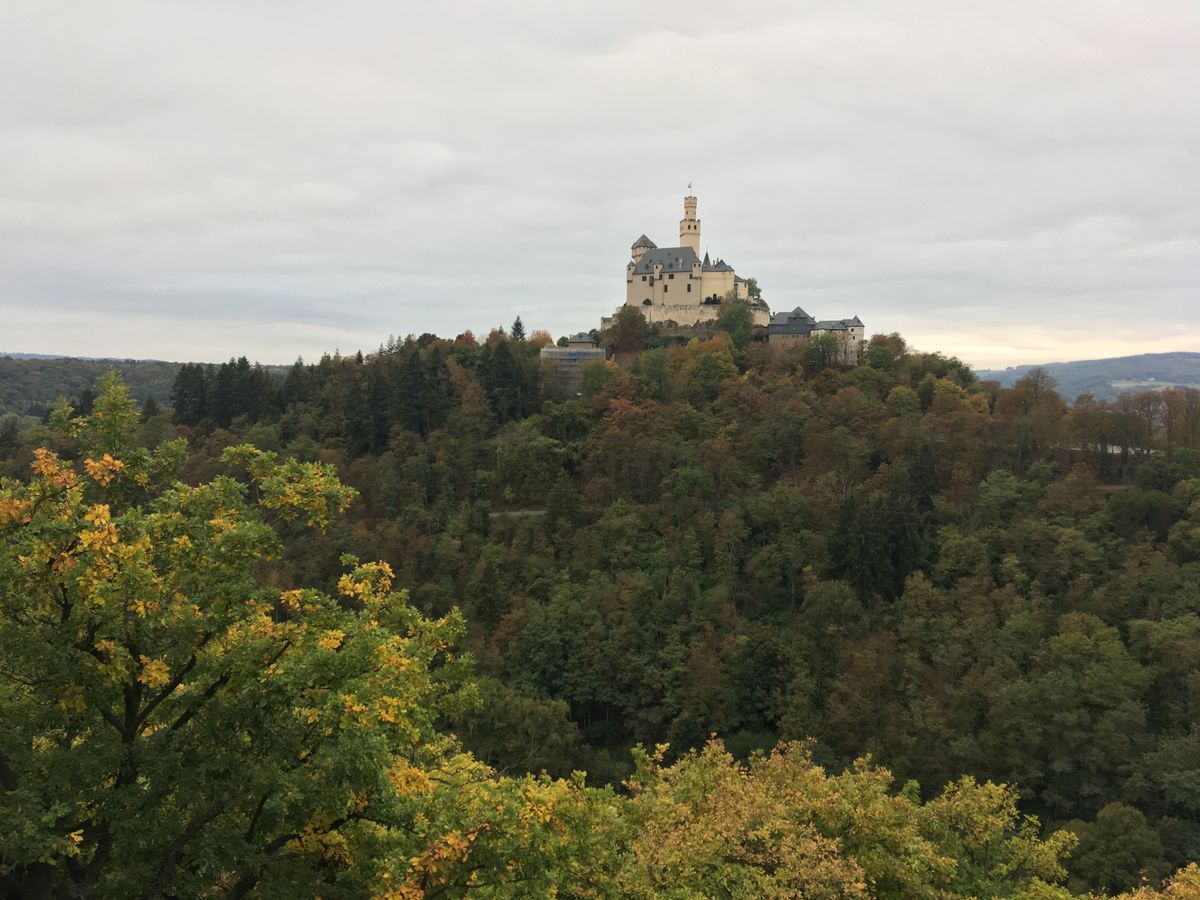
Marksburg above Braubach, in autumn colour.
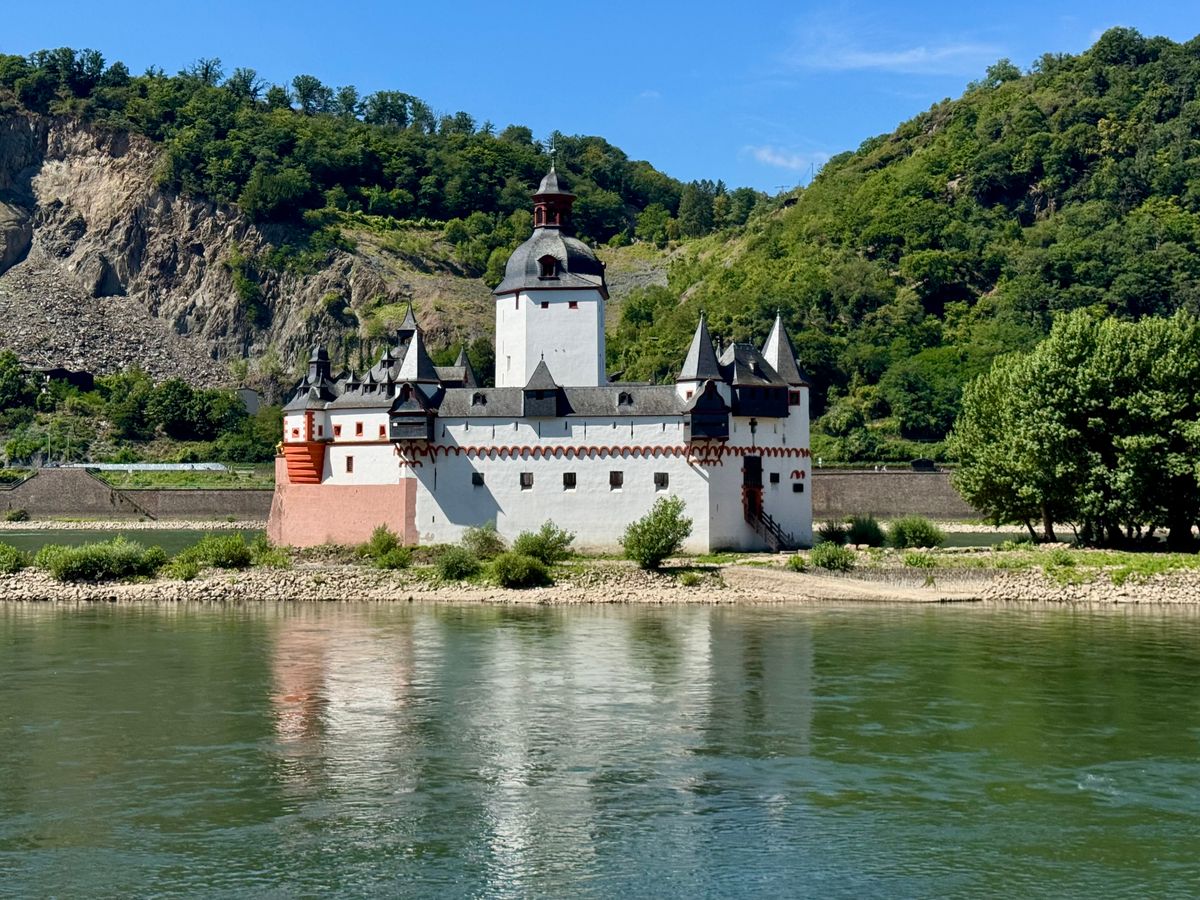
Pfalzgrafenstein, a castle on a small island in the Rhine near Kaub, was established in 1326/27 by King Ludwig IV the Bavarian to collect river tolls. When I passed it that summer the river was low, and a wide margin of pale stones showed around the island.
Ships could not dock properly on the island, so they paid their tolls at a customs house in Kaub, and chain booms were raised across the narrow passage by the castle and lowered only once the toll was paid. Collection went on until 1867, more than five centuries after the castle was founded.
Marksburg, on a forested hilltop above the town of Braubach, still has its roofs and its tall tower, and that is rare on this river: of the roughly 40 hill castles in the gorge, it is one of only two that were never destroyed, and the only one that never fell into disrepair.
The German Castles Association bought it in 1900 for a symbolic 1,000 Goldmarks, the German currency of the time, and has had its headquarters there since 1931.
Unearthing
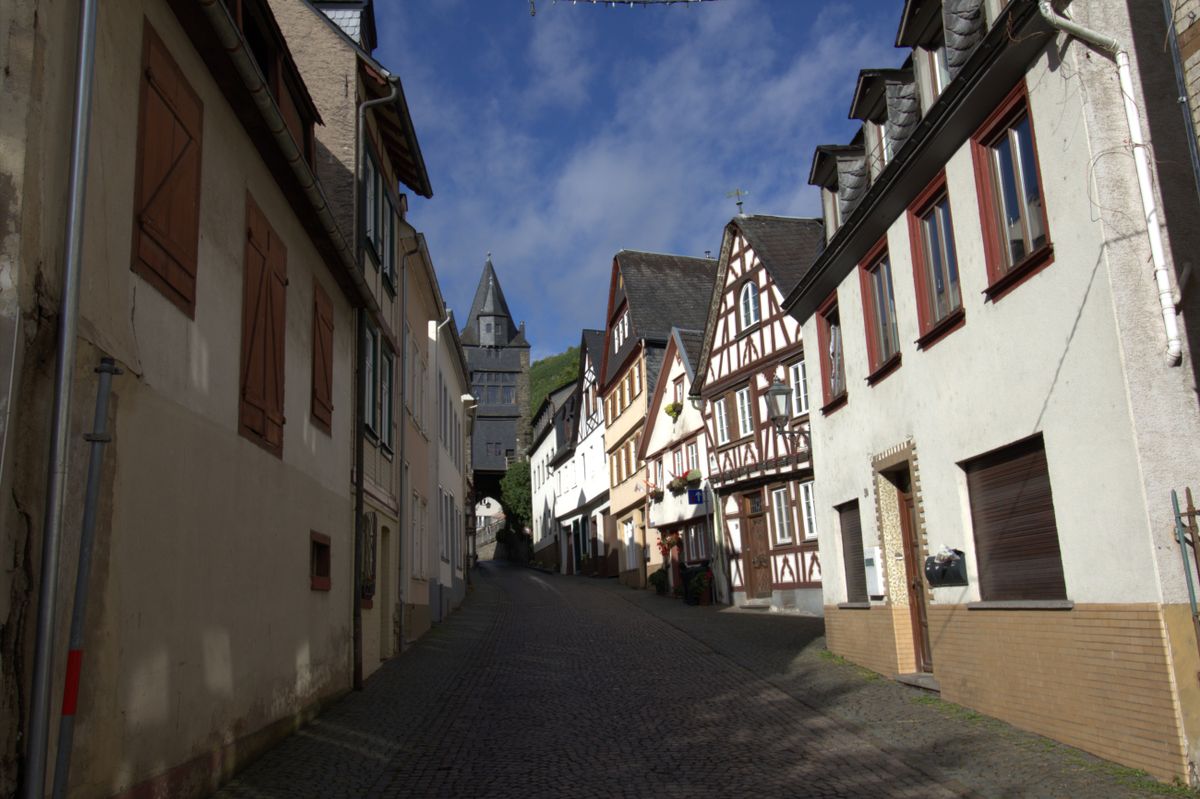
At home, unearthing is the day a qvevri is opened after months underground and I find out what the year made. My last stop on the river was Bacharach, the old wine-trade centre of the region, where I walked up a cobbled lane between half-timbered houses to the gate tower at the top.
winemaker's notes
Pfalzgrafenstein is a museum, reached by ferry from Kaub when river conditions permit, and closed in December and January.
The Loreley stands on the right bank of the Rhine.
In 1987 seven wine estates from Bacharach founded VDP.Mittelrhein, a regional association of wine estates. The group describes the region's soils as largely slate and weathered greywacke. ■