Two Breweries, One Purity Standard: Weihenstephan to Hofbrauhaus
A Bavarian quality-control specialist runs the world's oldest brewery and Munich's most famous beer hall through the same test he uses at work.
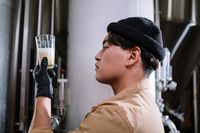
Mash: Weihenstephan, Freising
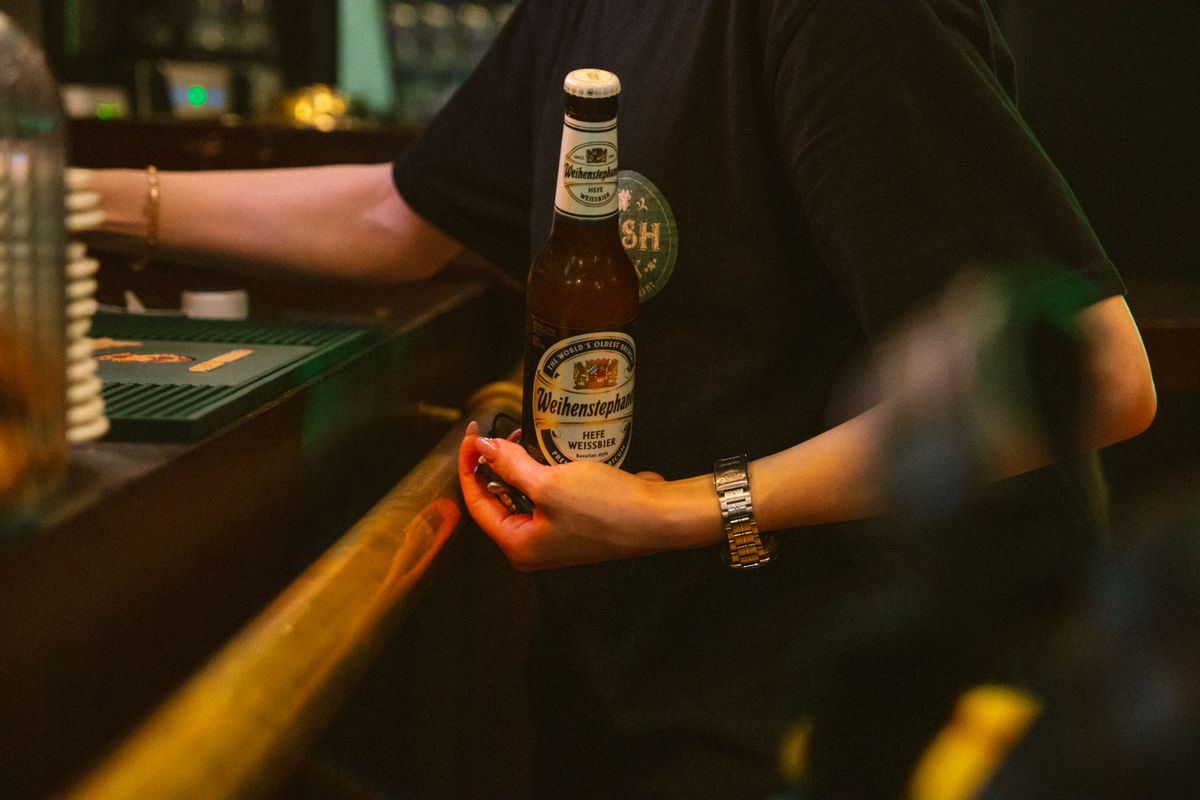
Weihenstephaner Hefe Weissbier, the brewery's flagship wheat beer, poured at a bar away from Freising.
Sixty three degrees Celsius. That is where you hold a decoction mash if you want the enzymes working without cooking them off, and it is close enough to the reading I clocked off the demonstration kettle in the Weihenstephan visitor center before I had my jacket off. Old habit. I got up the hill above Freising a little after nine, before the tour groups arrived, and looked down at the Isar doing the thing rivers do in the morning, which is nothing dramatic, just moving.
Weihenstephan has been brewing on this hill since 1040, when Abbot Arnold received brewing and selling rights from Otto I, the bishop of Freising at the time. Not a legend dressed up for the gift shop, a recorded transaction, which I trust more than a plaque with an adjective on it. Call it the oldest continuously operating brewery in the world and you are on solid ground: 986 years of somebody in this building deciding whether the batch was good enough to sell.
The gable over the entrance just says 1040 in plain numerals, no slogan underneath it, as if the year were doing all the marketing anybody needs. I have worked in breweries that print three sentences of copy on a single tap handle. This one uses four digits and lets the arithmetic speak.
Munich is not Freising, but the law that still governs what goes into my own tanks came out of a short drive from here. In 1516, Bavarian Duke Wilhelm IV signed off on barley, hops, and water as the complete ingredient list, at a meeting of the Assembly of Estates in Ingolstadt, an hour or so north. Yeast is missing from the wording because nobody in that room understood fermentation as a living process yet, they just knew it worked. Five hundred and ten years later, that is still the standard I hold everything else against, whether I am walking a working brewhouse or standing in line for a festival tent pour.
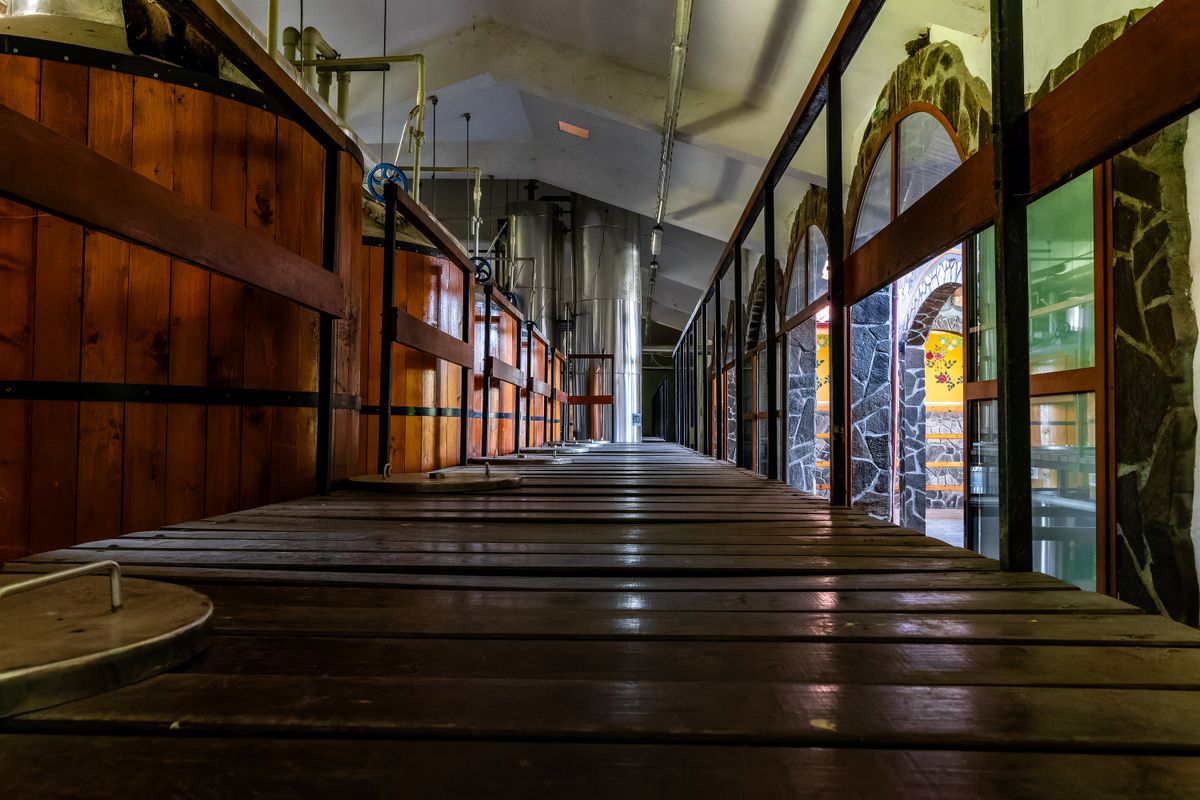
The tour takes you past copper kettles that do not look like museum pieces because they are not, they are in daily rotation, and a guide who could recite the hop bill for the Hefeweissbier without glancing at a card. I put a hand near the mash tun jacket more from reflex than need and got the even heat you want, no cold spots, nothing scorching at the seams. My own brewery runs a variant of the same three vessel layout. Watching one nine hundred and eighty six years older doing the identical job made this feel less like a holiday stop and more like auditing a very old, very competent colleague.
The Original Helles they poured us afterward held a two finger head for most of the glass, and the carbonation prickled properly on the tongue instead of going flat under the foam, the kind of detail you only notice after a decade of checking for its absence. Nothing about the pour was trying to impress anybody. It was just correct.
Downhill from the brewery gate, a kiosk was selling a bottled radler marketed as a traditional Bavarian mix, half beer and half lemon soda run from a syrup gun, the line looped over the counter like an afterthought. Traditional is doing a lot of work on that label. A proper radler is usually fresh lemonade cut in front of you, not concentrate squeezed from a nozzle into a bottle with a rustic font on it. Wouldn't pass purity law, though in fairness the purity law never had an opinion on radler, since it did not exist in 1516. Failed my personal version of it anyway.
Verdict on Weihenstephan: passes clean. Barley, hops, water, and a yeast they did not have a name for yet in 1516, all handled the way the later law would have approved of anyway. If a 986 year operating history counts as a shortcut, I do not know what the long way round is supposed to look like.
Nine hundred and eighty six years and they still won't cut corners on the mash.
— brewhouse notes
Condition: Hofbrauhaus, Munich
Four degrees Celsius, roughly, is where you want a lager arriving at the glass if you do not want the carbonic bite going flat before the head does. What actually landed on my table at Hofbrauhaus an hour after I left Freising sat closer to cellar temperature than fridge, and the foam held a good four minutes before collapsing to a thin collar. Not a complaint. That is about right for a hall this size, where the beer moves fast enough that overchilling is not the risk, understaffing is.
The building on the Platzl does not go back to 1040, nothing in central Munich does anymore, but the institution goes back to 1589, when Duke Wilhelm V set up a royal court brewery because Munich's local beer was not good enough for the Wittelsbach household and shipping in imports had gotten expensive. Heimeran Pongratz ran the brewhouse as its first brewmaster.
Demand outgrew that first building fast enough that a second brewery went up on the Platzl in 1607, the address people mean today when they say Hofbrauhaus. It stayed a court operation, drinkable by ordinary Munich residents only through connections, until 1828, when King Ludwig I opened the doors to the public.
The building most people photograph today dates to 1897, after the older one was demolished, and it is not even that structure either: a 1944 bombing raid gutted it, and what stands on the Platzl now is a 1958 reconstruction, rebuilt in the original style and timed to land on Munich's 800th anniversary. Every load bearing beam in that hall is younger than my grandfather.
Ordering runs by the liter here unless you specifically ask for a Halbe, and the staff carry a fistful of full steins stacked against a forearm without spilling the foam over the rim. That is a skill quality control never teaches you. I can tell you the exact carbonation volume in a keg to two decimal places. I could not carry four liters of beer across a crowded hall without decorating the floor.
brewmaster's notes
Order a Dunkel if the hall is loud and rushed, it holds its head under a fast pour better than a Helles does.
Weihenstephan's guided tour books out days ahead in summer, but the Braustuberl beer garden next door needs no reservation.
Skip the ice and skip the bottled radler mix. Ask for the beer straight if you want to taste what the brewer actually made.
Diluting a good pour with ice cubes is legal, but it still wouldn't pass my inspection.
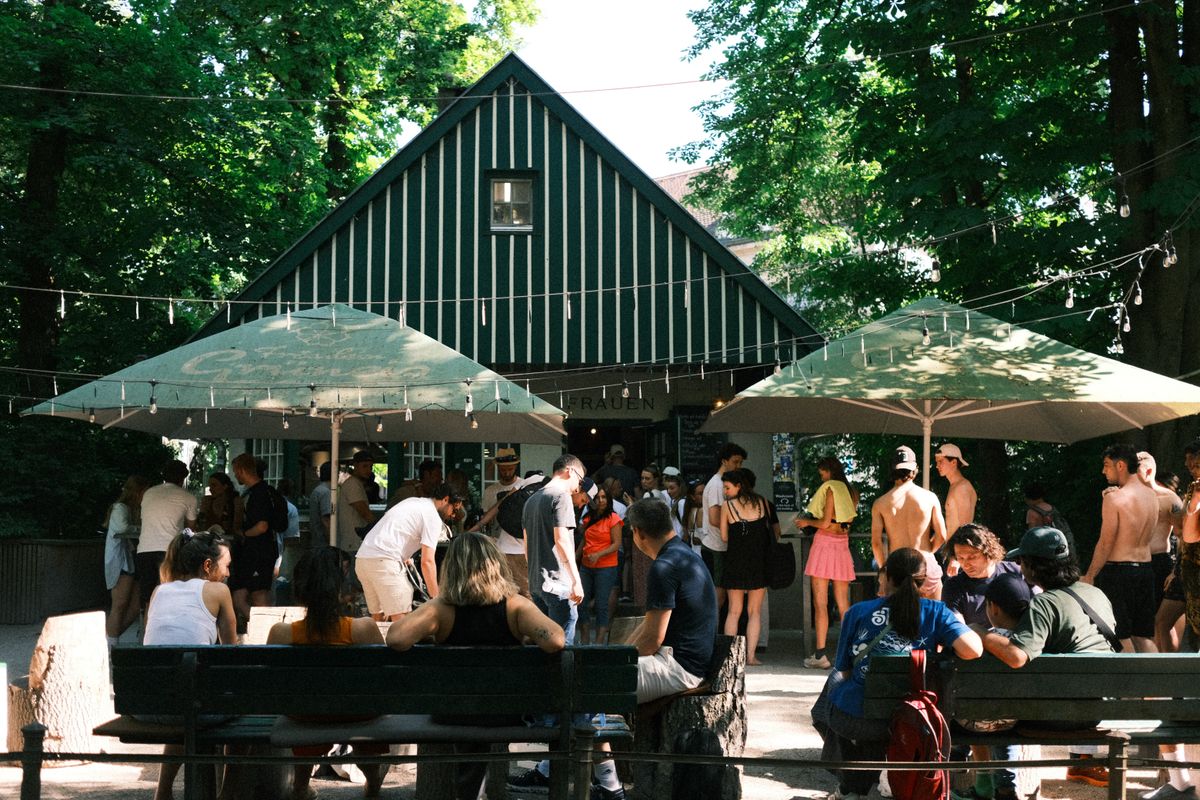
At the next table, a group dropped ice cubes straight into their Hofbrau Original, which cools it fast at the cost of thinning it more with every minute the cubes sit there melting. Nobody stopped them, it was their beer and their money, but I watched the head disintegrate under the ice and thought about how the 1516 law regulates what goes into the brew, not what a customer does to the pour afterward. Technically legal. Wouldn't pass inspection at my brewery, and it would not have gotten past me at that table either if anyone had asked.
The hall itself runs on scale rather than subtlety: long communal tables, a brass band working through Bavarian standards from a stage in the middle, a painted ceiling in the blue and white Rautenmuster pattern that shows up on every flag and beer tent awning for a hundred kilometers around. It is louder than Weihenstephan's tasting room by an order of magnitude, and it is supposed to be. This place was built to serve a city, not to certify a process.
Food arrived without much finesse either, a pretzel the size of a dinner plate and a Schweinshaxe that had clearly spent longer in the oven than most of the beer had spent in the tank. Nobody at Hofbrauhaus is chasing subtlety. The kitchen and the brewhouse are both running high volume, high turnover programs, and neither one apologizes for it.
Final verdict, if you are asking which one to trust more: Weihenstephan is the standard because it never had to become anything other than a brewery, 986 years of one job done the same way on the same hill. Hofbrauhaus is the same three ingredients run through a far bigger machine, rebuilt twice, aimed at a crowd instead of a case study. Both pass. Only one of them would still pass if nobody in the room were watching. ■