The Blue Gets Bluer Going South
From a covered market in Naha to a wind-carved cape to a quiet beach in the Kerama Islands, the water only gets bluer.

Steam rises off the pavement before nine in the morning, carrying the smell of frying pork and incense smoke drifting from a shrine wedged between two still-shuttered stalls, and under it something salt-heavy that never quite leaves the air on this island. The covered arcade holds the smell close, the way a greenhouse holds heat. This is Heiwa-dori, Naha's covered market street, though none of the vendors folding up their night awnings and stacking crates of goya and purple sweet potato seem to think of it by that name at all.
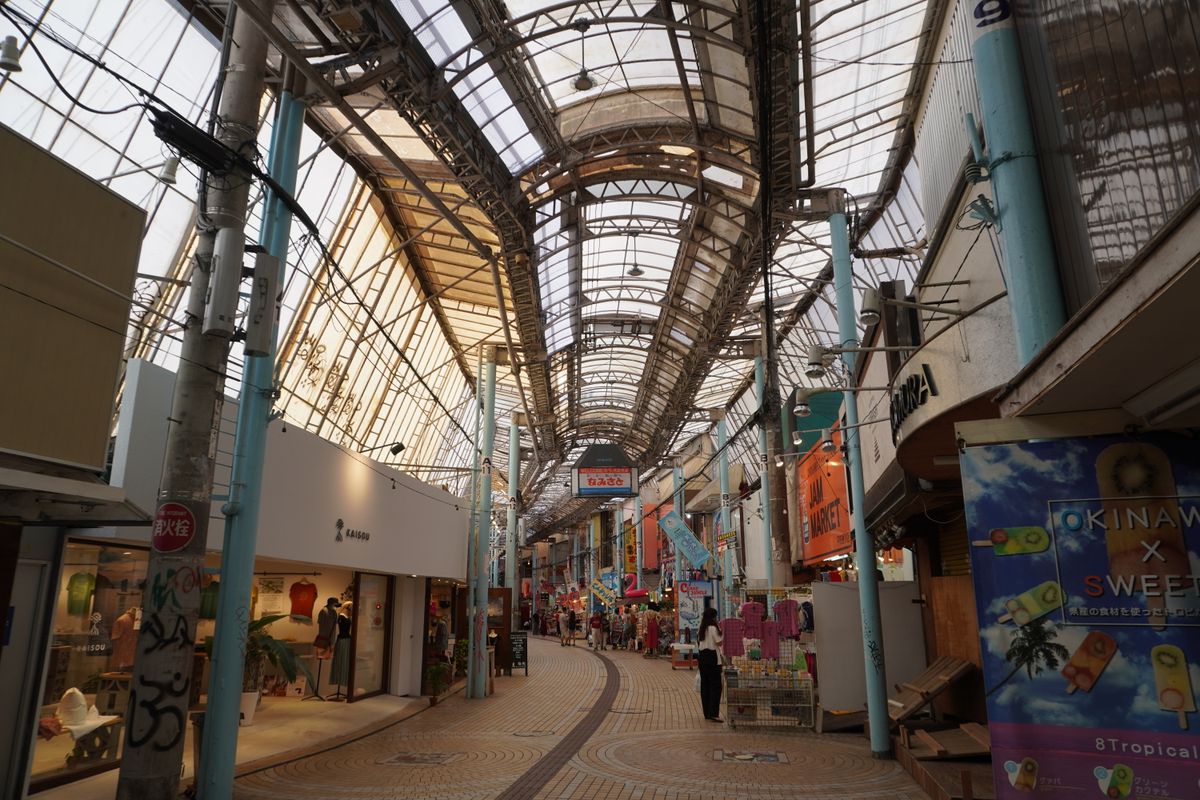
Naha
An old woman in a faded apron sweeps the brick paving in front of her stall, not because it needs it, the street is already clean, but because the motion seems to settle something before the day's first customer arrives. She works the broom in short strokes toward the gutter, pauses to nod at a delivery boy wheeling a hand truck of ice past her, and goes back to sweeping. Nobody photographs this. Under the arcade's arched skylight roof, pale teal steel columns march off toward Kokusai-dori, and the light comes down soft and diffuse, like the inside of a paper lantern.
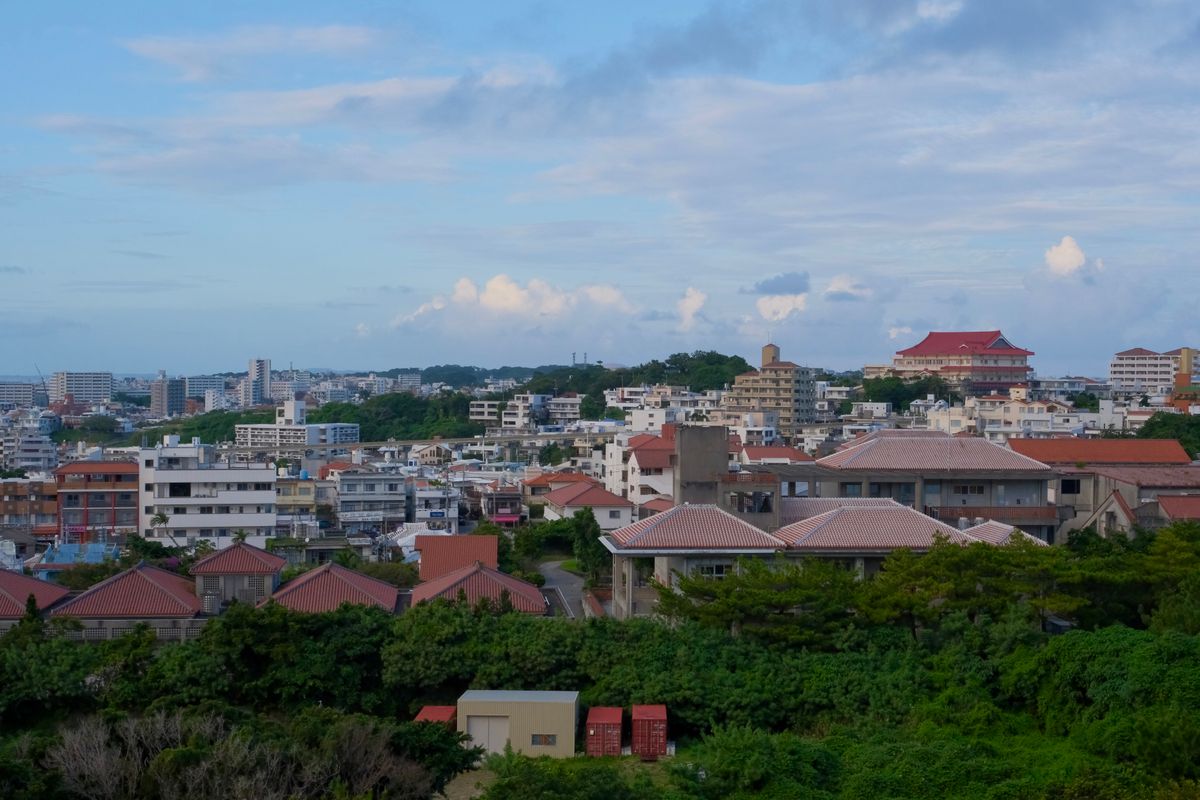
The bus to the west coast leaves Naha behind in under an hour, the city thinning into cane fields and car dealerships and then, abruptly, the blue starts. Okinawa's main island is narrow enough that the sea seems to wait behind every third building, and near Onna village the land breaks off into cliffs the color of old bone. Cape Manzamo sits at the tip of one of these, a name that translates loosely to a field big enough for ten thousand people to sit on, though on this quiet weekday morning there are perhaps thirty.
Cape Manzamo
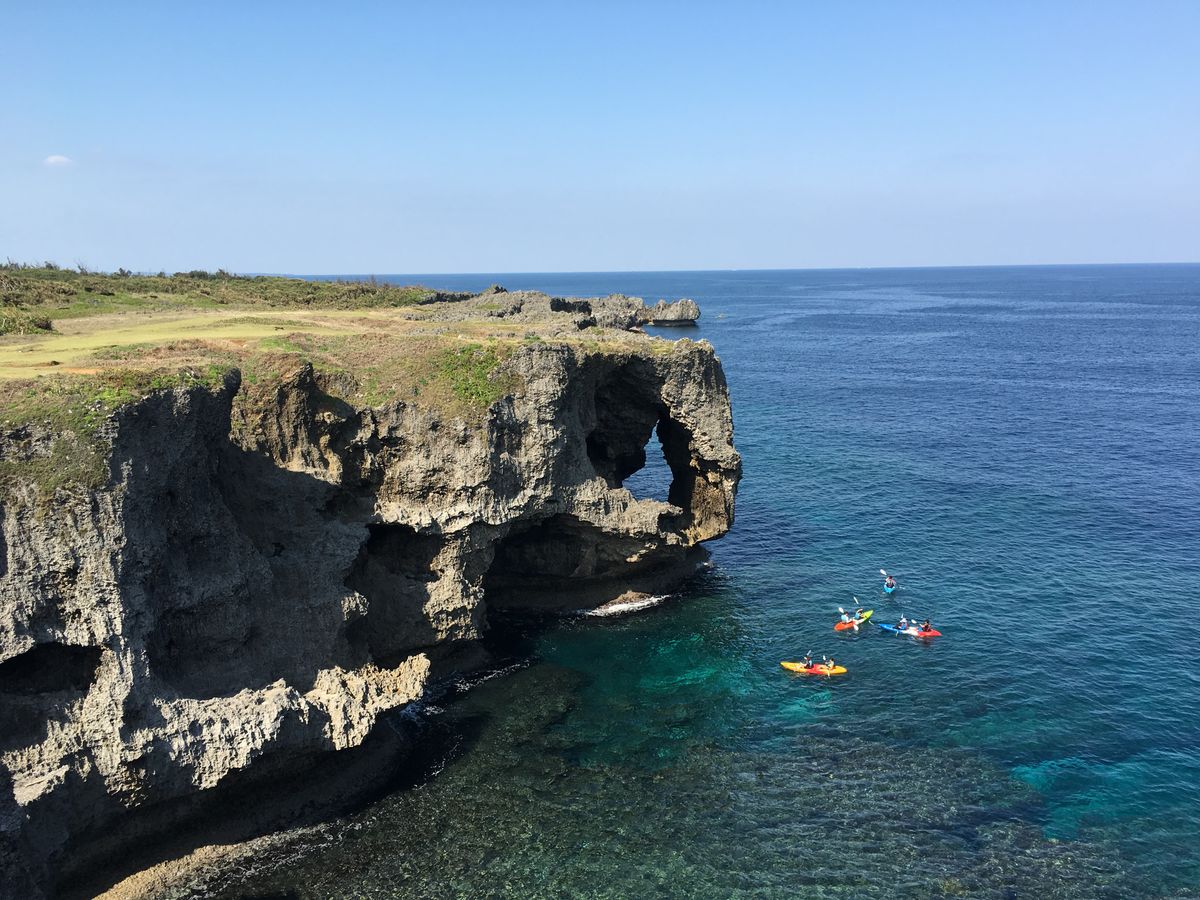
The wind at Manzamo never stops, it just changes which direction it insists on, pressing shirts flat against backs and pulling loose hair straight out from scalps until strangers start looking like siblings. Never stops. The limestone underfoot has been carved by centuries of that same wind into a low arch that locals say resembles an elephant's trunk dipping toward the water, and enough visitors repeat the comparison that it has become the only way anyone describes it anymore. Below the cliff the reef flattens the water into something closer to glass than sea, striped in turquoise bands.
Four kayaks drift on the reef shelf below, yellow and orange and one banked blue, tied loosely to a mooring so their paddlers can wade and photograph the arch from the water instead of the clifftop. From above they look like scattered confetti on a sheet of glass. A woman at the railing counts the kayaks out loud to her son, one, two, three, four, and he loses interest before she finishes and wanders back toward the car park, and she keeps looking anyway, alone now at the rail, in no hurry to follow him.
Okinawa doesn't hand you its scale all at once. It offers a cliff, then a reef, then a chain of islands smaller still, each one a held breath before the next.
Tokashiki
The ferry out of Tomari Port takes a little under an hour, and somewhere past the harbor breakwater the color underneath the boat changes from the working green of the port to a blue that looks lit from below. Passengers who spent the first twenty minutes on their phones start photographing the water instead. Tokashiki appears first as a green ridge, then as a scatter of guesthouse roofs above a single curve of white sand, one of the Kerama Islands that Naha residents talk about the way people elsewhere talk about a lake house, near enough for a day trip, far enough to feel like leaving.
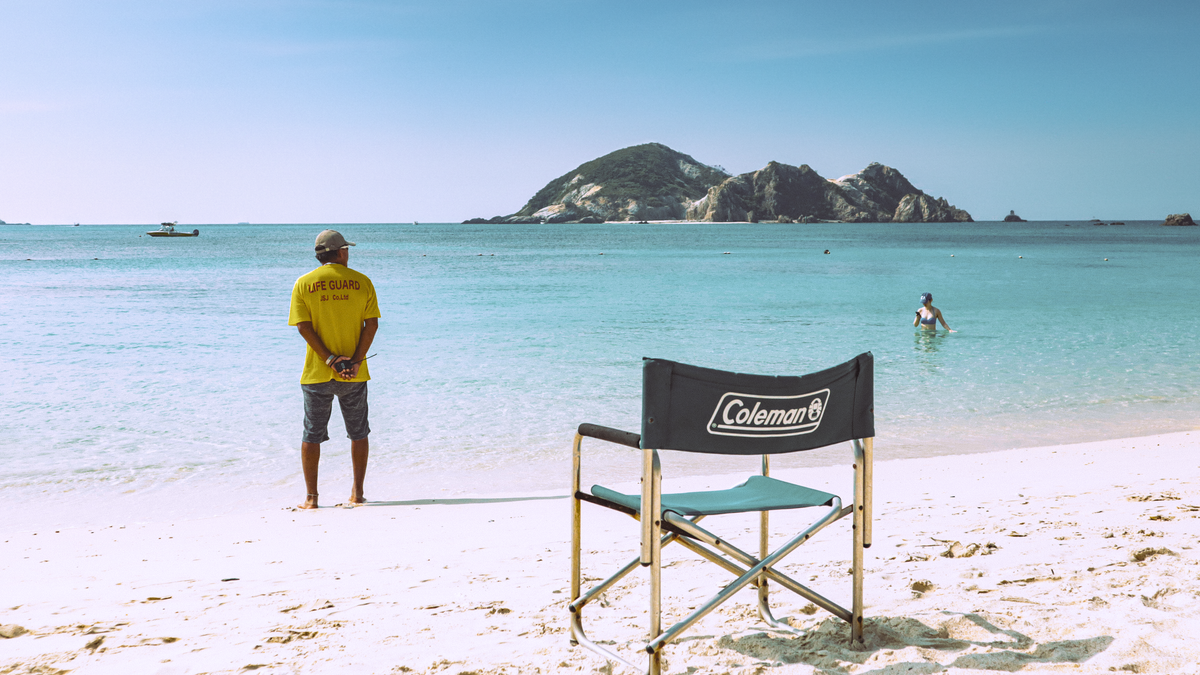
A lifeguard stands at the tideline in a yellow shirt with LIFE GUARD printed across the back, hands clasped behind him, watching a single swimmer move in slow, unhurried strokes toward the rocky island offshore. He doesn't blow a whistle or wave anyone in. He just watches, weight shifted onto one hip, the posture of someone who has done this every day of a short summer and will do it again tomorrow whether or not anyone needs him to. The empty camp chair beside him faces the same direction. Nobody comes to sit in it while I'm there, and the tide keeps coming in anyway. ■