Islands That Keep Their Own Clock
Between limestone cliffs, guardian statues, and the clear water of the outer islands, this stretch of the Ryukyu chain moves at a pace the mainland doesn't share, and Naha holds onto it even after dark.

Cape Manzamo: The Shape of Arrival
The air here arrives before the land does, thick with salt and something sweeter underneath it, plumeria maybe, or the diesel breath of the ferry terminal, and by the time I step onto the tarmac at Naha the humidity has already pressed my shirt flat against my back, a small surrender I make every time I return to these islands.
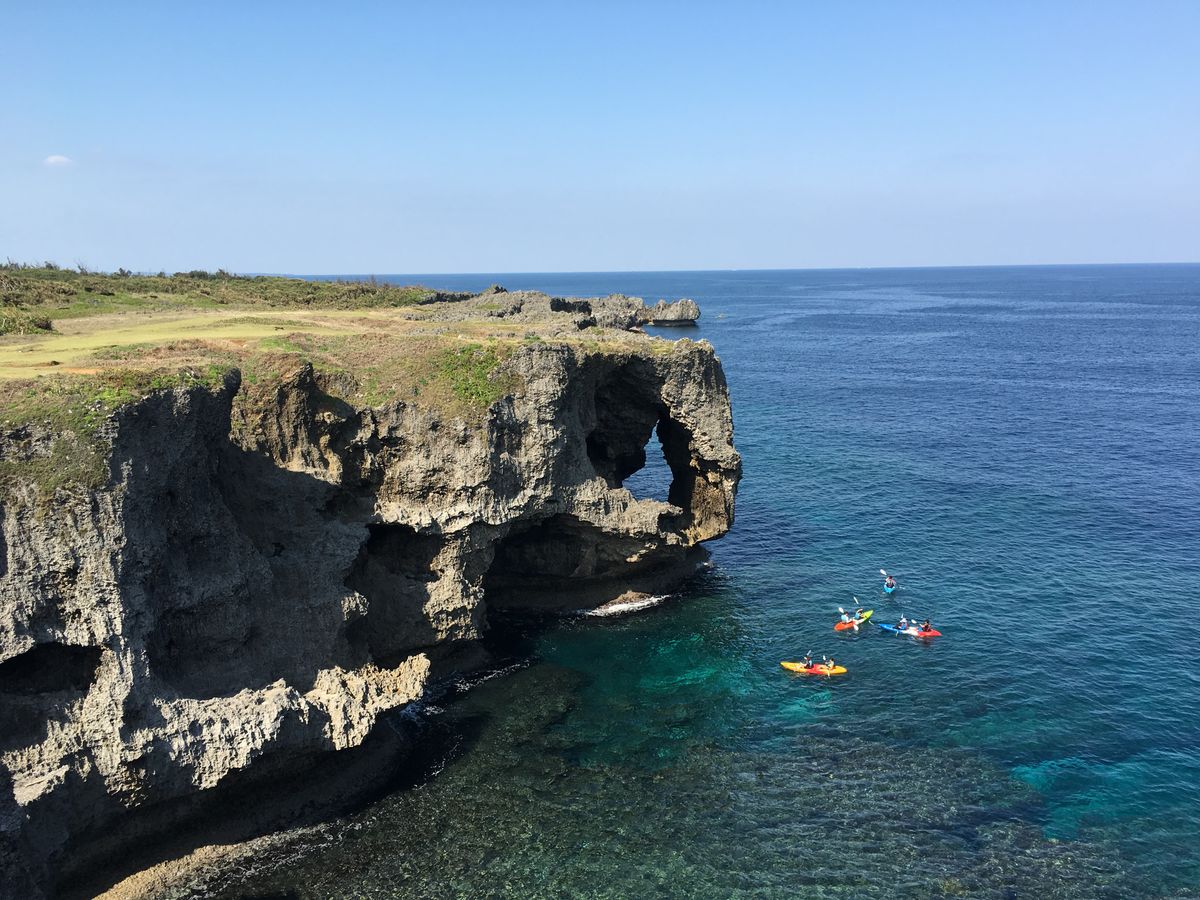
The road from the airport narrows as it leaves the city, and the color of the water changes with it, moving from the flat gray of the East China Sea near the runway to something closer to glass, then something closer to light itself, by the time I reach Cape Manzamo. The cliff face here has been folded by wind and tide into the shape of an elephant's trunk dipping toward the water, and every visitor who climbs the limestone path stops at the same spot to frame it, though none of them, myself included, can explain afterward why the shape moves them the way it does. Below, two kayakers cross the turquoise water in a line so straight it looks drawn with a ruler, their paddles catching the light and losing it, catching it and losing it again.
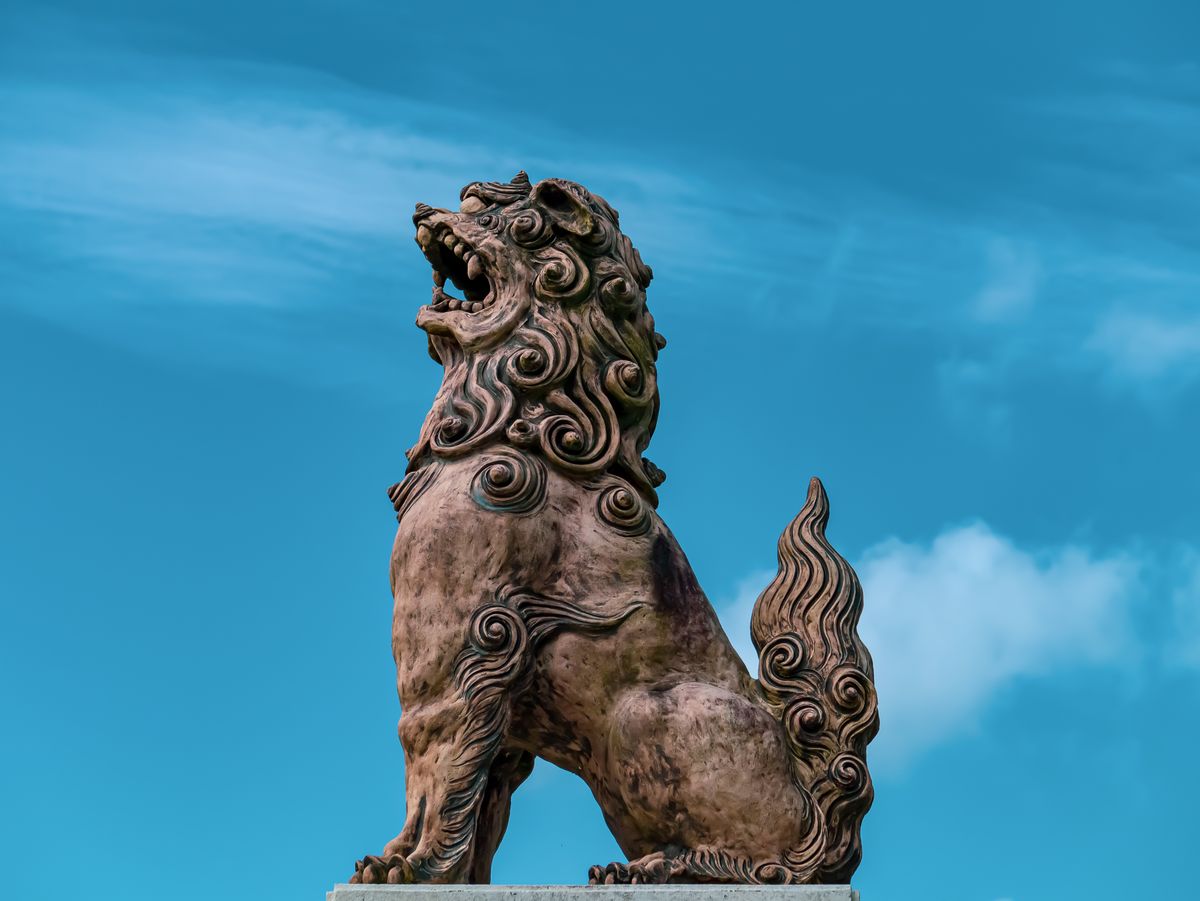
It is the shisa that tell you where you actually are. Okinawa announces itself first through these lion-dog figures, cast in clay or carved from coral limestone, set in pairs at gates and rooflines the way mainland Japan might use a nameplate or a bell. One statue keeps its mouth open, holding the position of a held breath, calling luck in. Its partner keeps its jaw shut, guarding the threshold like a bouncer who has seen every kind of trouble the night can offer. The guesthouse where I am staying has its pair worn smooth at the ears, decades of hands reaching up on the way in and out, and the owner, an older woman sweeping the entrance at seven in the morning, pauses her broom each time to rest two fingers on the open-mouthed one before she goes back to the leaves.
I leave a coin I don't need on the ledge beside the statues, an old habit of tourists more than locals, and start back down the limestone path toward the car, the trunk-shaped rock behind me now catching the last flat light of the afternoon.
Kerama and Miyako: Water Without Bottom
The ferry to the Kerama Islands takes less than an hour, but the water underneath changes character before the mainland of Okinawa has even fully dropped from view, deepening from teal to a blue with no name I know, then thinning again as the boat slows into the shallows off Zamami. A deckhand ties the mooring line without looking at his hands, the rope finding the cleat by memory alone, and somewhere below the engine idle a child asks her mother, too loudly, whether the water is real.
It is real, and it is closer to swimming through unclouded glass than through anything I would call sea. Off the reef the coral spreads in low terraces of brain and staghorn, parrotfish grazing across it in bursts of color that seem too bright for something living quietly on the bottom, and twice, without ceremony, a sea turtle rises past me toward the surface for air and sinks again, unbothered, as though I were a passing cloud rather than a stranger in its garden. Miyako Island, further out again, holds the same clarity in a different mood, its water paler in the late afternoon, more silver than blue, the sand underneath so fine it moves like smoke when a fin brushes it.
On the boat back, a group of visitors debate loudly which filter will do the color justice, holding their phones at arm's length toward water that needs no correction at all, and I watch the impulse fail, again and again, to catch what the eye is already seeing for free. The captain, waiting for the last swimmers to climb the ladder, cuts the engine early and lets the boat drift the final few meters into the harbor, an old habit, he tells me, so the wake doesn't rock the boats already moored.
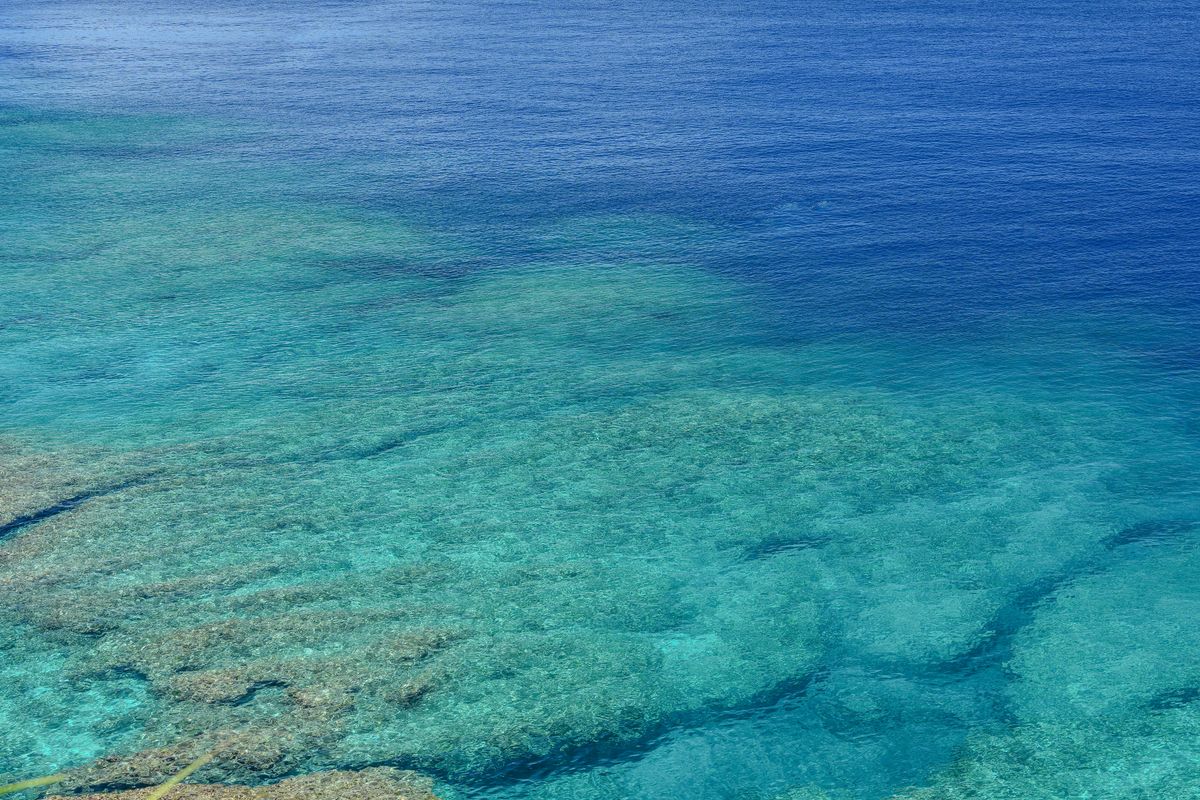
The water here does not reflect the sky so much as replace it.
Naha: The Hour After the Shops Close
By ten the department stores on Kokusai Street have pulled their shutters, and the tourist noise drains out of the avenue almost all at once, leaving behind a quieter city that was there the whole time, underneath the souvenir shops and the taxi horns, waiting for the lights to thin. The smell changes too, less sunscreen and shaved ice now, more grilled skin from a yakitori stall running its last orders, the smoke curling up under a bare bulb.
This is Naha's real hour, the one after the shops close and before the bars fully take over, when the street belongs to people running the errands that don't fit into daylight, a woman walking a dog in pajama bottoms, a delivery scooter idling outside a closed pharmacy, someone's grandmother wheeling a shopping trolley past a shuttered arcade as though it were three in the afternoon. Okinawa keeps its own clock even here in its biggest city, looser than Tokyo's, unbothered by the hour on anyone's phone.
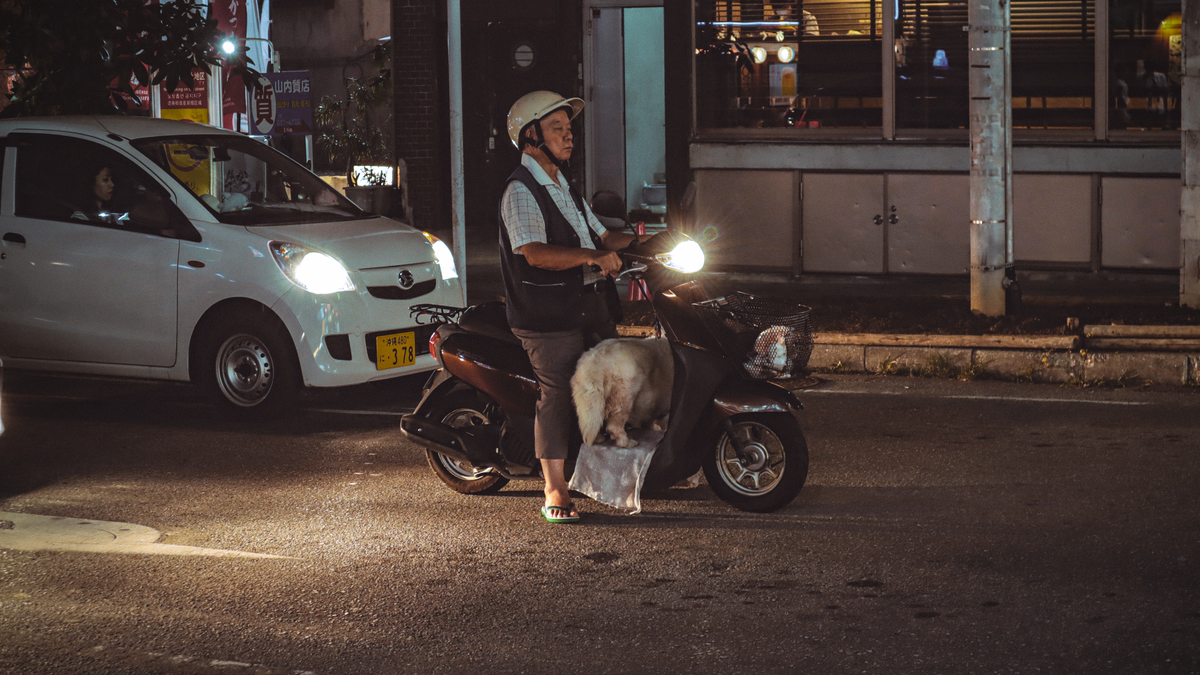
At the crossing an older man idles his scooter at the red light, headlight cutting a small cone through the dark, and tucked against his chest, held in place with one forearm the way you'd carry a folder of documents, is a small white dog, ears back against the wind of the ride, eyes open and steady on the road ahead. The man doesn't look down at the dog and the dog doesn't look up at him. They have done this before. When the light changes he pulls away without hurry, the dog's fur lifting slightly at the ears, and the two of them are gone around the corner before I think to wonder where, at this hour, they could possibly be going. ■