The Fes Tannery, Cross-Examined: Judging the Medina's Oldest Sales Pitch
A high school debate coach descends into the Chouara Tannery's dye vats and finds the eleventh-century craft holds up, the terrace pitch built around it much less so.

Fes: The Tannery Terrace
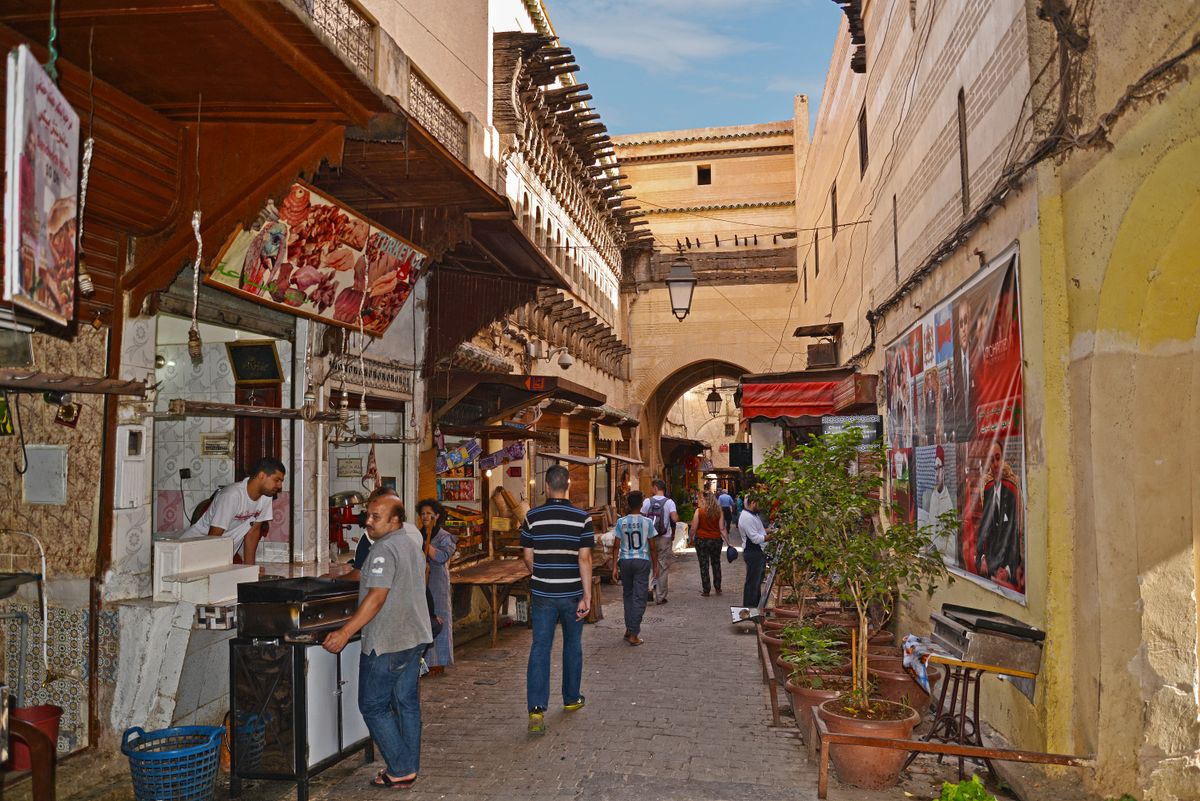
The route down from the tannery terrace, one turn among many that all end at a shop.
Resolved: the Fes tannery smell is worse in photos. Every guide opens with some version of that claim, mint already crossing the room toward your face before you've said a word, and it holds up for about four seconds once you're actually standing over the vats. The smell is not worse in photos. It is exactly as advertised, and the guide knows it, which is worth noting before the tour has properly started.
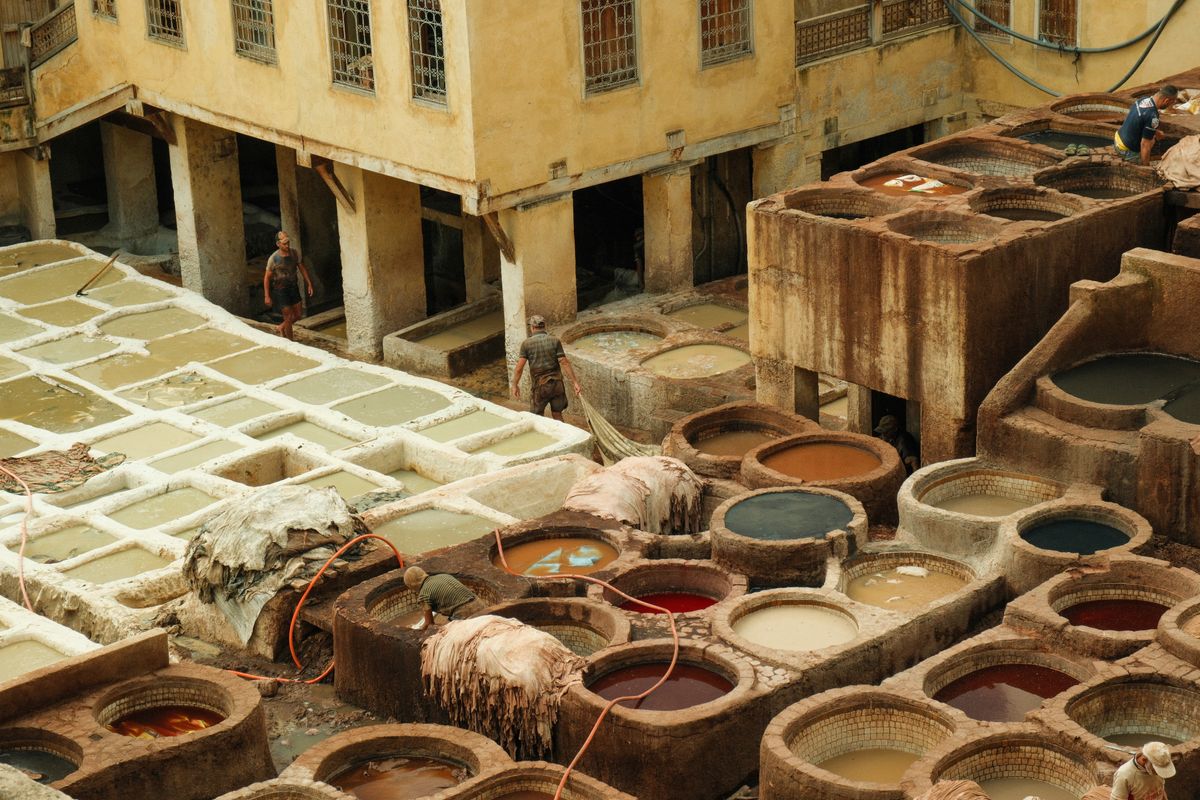
The process itself does not need embellishing, which makes the embellishing that follows more interesting. Hides arrive at Chouara Tannery, in the old medina of Fes el-Bali, and go first into the round stone tanks nearest the entrance, a mixture of cow urine, pigeon droppings, lime, and salt doing the unglamorous work of stripping and softening leather that has been done here, by most estimates, since the eleventh century. Only after that do the hides move to the dye vats the postcards actually want, ochre and saffron yellow and indigo blue and the poppy red that photographs best from the terrace. The oldest functioning tannery in the world does not need a narrator. It has one anyway.
The guide's account of the pigeon droppings is technically sound and rhetorically loaded, and both things are true at once. He explains, correctly, that the droppings supply ammonia the tanning needs, a real chemistry lesson delivered like a magic trick, pause included. What he does not explain is why the same beat, the same pause, the same upward glance to check the reaction landed, plays out at every terrace along this stretch of the quarter. A demonstration blocked and rehearsed this precisely is not lying to you. It is coaching you, and coaching is not testimony.
Award the mint a point and dock the framing one back. It works, genuinely, crushed and held under the nose the way every guide hands it over, and the smell recedes into something you can stand next to for twenty minutes instead of two. The framing calls this hospitality. The evidence says it is standard equipment, issued to every visitor without exception, which makes it closer to a hard hat than a gift. Generosity handed to a hundred percent of the room is a safety procedure with better branding.
Verdict: the demonstration is real, and the tannery's claim to the eleventh century is not in dispute. The performance built around it, mint and pause and upward glance, is a closing argument for a shop you haven't seen yet. Save your applause for the terrace. Save your money for what's actually being sold.
Resolved: the Fes tannery smell is worse in photos.
Fes: The Leather Stall
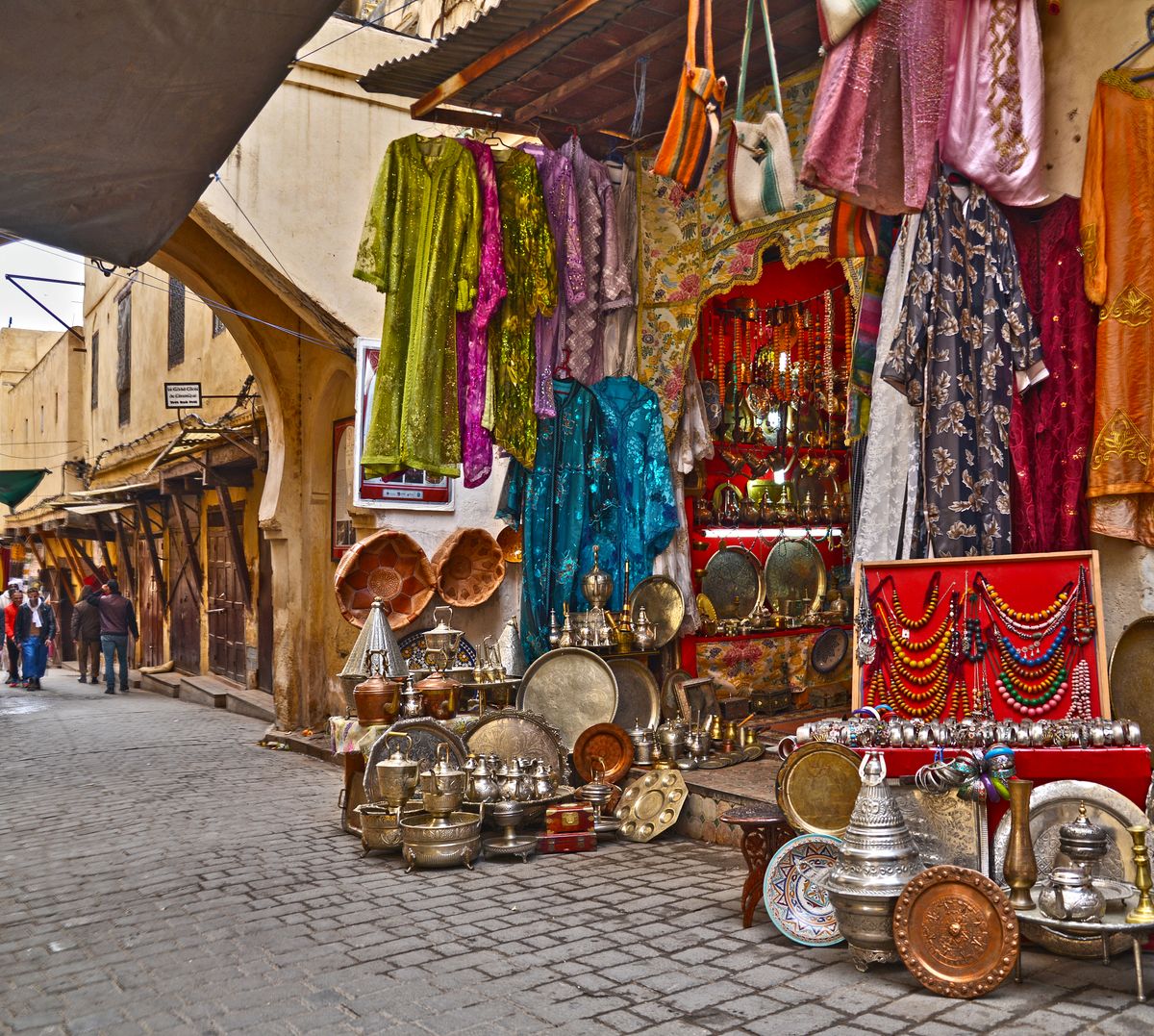
Resolved: the stall owner wins this round on craftsmanship and loses it badly on the opening price, and the margin of loss is not close. He unrolls a bag dyed the same poppy red as the vats upstairs, stitched by hand along seams that don't pucker, and names a number that assumes you arrived yesterday. Both facts are true. Only one of them should set the price.
His pitch runs the same three claims in the same order every time, which is itself evidence of something. The leather is goat, not the cheaper split hide sold two stalls down. The dye came from the tannery visible from his own doorway, not a chemical vat somewhere off the tourist route. And the price, he says, is already a friend's price, offered before any haggling has technically occurred. That third claim collapses the moment you turn to leave and the number drops by nearly half without your having said anything at all. A friend's price that revises itself downward at the door was never a price. It was an opening bid dressed up as a concession.
The guide who walked me here, out of a dozen stalls selling a nearly identical bag, is not a neutral witness, whatever his introduction implied. He gets a percentage, a well-documented arrangement in this quarter and not a secret one, and his enthusiasm for this particular stitching is therefore evidence of a financial relationship before it is evidence of quality. That does not make the bag bad. It makes his testimony inadmissible on the question of whether it's the best one in the medina, which is a different question than whether it's a good one.
Call the foul on the line about locals. He mentions, unprompted, that this is where residents of Fes actually shop, a claim that does not survive a glance at the stall's entire clientele, all of whom are holding the same paper map I am. A shop can be excellent and still not be the one locals use. Claiming both is not persuasion. It's overreach, and overreach costs points in any round I'm judging.
Verdict: buy the bag if you like the bag, at whatever number you land on after the price has finished revising itself. Don't buy the story about the friend's price, the local secret, or the guide's disinterested expertise. Those are three separate arguments and none of them earned the win.
Fes: The Medina Gate
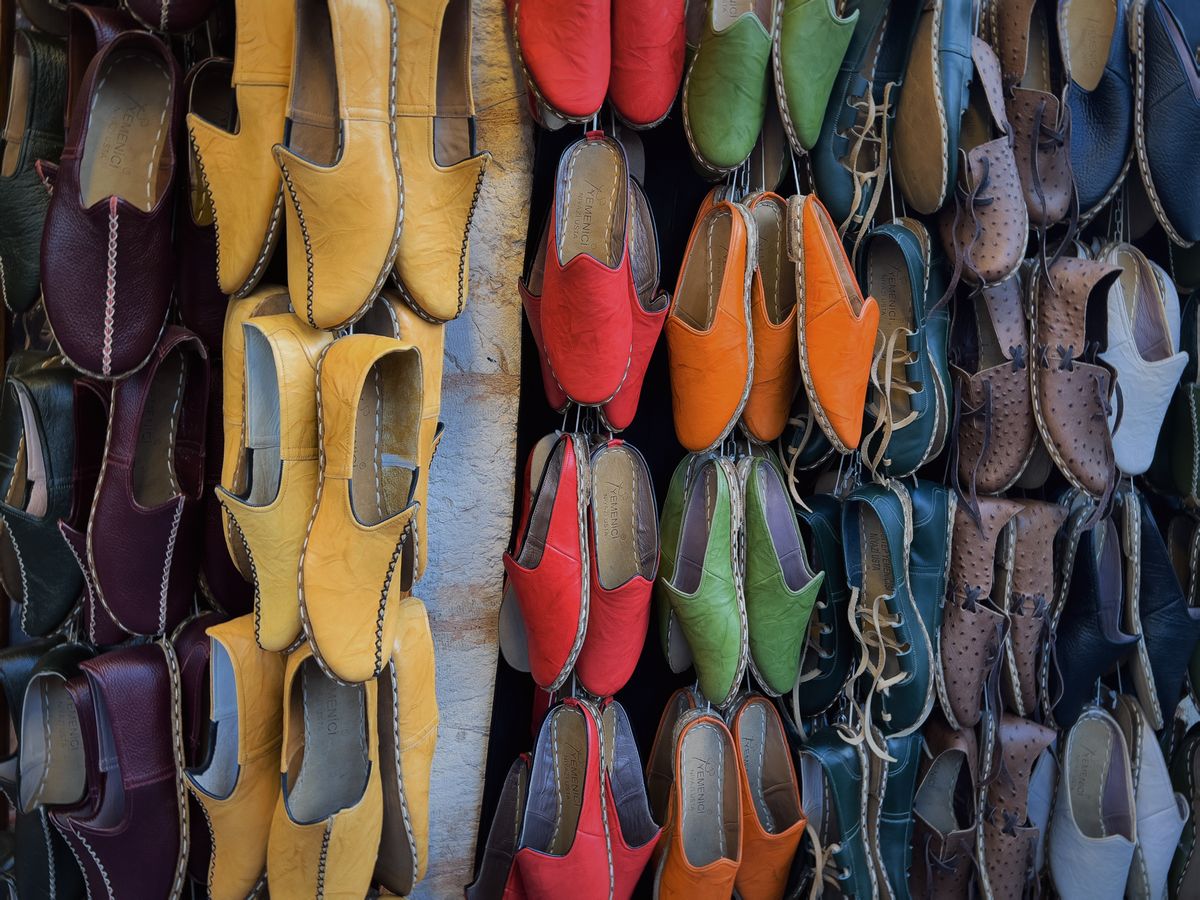
Resolved: the tannery's craft is real and eleventh-century honest, and the economy built around showing it to visitors like me is a separate, much younger argument riding on its coattails. Walking out of Fes el-Bali toward the gate, past shop after shop of babouches in every color the vats produce, both claims sit right next to each other, and the quarter mostly hopes you won't examine the seam between them.
Fes el-Bali is one of the largest car-free urban zones anywhere, a UNESCO World Heritage Site navigated entirely on foot and by the odd loaded donkey, and the tannery has operated inside it for something like nine centuries by most accounts. That fact does not need a sales pitch. It survives cross-examination on its own. The dozens of babouche stalls crowding the lanes toward the gate, yellow and red and green and the deep brown that matches the tannery's own leather, are a newer institution, built on genuine material but organized entirely around the last two hundred meters of a tourist's walk.
Closing argument
Mint is handed to everyone, not just you. Take it and don't read it as a personal kindness.
A guide's enthusiasm for a specific stall is worth a discount to your trust, not a dismissal.
Prices move fastest right as you turn to leave. That's the round's actual closing statement.
The tannery terrace and the shop below it are two different pitches. Judge them separately.
The tempting rebuttal is that the commission economy is parasitic on the craft, skimming off tourists drawn by something it didn't build. The evidence doesn't fully support that either. Guides, stall owners, and the tannery workers themselves are drawing from the same eleventh-century well, and the foot traffic funding the babouche stalls is very likely part of what keeps the tannery a working site instead of a preserved one behind glass. The two arguments aren't opponents. They're closer to co-counsel who don't entirely trust each other's evidence.
Final verdict: the tannery earns the credit its age deserves, on the strength of vats that were doing this work long before anyone charged admission to watch. The terrace pitch, the friend's price, and the local-shopper claim earn no such credit, and shouldn't get it just for being delivered near something genuinely old. Fes wins the round on craft. It loses a few points on procedure, same as every quarter that's figured out what tourists will applaud. ■