The Stove in Car Three
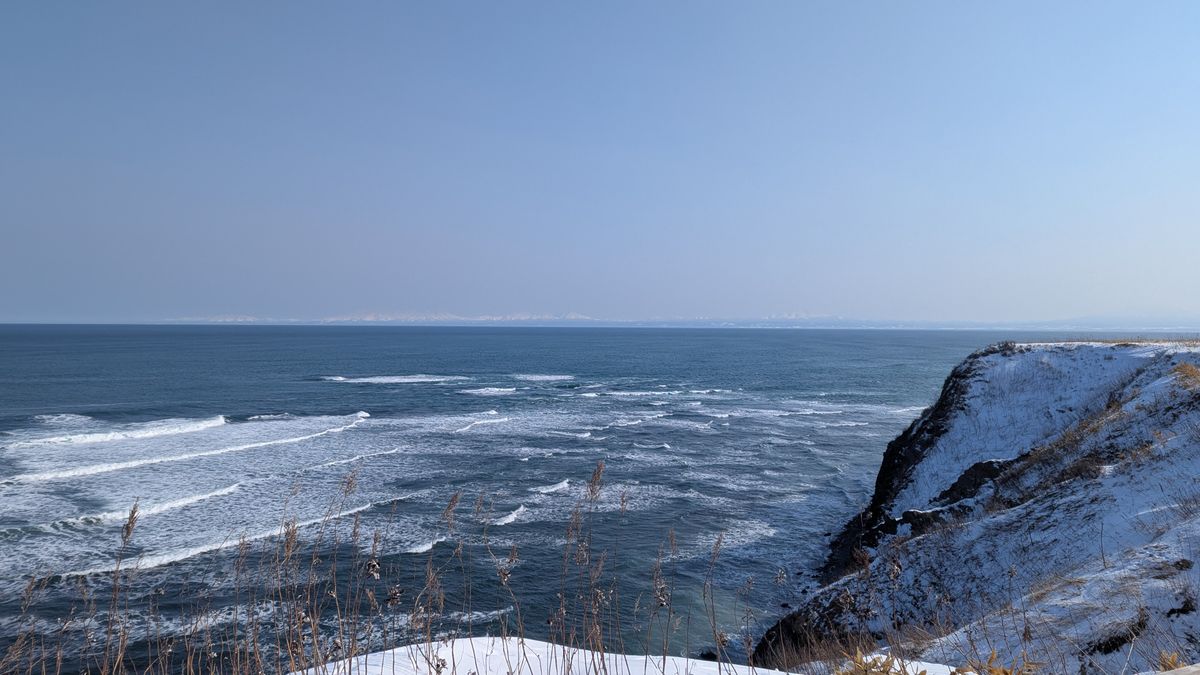
Deep February in eastern Hokkaido: a harbour that smokes, a steam train heated by coal, and at the end of the line, a town that smells of struck matches.

The harbour is smoking. The sea at Kushiro is warmer than the air above it, so on the coldest mornings it gives itself up as fog, long white ribbons lifting off the water and unravelling under the lamps of Nusamai Bridge. My breath does the same thing on a smaller scale. It is not yet seven, the town smells of salt and kerosene, and somewhere behind the fish market a forklift beeps twice and goes quiet, as if it too has decided the morning is not to be disturbed.
The Sea Smokes at Kushiro
Inside Washo Market, across from the station, breakfast is a bowl you assemble yourself. You buy warm rice first, then carry it from stall to stall while vendors lay sashimi over it one piece at a time, salmon, scallop, whatever the boats brought in, until the rice disappears. The woman at the third stall sets a spoonful of ikura in the centre with the care of someone placing a stone in a garden, then turns the bowl so it faces me before she hands it back. A small ceremony. Nobody hurries, and the fluorescent light lands on the wet counters like weather of its own.
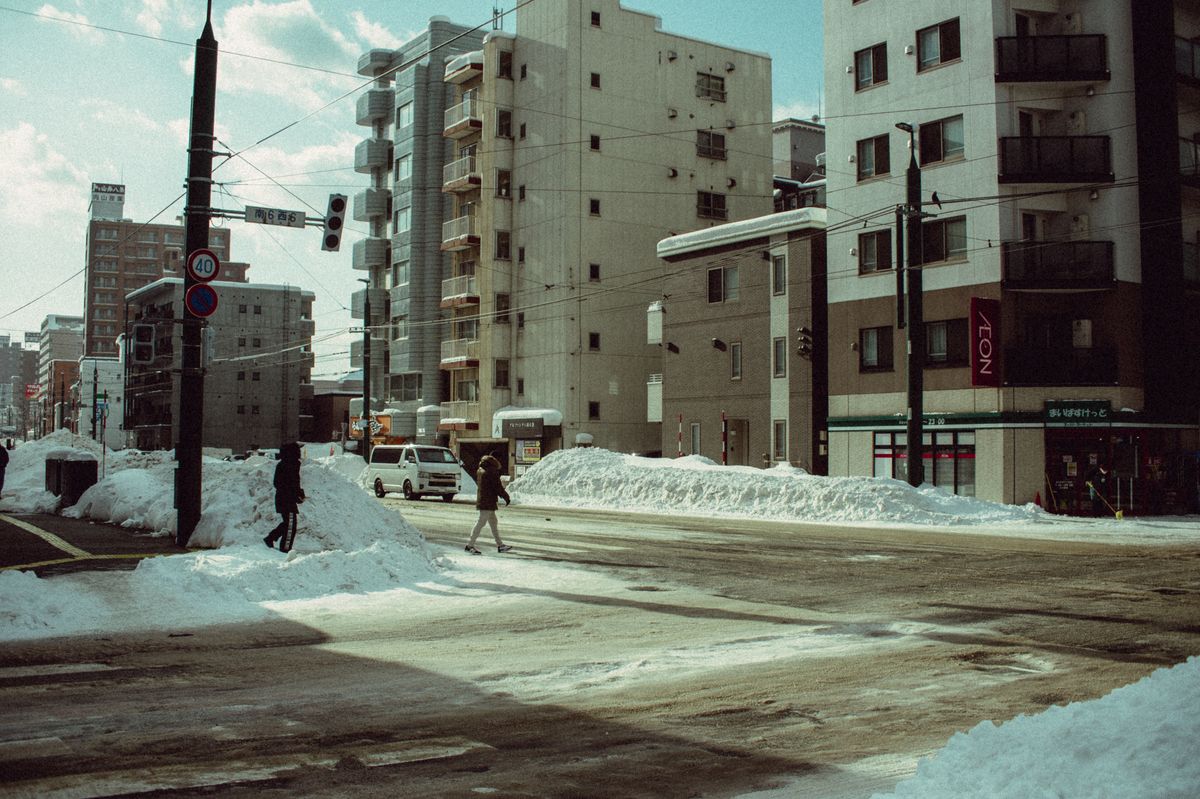
Kushiro likes to say it has the sunniest winters in Japan, and walking back from the market I believe it, the light hard and low and blue in the shadows, so bright off the snowbanks that people squint at each other and smile about it. Crossing near the station, a man ahead of me stops mid-intersection to let an old woman with a sled of groceries take the packed-snow channel first, and both of them bow, barely, the way you would underline a word once. Then the signal chirps its little melody and the moment closes over.
A Coal Stove on Rails
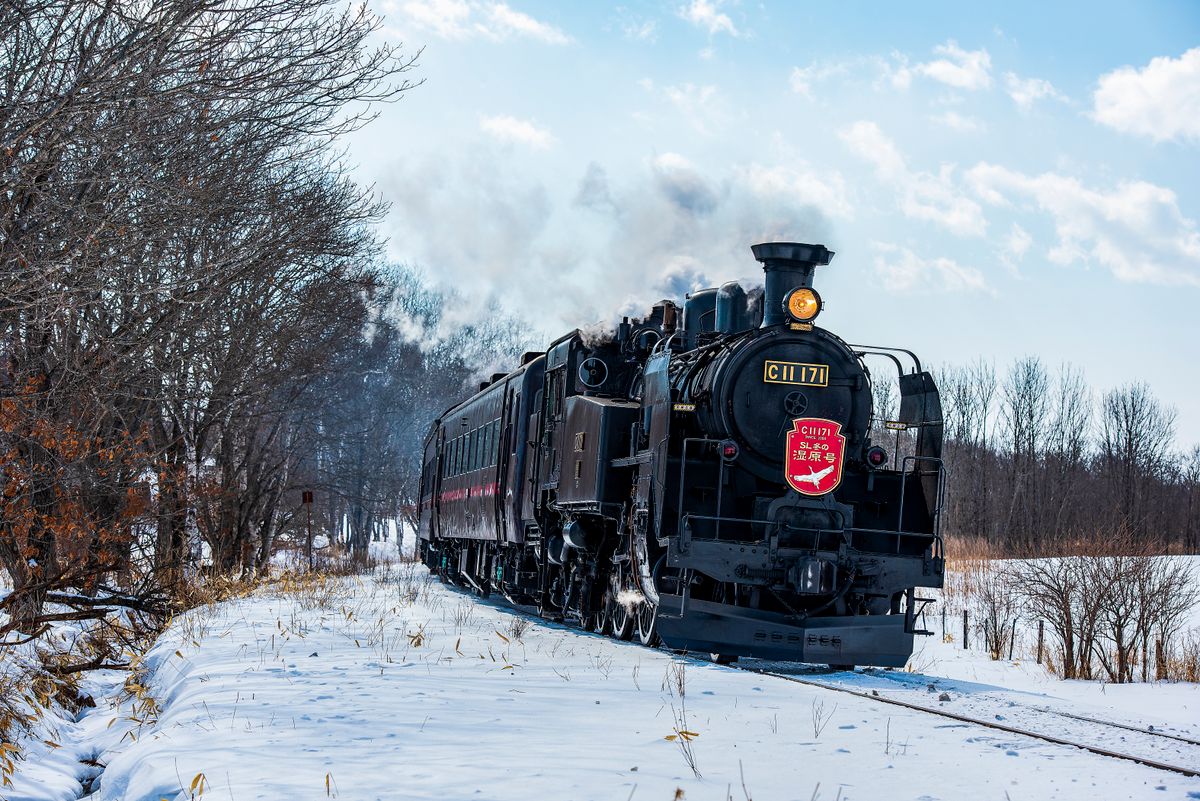
At eleven the platform at Kushiro Station fills with a sound the city no longer makes anywhere else, a deep respiratory chuff, and the C11 171 comes in black and wet-flanked, built in 1940 and still breathing. This is the Fuyu no Shitsugen-go, the winter wetland train, and inside the old carriages there are actual coal stoves, squat and cast-iron, their chimneys running up through the roof. An attendant sells dried squid from a counter at the end of the car and grills it for you on the stove lid, turning it with tongs until it curls. The whole carriage takes on the smell, coal smoke and toasted squid and wet wool. It is the smell of a century that ended before I was born, and everyone breathes it in like they remember it anyway.
The train follows the Kushiro River north into the wetland, and the wetland performs. Ezo deer stand chest-deep in snow and do not bother to run, and twice, far out where the reeds show through, red-crowned cranes lift off in pairs, unhurried, like paper being peeled from a page. The windows fog from the stoves, and the conductor walks the aisle with a cloth, wiping a clean circle onto each one for whoever is sitting there, children first. He does it without being asked and without saying anything. That circle of clear glass, offered and accepted, is the whole trip in miniature.
If you go looking for this train
The winter wetland train breathes for only a few weeks, late January into late February, one round trip a day between Kushiro and Shibecha, and every seat is spoken for long before the snow softens. Deer and cranes appear on both sides of the line, so there is no seat to agonise over. Dress for the open decks at the ends of the cars; they are the coldest place on the train, and the best.
The carriage smells of coal smoke and grilled squid, and no one is looking at a phone. Everyone is looking at the snow.
Shibecha at Four O'Clock
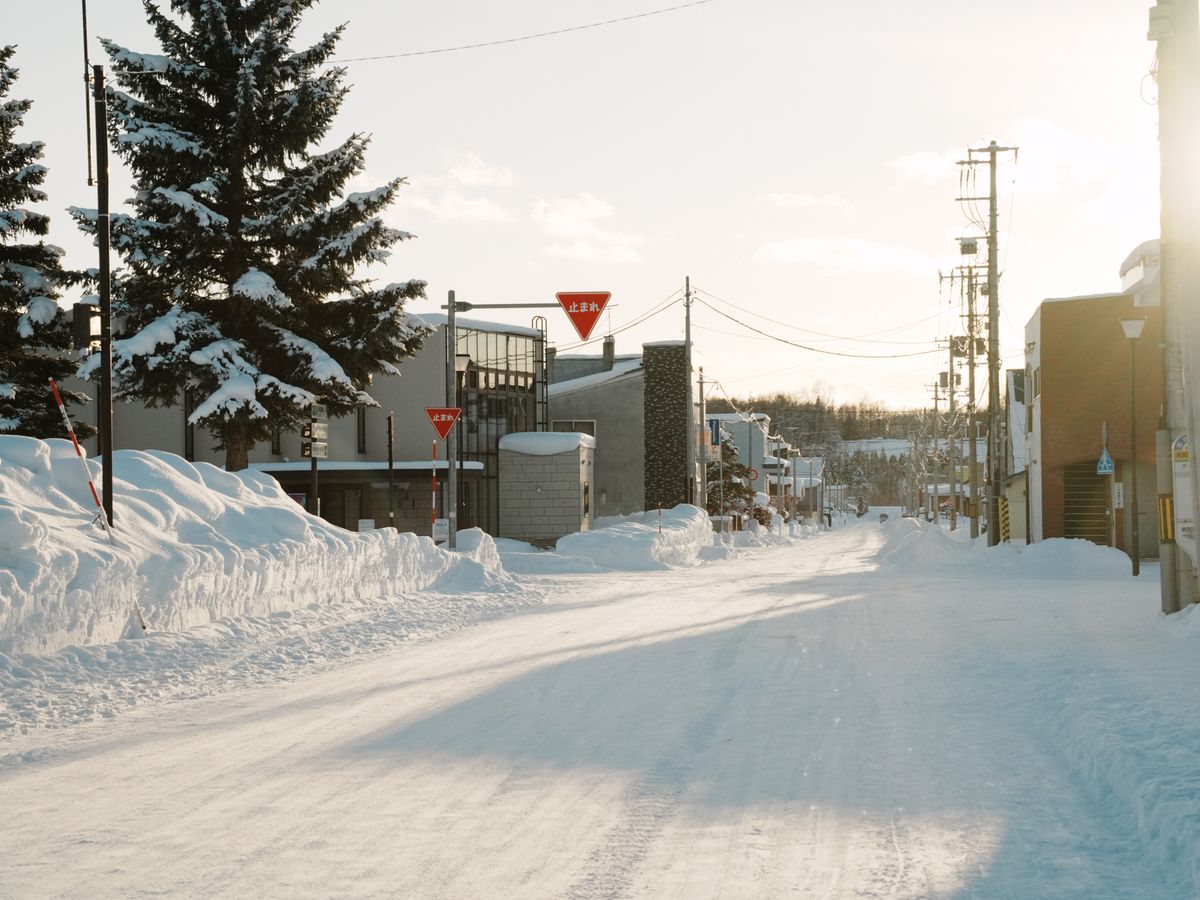
Shibecha's main street, an hour before dark. The red signs are the loudest thing in town.
Shibecha is a dairy town at the top of the wetland, and when the locomotive is uncoupled and turned for its run home, most passengers turn with it. Stay. By mid-afternoon the sun is already low enough to run the length of the main street, and the snow, which is only white at noon, turns the colour of weak tea, then honey, then something you would call gold if the word hadn't been used up. The snowbanks stand shoulder-high along the shopfronts. A kerosene tanker idles outside the pharmacy. Steam leaks from a vent behind the soba shop and hangs in the street light like it is thinking about leaving.
The emotional centre of Shibecha, for me, is a postman. He pulls up on a small red motorbike with chains on the tyres, sets the kickstand into the packed snow, and before he pushes the letters through the slot he clears the mailbox lid with the side of his glove, one slow pass, the way you would brush snow from a friend's shoulder. Then he rides off and the street is quiet again, so quiet I can hear the power lines. In the station's little waiting room a stove ticks, and an old timetable on the wall lists trains that no longer run, and nobody has taken it down, and I understand that.
Sulphur, Then Sleep
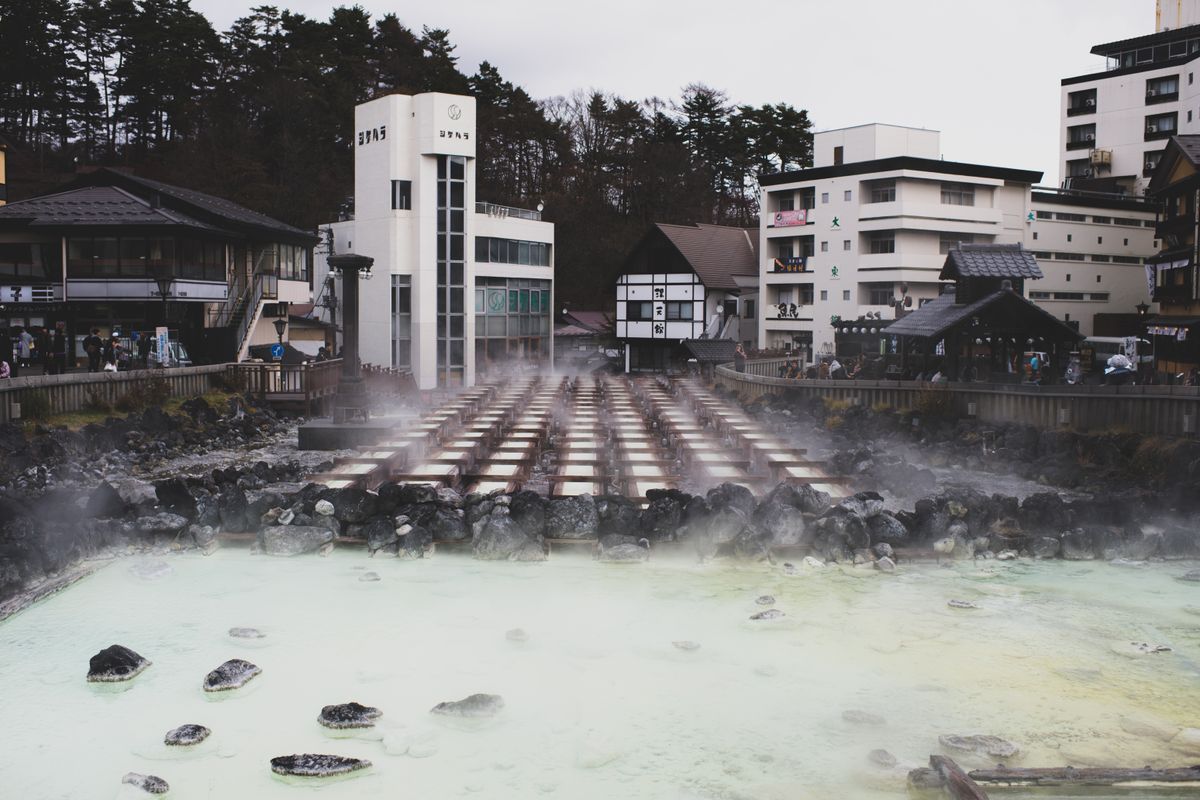
At dusk a one-carriage local carries me further up the Senmo Line to Kawayu Onsen, the interior lit like an aquarium, four other passengers, all asleep. The town, when I walk into it from the dark station road, announces itself by smell before light, sulphur off the bare slopes of Mount Io, the smell of a struck match held under the whole sky. The spring water here is so acidic it eats nails out of the bathhouse walls, the minshuku owner tells me with something close to pride, and in the outdoor bath the snow falls to within a metre of the water and gives up. Steam, again. This whole corner of Hokkaido is things becoming steam. I had planned to be at Otowa Bridge before dawn to watch the cranes wake in the river mist. I sleep instead, heavy and sulphur-warmed, until the light through the paper screen is ordinary daylight, and I am still deciding whether I regret it.
On the express back to Sapporo the sun sets somewhere around Obihiro and the window becomes a mirror with fields moving behind it. I can still smell coal smoke in my coat collar. I decide not to wash it yet. ■