Hoi An After Dark: Lanterns, Cao Lau, and Dave's Near Swim
The old quarter goes electric-free once a month, and we spent three days working out why everyone comes back for it.

Hoi An: The Old Town Lights Up
We rolled into Hoi An off a bumpy Grab from Da Nang airport, 400,000 VND (about $16), windows down, the air already thick with fish sauce and river damp. It was gone 9pm and the humidity landed like a wet towel to the face, the good kind, the kind that means you've actually arrived somewhere warm in January. Dave fell asleep against the window within ten minutes. I stayed awake watching rice paddies turn into shopfronts turn into lanterns.
Our guesthouse, a family-run place two streets back from the river, ran 450,000 VND a night (about $18), fan room, breakfast included, a grandmother who topped up our water bottles without being asked. We dropped our bags and walked straight into the Ancient Town, because the whole point of Hoi An is that you don't wait.
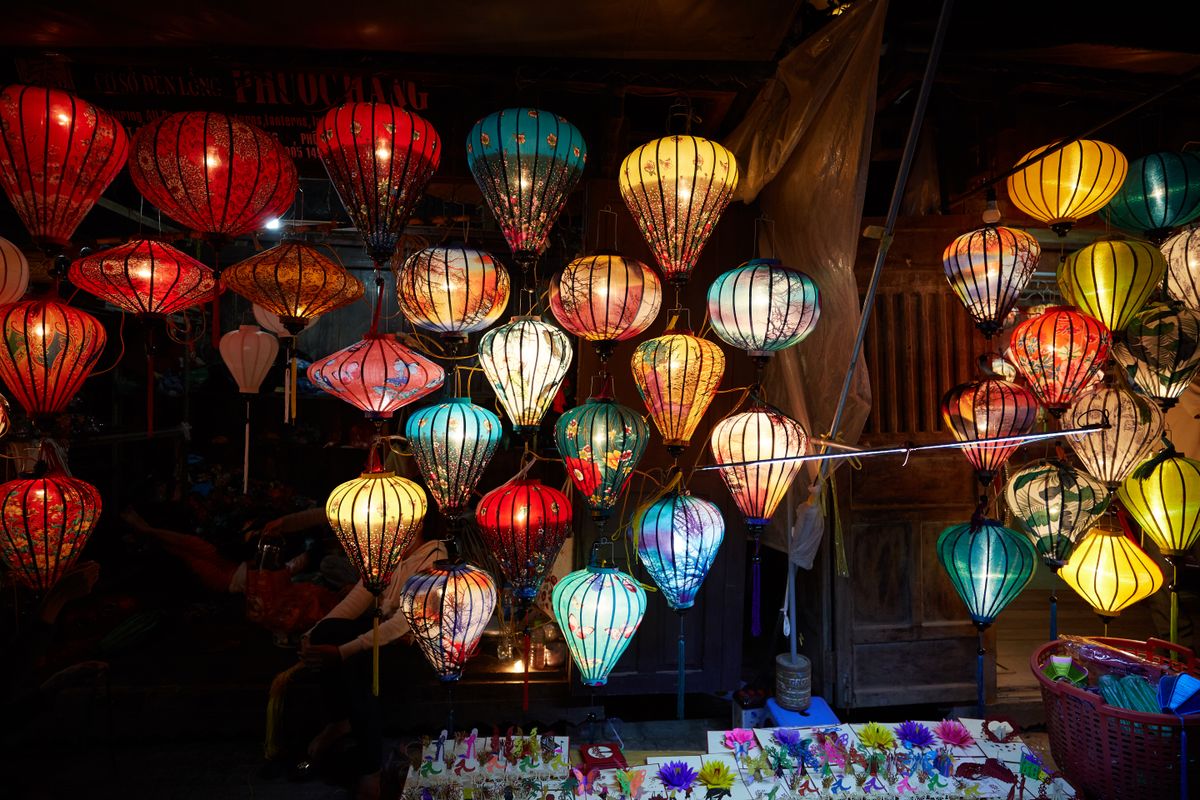
The lantern shops start before you notice you're in one. Silk lanterns hang three and four deep off every awning, 60,000 to 90,000 VND each (roughly $2.50 to $3.50), in every colour a dye vat has ever produced: magenta, saffron, a green I don't have a paint-chip name for. One workshop near Tran Phu Street let us build our own for 150,000 VND (about $6), bamboo frame, silk stretched and glued while a woman half our age corrected our technique without a word, just quietly taking the glue brush back out of Dave's hand.
Hoi An's Ancient Town is UNESCO-listed and they make you feel it at the gate: a ticket booklet, 120,000 VND (about $5), good for entry to five historic houses, temples, or assembly halls, of which we used three before Dave's attention span gave out. The Japanese Covered Bridge was the one non-negotiable stop. Everything else was a coin flip between a 400-year-old merchant house and a bowl of noodles, and the noodles usually won.
We happened to land on a full moon, which in Hoi An means the Lantern Festival: streetlights off, generators cut, the whole old quarter running on candlelight and paper glow for one night a month. Dave had read the schedule three months out ('it's every second Saturday, I checked') and was wrong on both counts. Rachel 1, Dave 0, and we were only six hours in.
The River After Dark
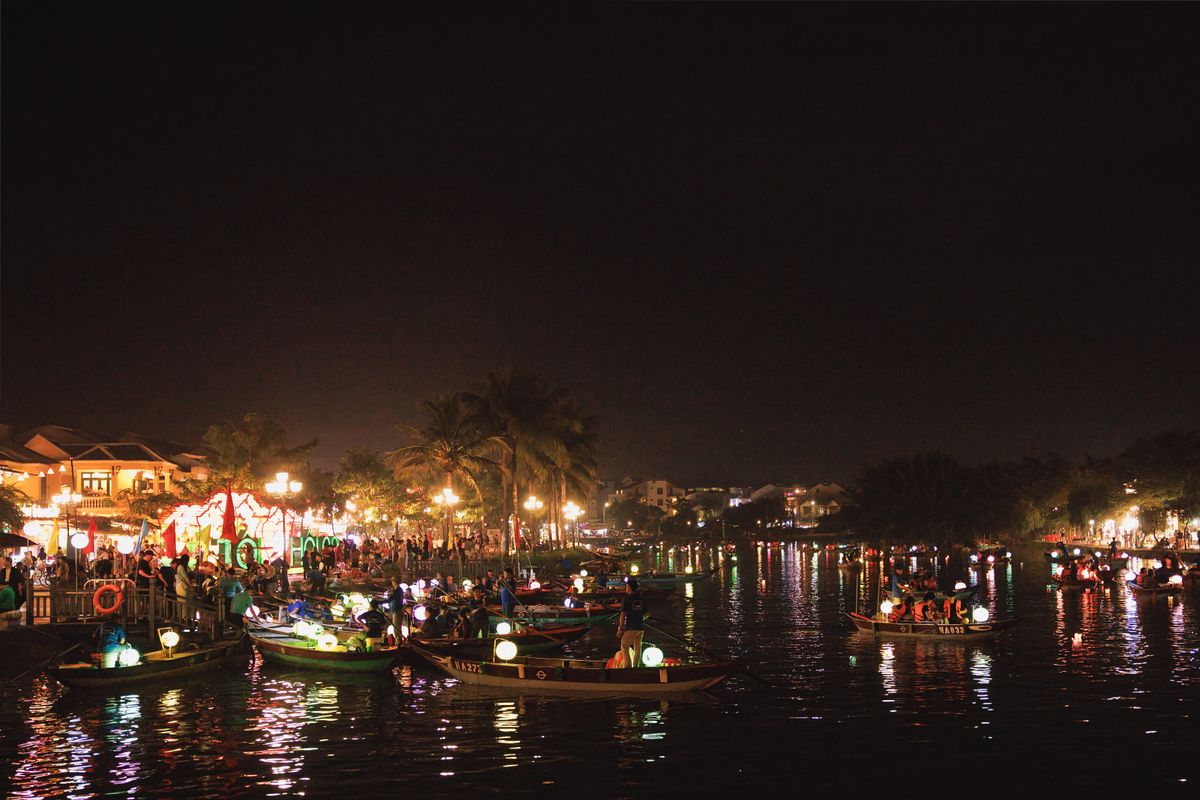
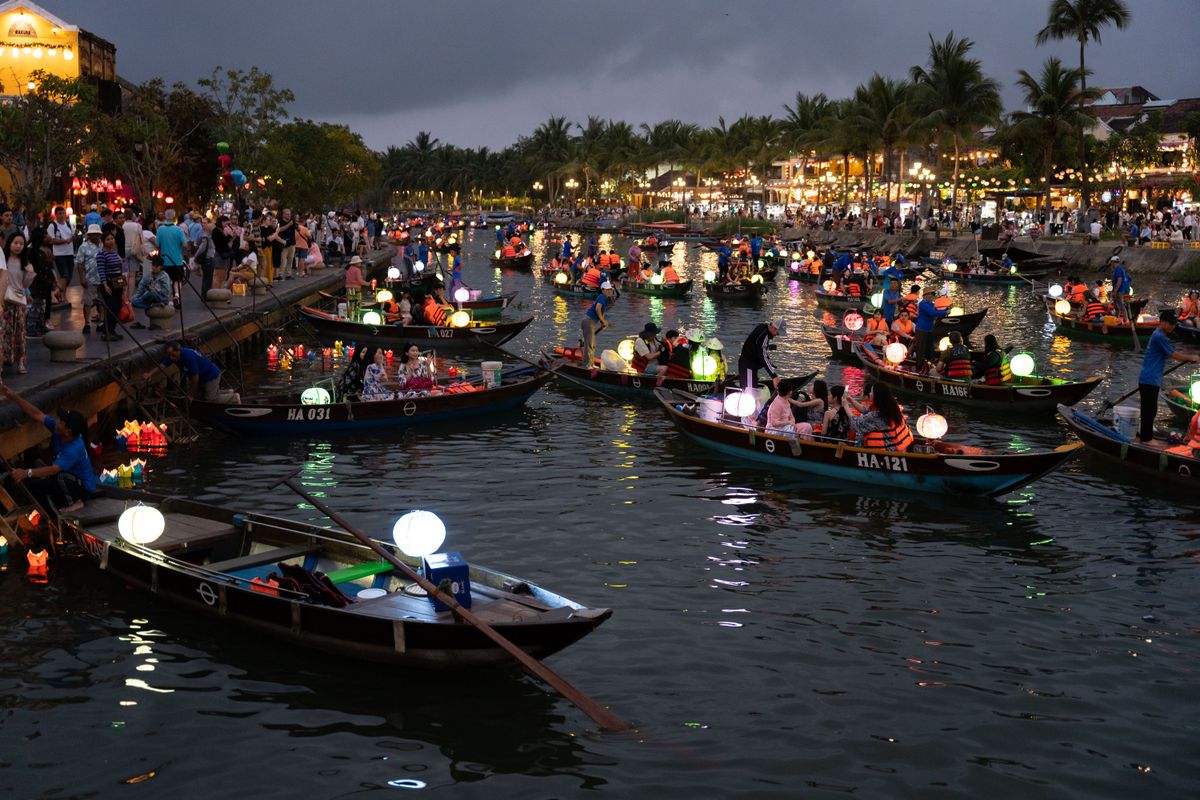
By 8pm the Thu Bon River was doing more work than any of the temples. Vendors, mostly women balancing shallow baskets, sold small floating candle-lanterns for 10,000 to 20,000 VND each (about 40 to 80 cents), paper cups the size of a fist with a tea light wedged inside. You buy one, walk to the water's edge, and set it going for luck. We bought four, because the woman selling them told us one each wasn't enough for a married couple, we needed spares 'in case the current is unkind.'
A boat ride with a lantern release, 150,000 VND per person (about $6), took us out from a jetty near An Hoi bridge for twenty unhurried minutes. Our boatman cut the little outboard motor once we were mid-river so we could hear the festival properly, no traffic, no generators, just paper lanterns strung across every balcony and a thousand tiny candles drifting past on the current like the town's own slow-motion confetti.
That last part was less a joke than an incident report. Dave leaned out to release his lantern with both hands, forgot the golden rule of small wooden boats, and rocked us hard enough that our boatman had to grab his shirt collar. The lantern went in the water fine. Dave went in almost as far, one foot actually submerged before he got hauled back. Our boatman laughed for the rest of the ride and would not be talked out of it.
Rachel 2, Dave 0. He tried to argue the wet shoe didn't count because he 'never fully committed to the water,' which is the exact defense he used after the Bangkok scooter thing three weeks earlier, and it didn't work then either.
Buy two lanterns; one always tips over, and ours was Dave.
Cao Lau and the Verdict
A banh mi cart outside the market, 20,000 to 25,000 VND (about $1), fed us more efficiently than any sit-down place all trip, pork, pate, pickled carrot, a chili paste the cart owner applied with visible judgment about how much heat we could handle. She was right to be conservative with mine and wrong to be conservative with Dave's, who then spent ten minutes drinking from a water bottle that wasn't going to help him.
Cao lau, 35,000 to 45,000 VND a bowl (about $1.50), is the dish you actually come to Hoi An for, and it doesn't travel outside town because the noodles are supposedly made with water from a specific local well and ash from a specific local tree. Thick, chewy, more like a udon cousin than the rice noodles you get everywhere else in Vietnam, topped with pork slices, greens, and pork crackling for crunch. We ate it three nights running from the same stall and it was different, slightly, each time.
What we learned in Hoi An
Time your visit to the full moon if you can, the Lantern Festival is the whole town with the electric lights off, not a staged add-on.
Buy a spare floating lantern. Someone in your party will drop or capsize the first one.
The old town ticket booklet covers five sites, three is plenty unless you're genuinely into 19th-century merchant architecture.
Cao lau is a Hoi An-only dish, don't wait to try it elsewhere because you won't find it.
Haggle at the night market stalls but expect it to be mild, walking away usually gets you the real price fast.
Hoi An, three nights, two people
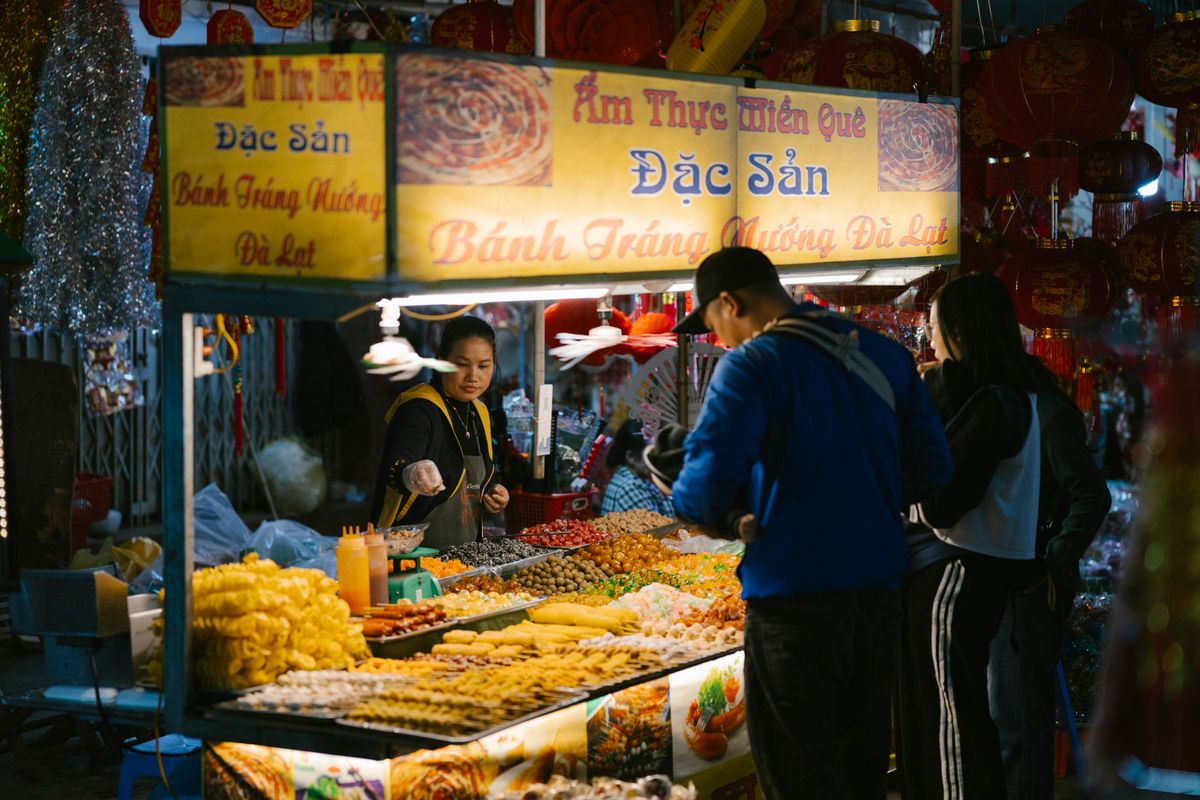
The night market stalls expect haggling, gently. A stallholder selling printed cotton scarves opened at 150,000 VND and settled at 100,000 VND (about $6 down to $4) without much of a fight, then told us, unprompted, 'always walk away first, we chase you if the price is real.' We tested that twice more that week. It held both times.
Somewhere between the second bowl of cao lau and Dave still smelling faintly of river water, I decided Hoi An earns the fuss made about it, which is not something I say about every stop on this route. ■