Bali's Inland Circuit, Cross-Examined
A debate coach runs Ubud's rice terraces, a holy spring, a volcano sunrise, and a night market haggle through claim, evidence, rebuttal, and verdict.

Resolved: Tegallalang Owes You a View, Not a Lecture
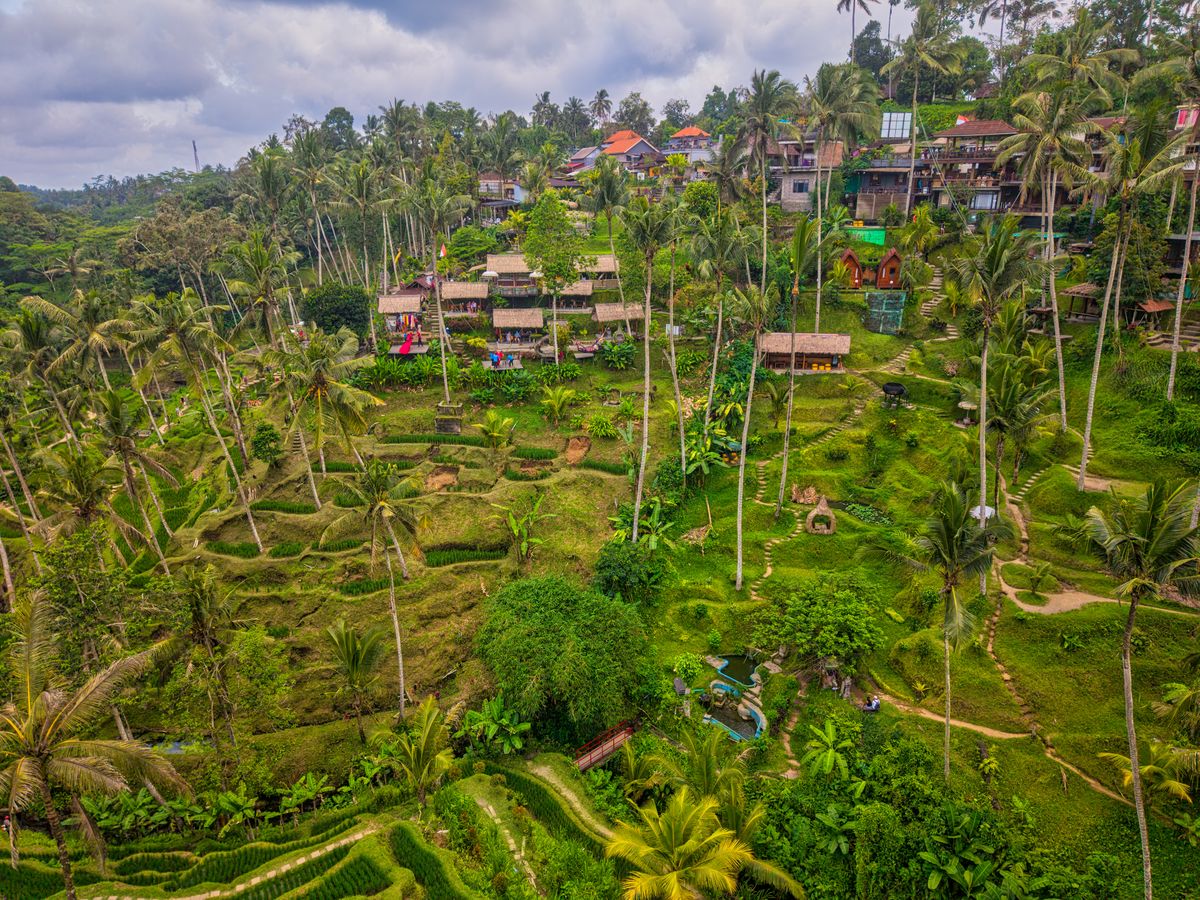
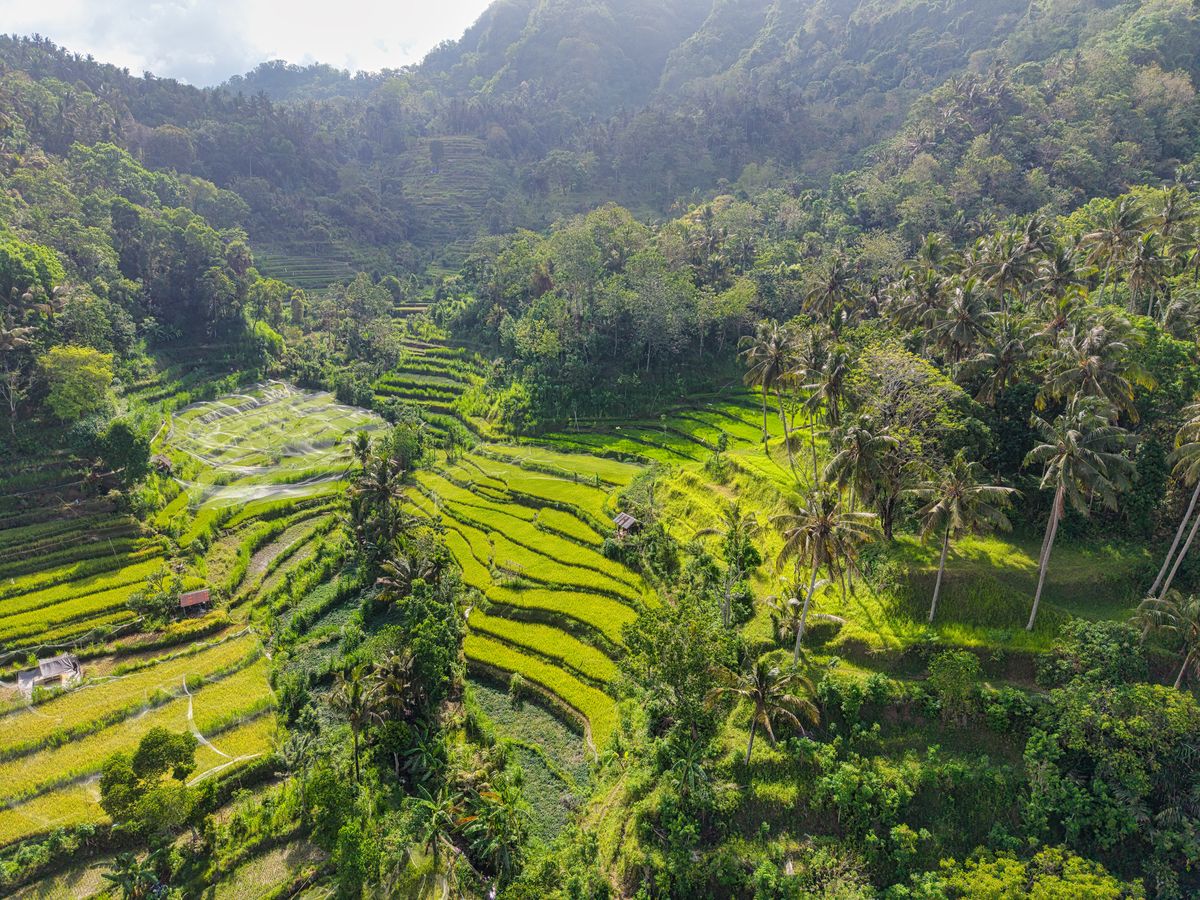
Every driver who brings you to Tegallalang delivers the same opening statement before the engine is off: these terraces are the last working stretch of the subak system, a thousand years of farmers sharing one river on a schedule stricter than a debate clock. It's a strong claim. That claim has almost nothing to do with what happens once you're standing at the rail.
The entrance fee is fair, 15,000 rupiah, about a dollar, collected at a folding table by a man who does not look up from his phone. Evidence gets shakier past that table. A second box marked 'donasi sukarela,' voluntary donation, sits at the main viewpoint, and the young man beside it does not move his hand from the lid until a bill goes in. Voluntary is doing a lot of work in that sentence.
Higher up the terrace path, the pitch changes entirely. A swing built over the rice paddy rents for 150,000 to 250,000 rupiah, ten to fifteen dollars, for ten minutes of sitting above the green and photographing yourself sitting above the green. Nobody calls this a farming fee. Everybody treats it like one, because it's collected at the same gate, by staff wearing the same batik vest as the terrace guides.
Resolved: the terraces earn the view honestly, on the strength of the work still happening in them. The swing operators are billing you for a backdrop they didn't build and don't maintain, and dressing it in the same uniform as the farmers who did. Point to the rice. Foul on the marketing.
Resolved: Tirta Empul's Purification Story Has a Standing Rebuttal
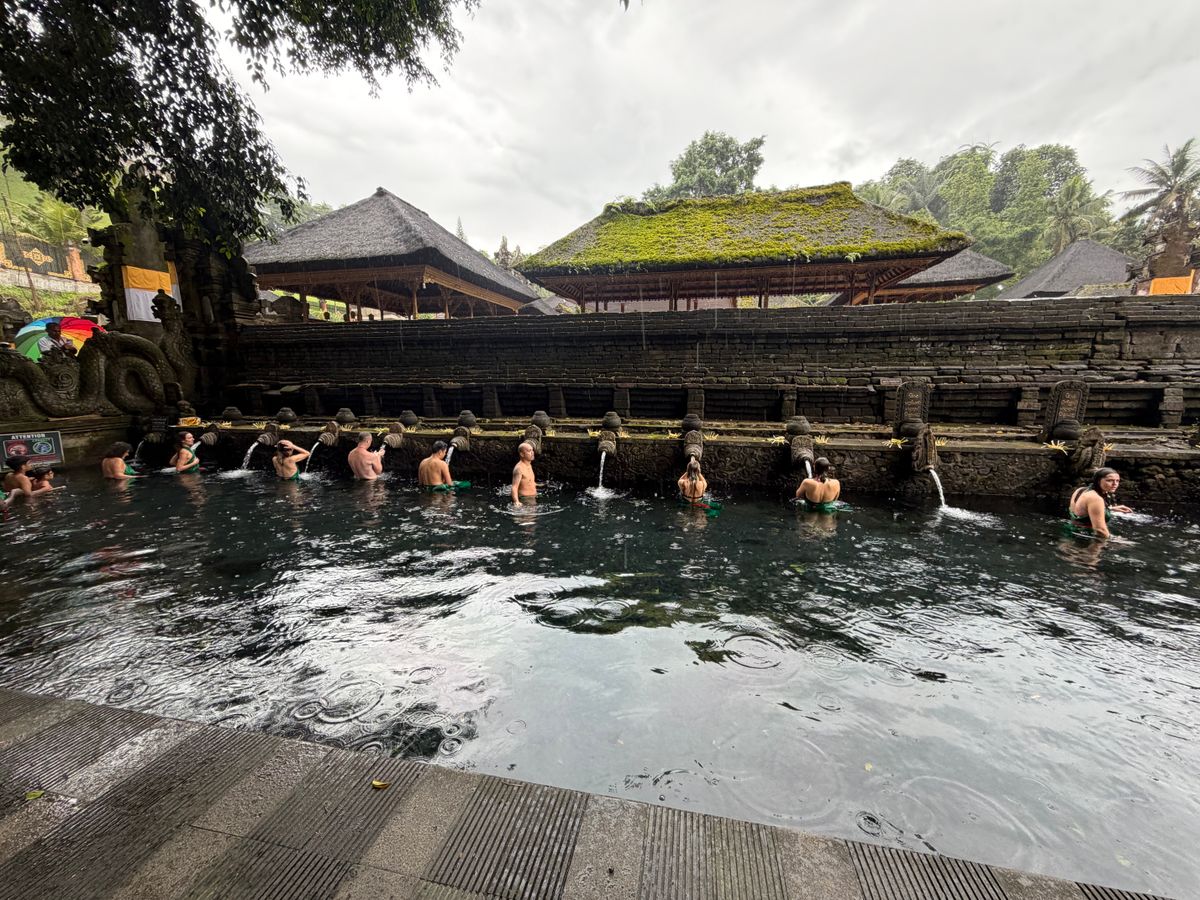
The guide's opening statement at Tirta Empul is delivered like a closing argument already: this spring has been used for melukat, ritual purification, since the tenth century, unbroken, and every one of the thirty-some spouts cleanses something different, work troubles at one, grief at another, bad luck at a third. It's tidy structure, tidy enough that I wrote it down like a debate case: contention one, contention two, contention three.
The line at the purification spouts is long enough that the ritual now runs on a schedule of its own; a family of four in matching sarongs will duck under a spout, hold a pose for the phone held by the fifth family member on the bank, and move to the next spout before finishing the water. A monk stationed at the far end reminds people, politely, that the last two spouts are reserved for the dead and shouldn't be used for photographs. Half the queue doesn't hear him over the queue.
Here is the guide's own evidence working against him. Twenty minutes into the tour he'd said the temple survives because outsiders are only permitted to observe, not participate, respect for a rite that isn't ours to perform. Ten minutes later he was steering our whole group toward the sarong rental stand, coaching a stranger from our van on which spout to start at. Observation had become participation somewhere in the walk between the two spouts, and nobody flagged the contradiction but me.
Resolved: the spring is real, the crowd's reverence is a coin flip, and the guide switched sides of his own resolution mid-round. Half credit for the history. No credit for noticing he'd reversed himself.
A morning at Tirta Empul
Resolved: Sunrise on Batur Is Sold as Solitude and Delivered as a Grandstand
The trekking agencies all pitch the same resolution: watch sunrise from the summit in near solitude, above the clouds, before the day tourists arrive. A 2 a.m. pickup exists to defend that claim. It doesn't survive contact with the ridge.
The package runs 400,000 rupiah, about twenty-six dollars, and covers a guide, a headlamp, breakfast cooked in the volcanic steam vents (an egg and a banana wrapped in foil, sulfur smell included at no extra charge), and the park entrance fee of 100,000 rupiah collected at a booth halfway up in the dark. Sound evidence for the price. No evidence yet for the solitude.
Our guide, Wayan, said this exact week counted as low season, quiet, before correcting himself twenty feet from the summit to warn us to hold our spot early because 'today will be busy.' Both statements can't be evidence for the same case. By 5:40 the ridge held enough headlamps to write with, elbow to elbow, someone's tripod planted in the one gap I'd been holding for eleven minutes. A macaque took a bag of crackers off an unattended backpack four feet from where our guide had just said, unprompted, that monkeys 'mostly stay lower down.'
Resolved: the sunrise itself, cloud line burning orange under Batur's black cone, wins on the merits. The pitch for solitude does not, and the guide conceded the point without noticing he had, which is the only foul that matters more than the crowd.
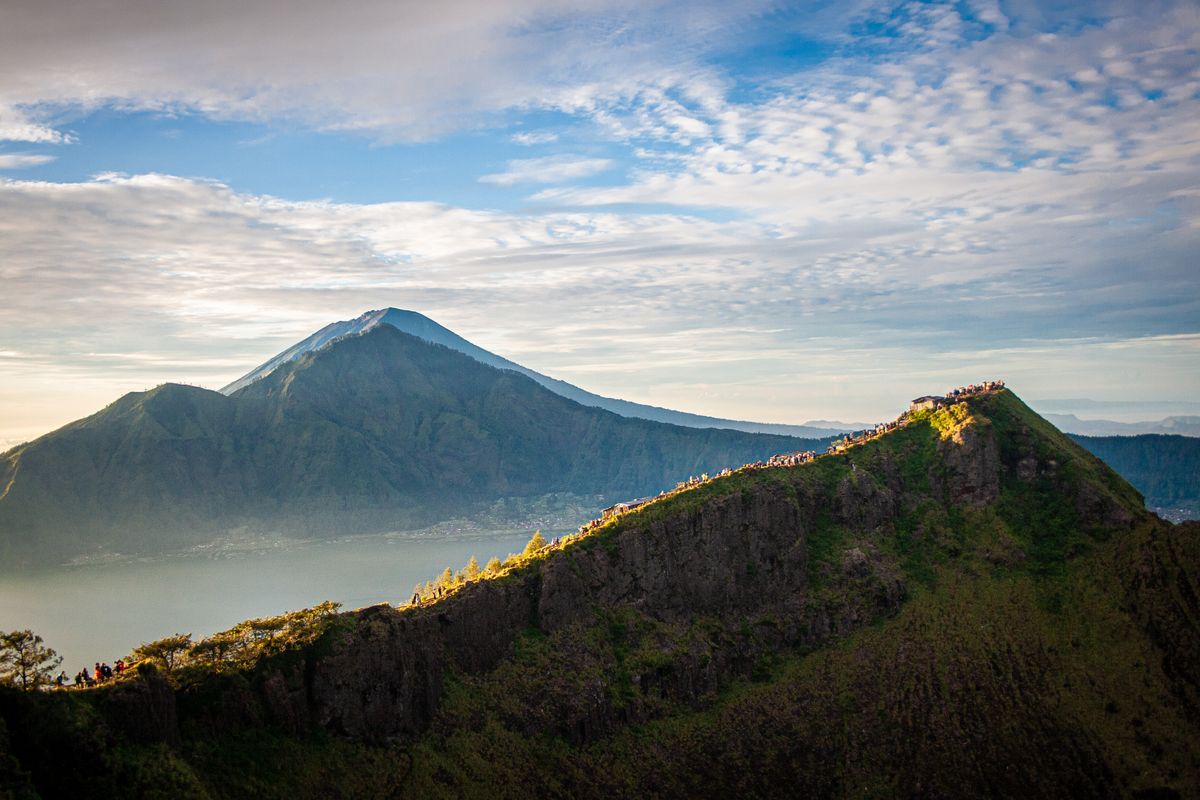
A ridge with three hundred headlamps is not solitude. It's a debate final with worse acoustics.
Resolved: The Satay Vendor's First Price Is Not a Price, It's an Opening Statement
Every stall at the night market runs the same opening move: name a number that assumes you've never priced anything before in your life, then treat your first counteroffer as an insult rather than a rebuttal. A haggle is a debate round with worse eye contact and better smoke.
The satay vendor grilling over coconut-husk coals wanted 100,000 rupiah, about six and a half dollars, for a carved wooden mask laid out next to his grill, 'handmade, one week of work.' His satay was priced fairly and sold in the open, 5,000 rupiah a skewer, chicken or pork, peanut sauce thick enough to hold the char. No argument there. The mask was the case in dispute.
closing argument
Carry small bills, 5,000 to 20,000 rupiah notes, for temple donation boxes and market haggling. Nobody breaks a 100,000 note gracefully.
Book the volcano trek direct through a homestay in Kintamani, not the hotel front desk. Same guide, same headlamp, 100,000 to 150,000 rupiah cheaper.
A sarong is required at every temple. Tirta Empul rents them, but packing a light one saves the 15,000 rupiah and the queue.
Treat any 'last one' or 'handmade, one week' claim as a resolution to test, not a fact to accept. Check the next stall before you counteroffer.
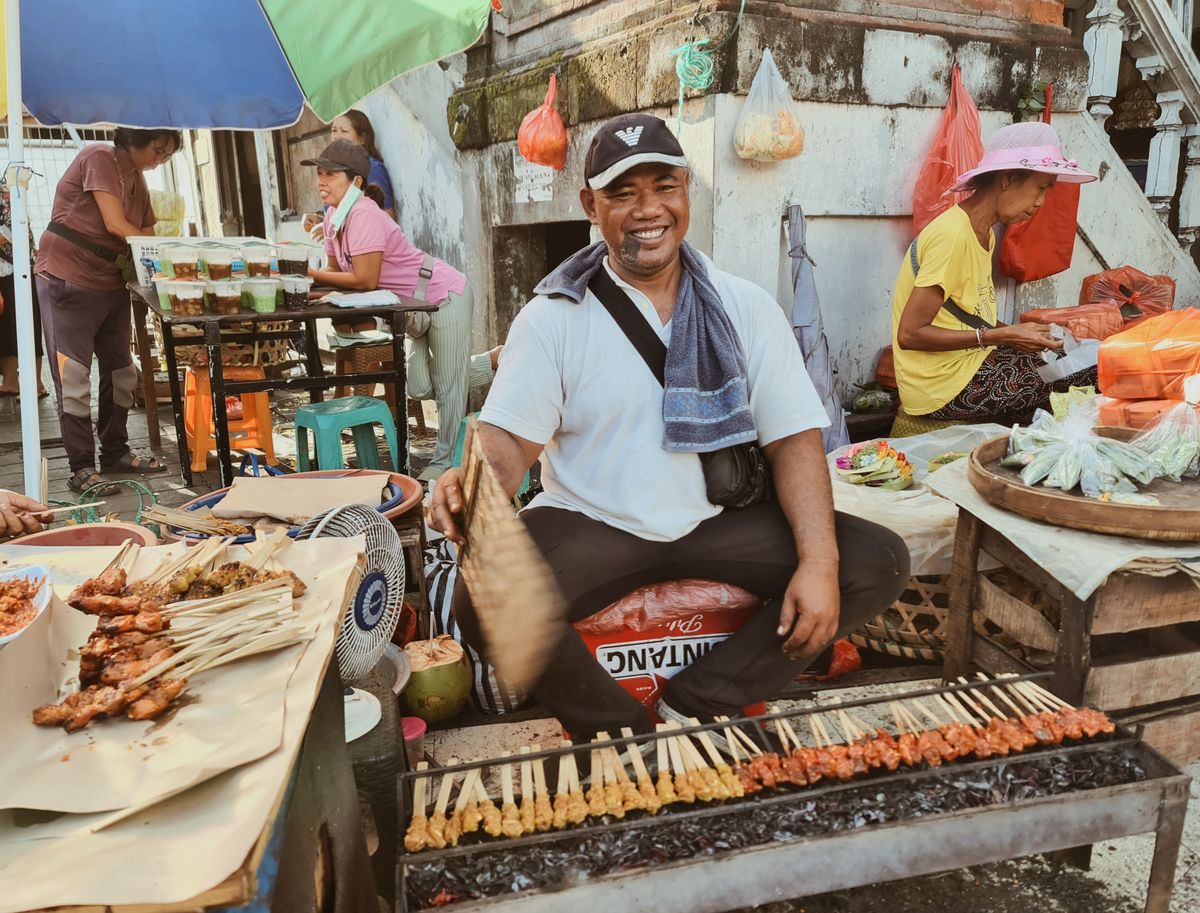
Two stalls down sat nine identical masks, same grain, same chisel marks, same price tag before haggling. One week of work times ten, at one stand, undercuts the claim of individual labor more than it supports it. I offered 35,000, he came back with 'best price, 80,' I walked to the noodle stall and back, and we landed on 45,000. He threw in a second mask 'for the price,' which is either generosity or an admission that 45,000 was still profit twice over. I didn't ask which.
Resolved: the vendor wins the round on the satay, loses it on the mask, and the free second mask reads less like goodwill and more like a concession speech. ■