Dotonbori After Dark: A Slow Walk Through Osaka's Loudest Street

The Alley Before the Crowd
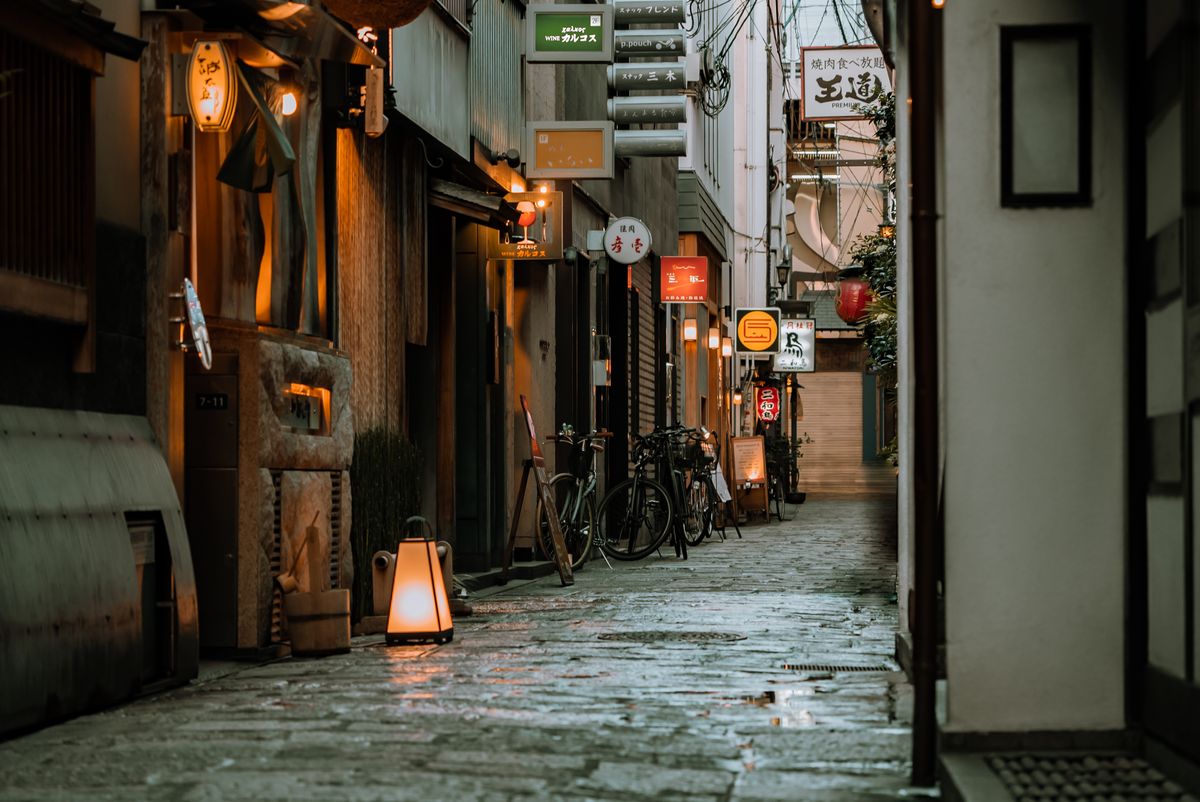
The smell reaches Hozenji Yokocho before the crowd does: char and dashi and something sweeter underneath, threading through air still thick with the day's heat. It is barely seven and the alley is narrow enough that I could touch both walls if I stretched my arms, stone underfoot worn smooth by a century of regulars who came here before Dotonbori learned to shout. A bartender in a blue apron sweeps the step outside his six-seat counter, unhurried, the broom finding the same three tiles it found last night and the night before that.
Down the lane, someone has just poured water over the small stone Fudo Myoo that gives the street its name, the statue so thick with moss it has stopped looking like a face and started looking like a hillside in miniature. Regulars do this on their way past, a splash from a wooden dipper, no ceremony to it, more like greeting a neighbor who happens to be a deity. I watch three people do it in ten minutes and none of them look at each other, or at me, or at anything but the water finding its way into the moss.
Bicycles lean three deep against the wall outside a shuttered noodle shop, lanterns strung low enough that their light catches the handlebars and nothing above shoulder height. Somewhere past the last lantern the alley opens, and I can already hear it before I see it, a low electrical hum with something louder underneath, waiting.
Into the Neon
Cash Wins the Crawl
Most stalls along Dotonbori and Sennichimae are cash-only once the dinner rush sets in, so carry small notes and coins, and get there before six if you want to watch the vendors work before the queues form.
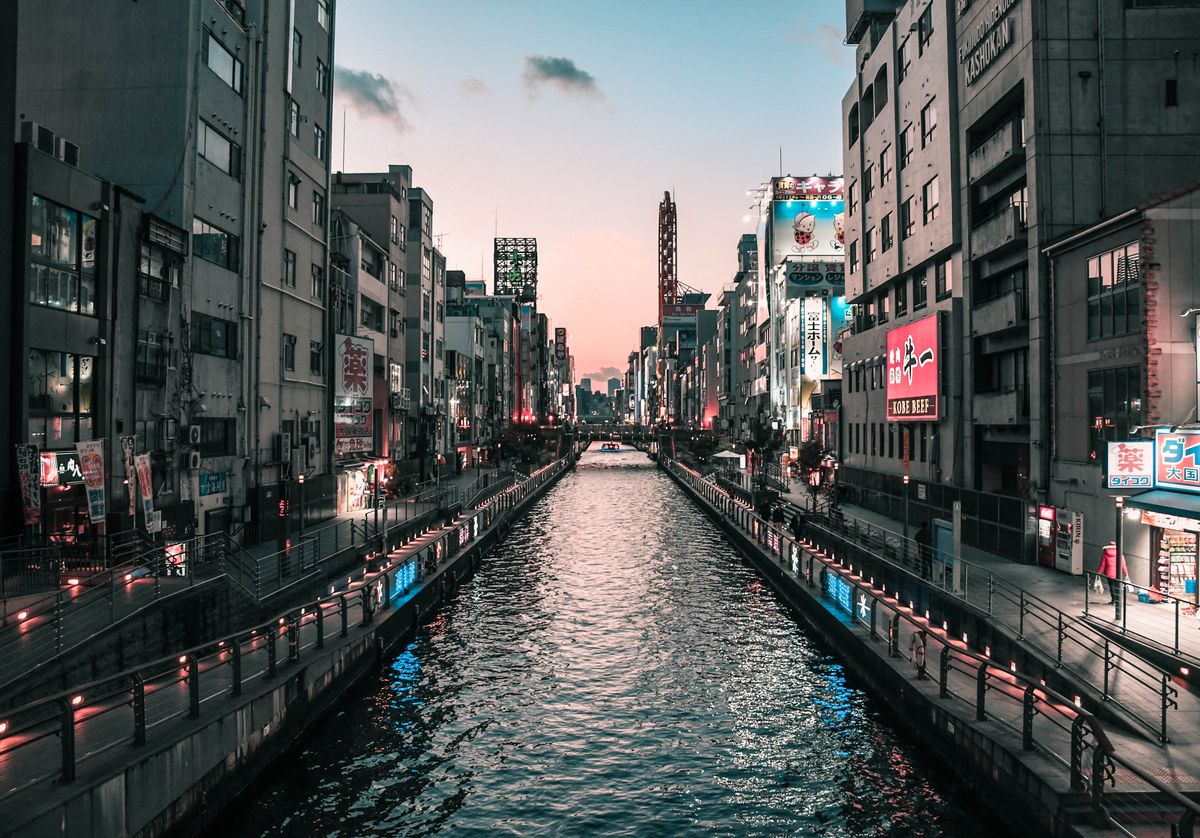
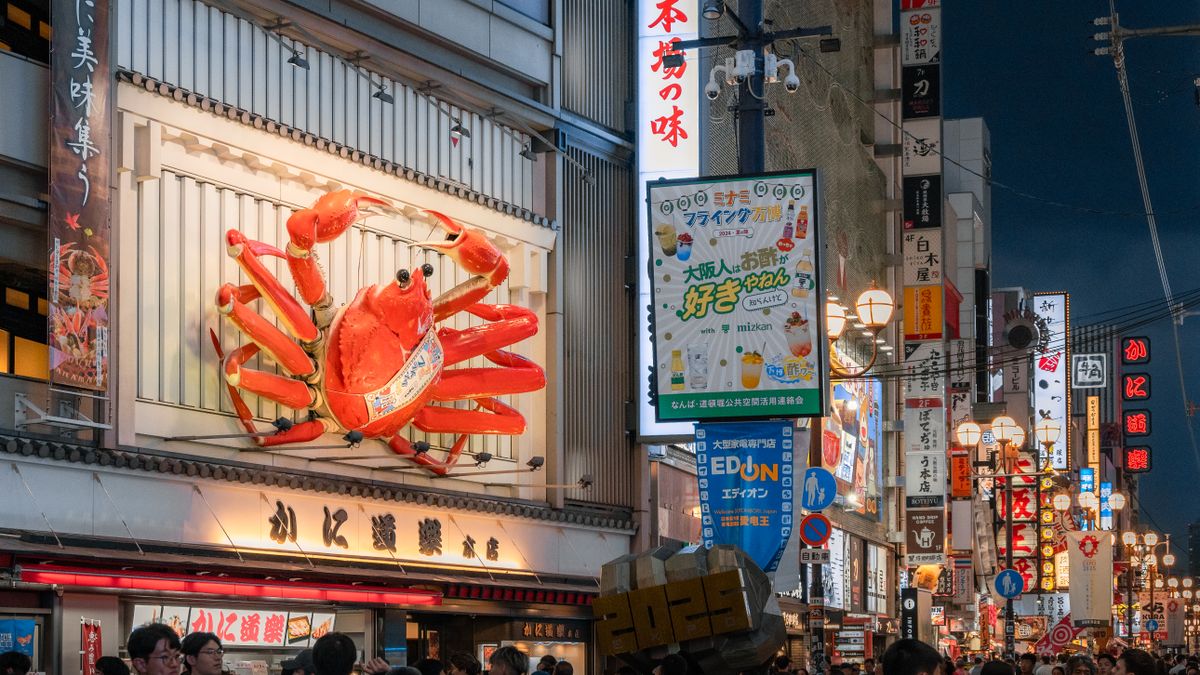
Hozenji Yokocho lets out onto Dotonbori with no warning, one step from lantern light into a wall of screens taller than the buildings holding them up. The canal runs green-black under Ebisubashi, and above it the crab works its claws in a slow mechanical rhythm it has kept since long before I was born, legs testing air that never moves. Behind me a group of teenagers photographs the running man again, the way every visitor here has for forty years, and I don't think less of them for it.
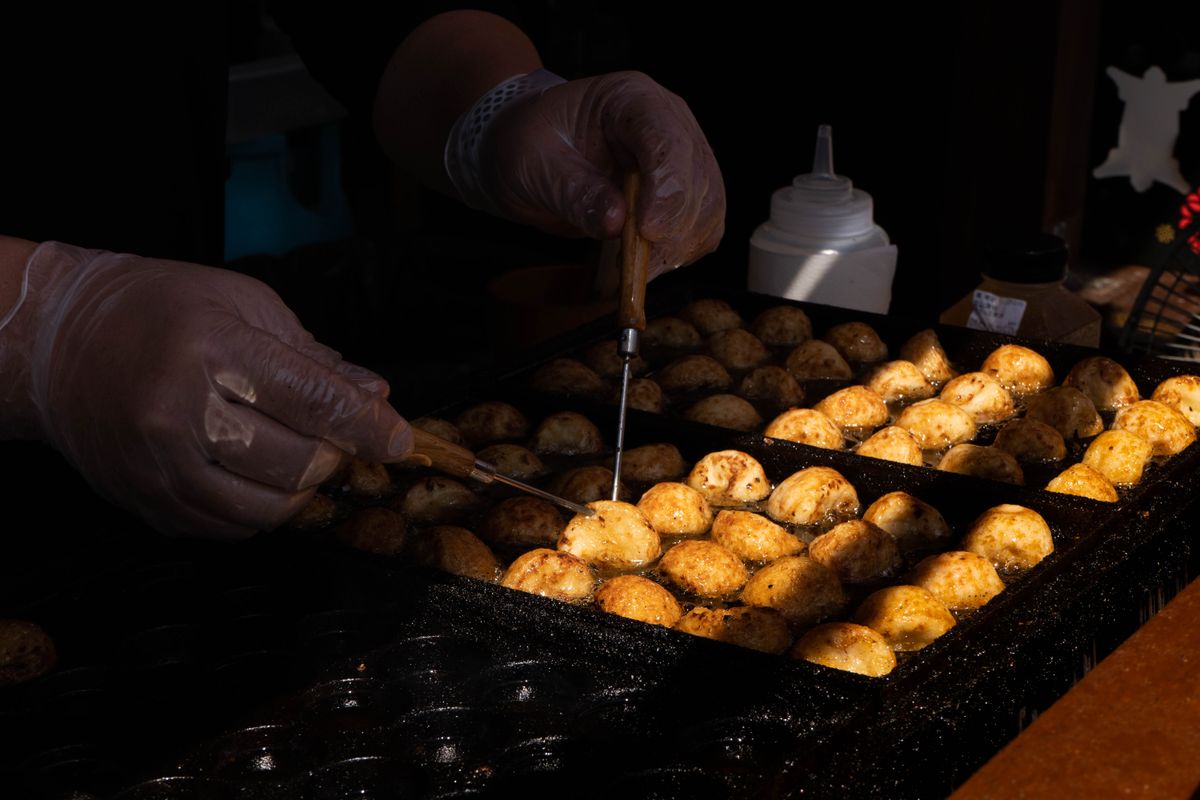
At a stall wedged between a pachinko parlor and a shuttered import shop, a woman in a headscarf and elbow-length gloves works two thin picks across a takoyaki griddle sixteen holes wide, flipping each half-cooked ball a quarter turn without once looking down. Her hands know the griddle the way a pianist knows a keyboard blind, and when a ball threatens to stick she doesn't fight it, just eases the pick underneath and lets the batter finish itself.
She hands me a tray of eight, bonito flakes still curling in the heat rising off them, and tells me to wait thirty seconds before biting or I'll regret it. I don't wait. Mouth full of molten batter, eyes watering, I regret it immediately, and the couple behind me laughs in a way that isn't unkind.
The Grill Line
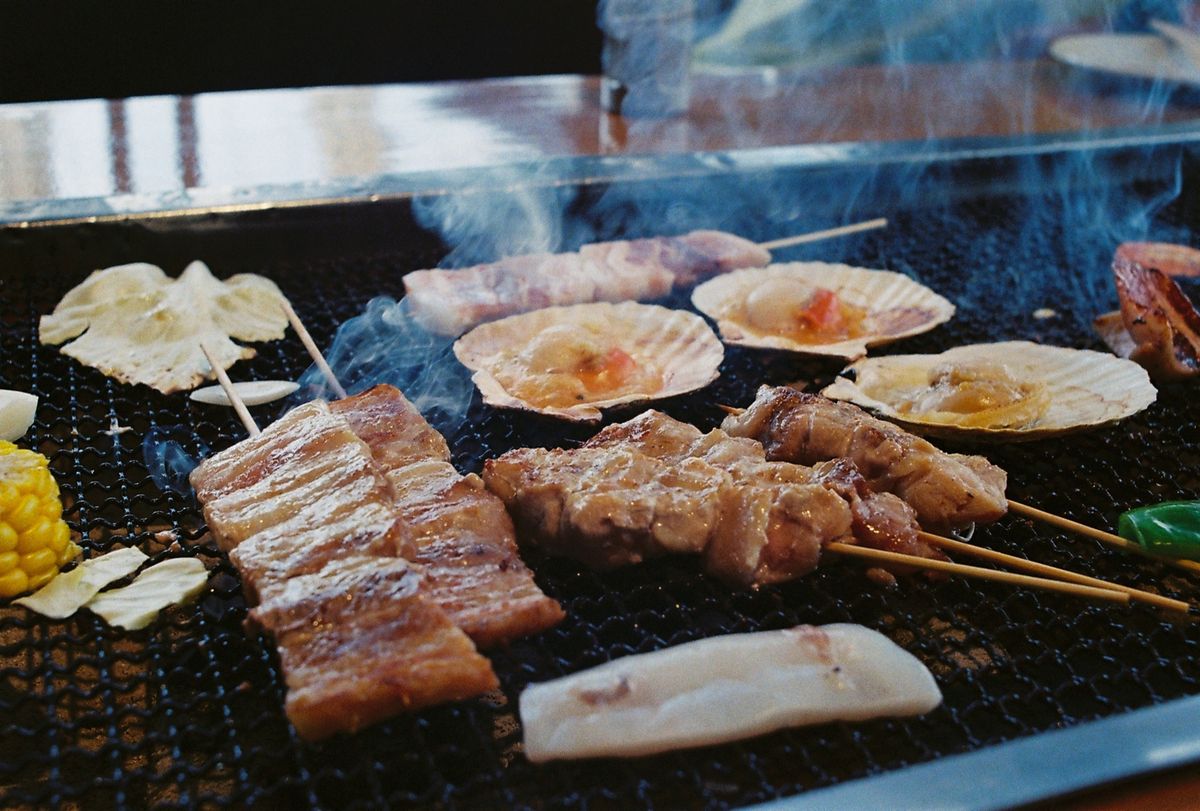
Further along Sennichimae, the kushikatsu stalls run their charcoal hot enough that the air above each grill bends the neon behind it, and a line of skewers goes down in twos and threes: pork belly, scallop, a whole quail egg threaded sideways so it won't split. The rule here, handwritten on a strip of cardboard taped to a communal tub of sauce, is the same one Osaka has enforced since the postwar years. Dip once.
A man in his sixties, apron gone the color of the sauce itself, watches the tub the way a crossing guard watches a school gate, and when a tourist two stools down reaches back in for a second dip he simply slides a fresh cup over without a word. No scolding, just a workaround so practiced it looks like hospitality. Further down the counter an elderly couple splits one scallop skewer between them, passing it back and forth without speaking, corn cobs turning gold on the grill beside their elbows.
One Night, Six Stops
Dip once, the sign says, and somehow that one small rule holds the whole street together.
The Canal at Twilight
By the time I circle back toward the water the sky has closed down to a color between rust and pink, and the neon has started doubling itself on the canal's black surface, brighter down there somehow than it is in the air. Away from Ebisubashi the crowd thins to a scatter of people leaning on the rail, and a street cleaner in an orange vest works the promenade with an earbud in one ear, laughing at something only he can hear.
I lean on the rail for a while and don't take a photograph, which feels like the correct thing to do with a view everyone photographs. A boat goes under the bridge empty, its operator finished for the night, running lights on but no passengers, and the wake it leaves takes a long time to settle.
Walking back to the hotel I find a kushikatsu stick still in my jacket pocket, forgotten there since Sennichimae, and it takes two more blocks before I pass a bin to put it in. My feet ache in the specific way only a night of standing at counters produces, and I don't feel like I've learned anything about Osaka I didn't already suspect. Just full, and glad of it.