The Mother Road, Peer-Reviewed
A Peruvian bridge inspector drives St. Louis to Santa Monica and can't stop grading everything that's still standing.

Total distance: 3,940 kilometres, St. Louis to Santa Monica, if you don't detour for gas station dinosaurs or teepee motels twice like I did. Net elevation change: near zero, sea level to sea level, and that number is a liar. The road climbs to 1,128 metres over Sitgreaves Pass before it ever comes back down. Temperature at Needles, California, hit 41°C on the dashboard thermometer at 3 p.m. and 9°C at the same mile marker after midnight. Tightest switchback grade, unposted, on the Oatman side of the pass: 15 percent by my own clinometer app, because nobody in 1926 filed a grade report.
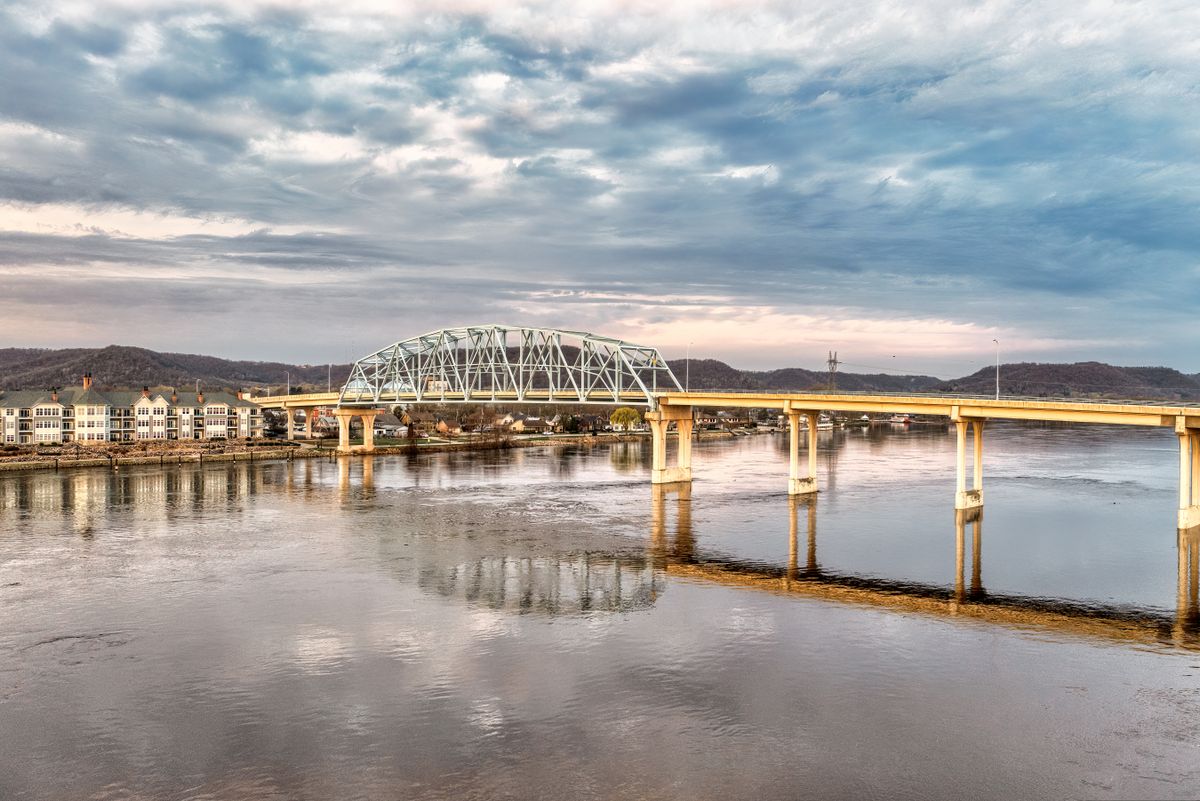
Leg One: St. Louis to the River, Mile 0, 143 Metres
Elevation at the riverbank: 143 metres. Grade of the approach ramp: negligible, 2 percent, no complaints. Temperature swing since dawn: 6 degrees, mild by the standards of what's coming. The truss bridge that carries the old alignment over the Mississippi is a Warren truss, riveted, not welded, which puts it comfortably pre-1960 and tells you the engineers trusted redundancy over elegance. Every diagonal doubles as a backup for its neighbor, so a single failed member doesn't collapse the span, it just makes the bridge inspector's job easier. I stood on the shoulder for ten minutes counting rivets instead of taking photos, which is either professional deformation or the reason I'm writing this at all.
Grade: B-plus. The original riveting has held for a century of freeze-thaw cycles that would embarrass a lot of concrete built forty years ago. Deducting the half-grade for the resurfaced deck, poured thicker than the original design load ever accounted for, because someone decided smoother ride quality was worth ignoring the dead-load calculation. It isn't going to fail on my visit, and it also isn't going to make the hundred-year mark without someone quietly re-rating it.
I filled the tank in St. Louis for $3.62 a gallon and pointed the car west on the frontage road that still calls itself 66 in defiance of the interstate running parallel forty feet away. Missouri keeps the old alignment stitched together with green shields and gaps where the state simply gave up and told you to merge onto I-44 for eleven miles. I did not enjoy those eleven miles. Nobody does.
Day one, St. Louis to Rolla
A bridge with redundancy fails politely. A road trip does not.
Leg Two: The Panhandle, Amarillo, 1,099 Metres
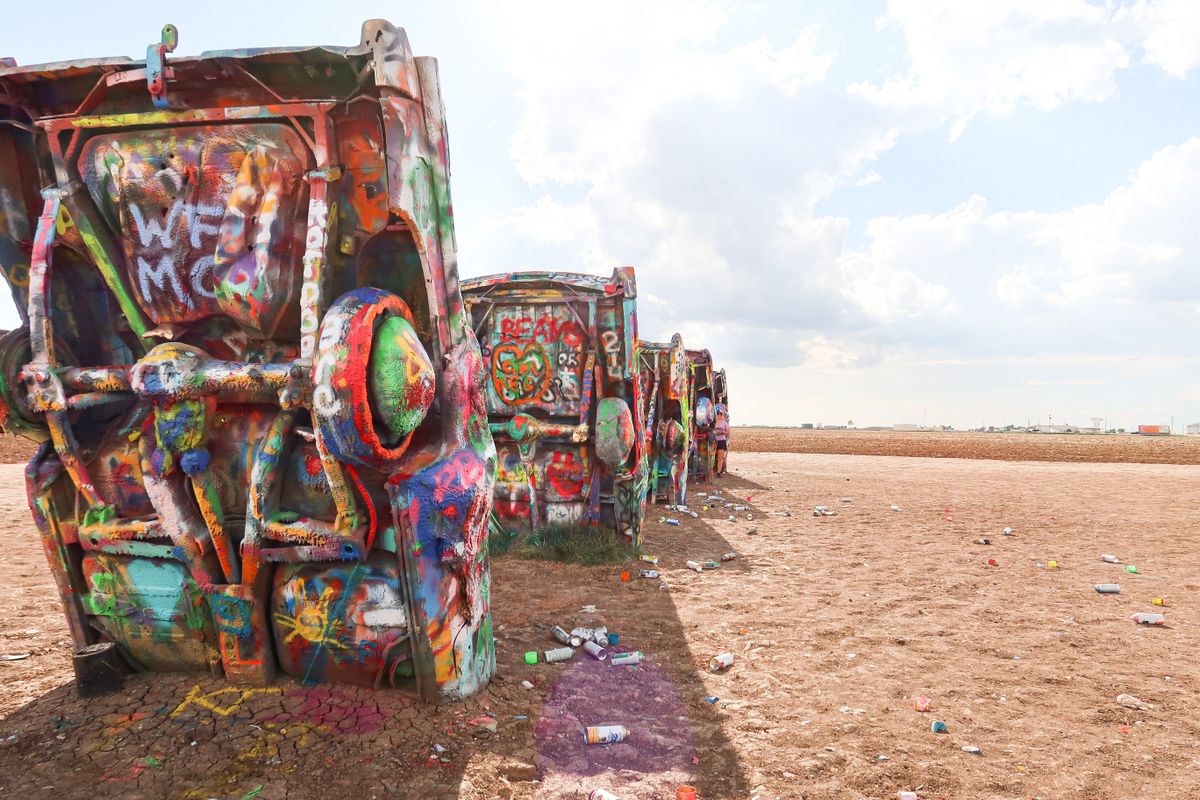
Elevation: 1,099 metres, high enough that the Texas Panhandle gets snow flurries in a season the postcards don't show. Grade: zero, flat enough that you can watch weather arrive from thirty kilometres out. Wind, unmeasured but constant, gusting hard enough that I braced against the car door twice just walking from the shoulder to the field. Ten Cadillacs stand nose-down in the dirt outside Amarillo, buried to the windshield at the same rake angle as the Great Pyramid of Giza, 51 degrees, which the artists apparently chose on purpose and which every tour guide repeats like it proves something mystical about American engineering instead of proving that 51 degrees is just a stable angle of repose for buried ballast.
Grade: incomplete, because this isn't a structure, it's a sculpture wearing a structure's clothing. The footings are just packed caliche, no rebar, no engineer's stamp, and that's fine, nobody is renewing a design load on a buried Cadillac. A plaque near the entrance claims the cars have been repainted 'over a million times since 1974.' At even one coat a day that's roughly 19,000 days, which is 52 years, which checks out almost exactly, so credit where due, someone did the arithmetic before I did.
A can of spray paint costs $5 from the trailer at the gate, or you bring your own and save the markup, which every local I asked recommended without hesitation. I painted a strip of turquoise across a rear fender already forty layers thick, added my initials, and drove off wondering how much dead load that field is carrying in dried acrylic at this point. Nobody has measured, and nobody plans to.
field notes
Bring your own spray paint, $5 saved per can versus the gate trailer.
Boots you don't mind ruining, the field floods after rain and stays soft for days.
Go at sunrise or dusk, the flat light does more for photos than noon glare ever will.
No fence, no gate hours, but there's a $10 suggested lot donation that keeps the ranch maintained.
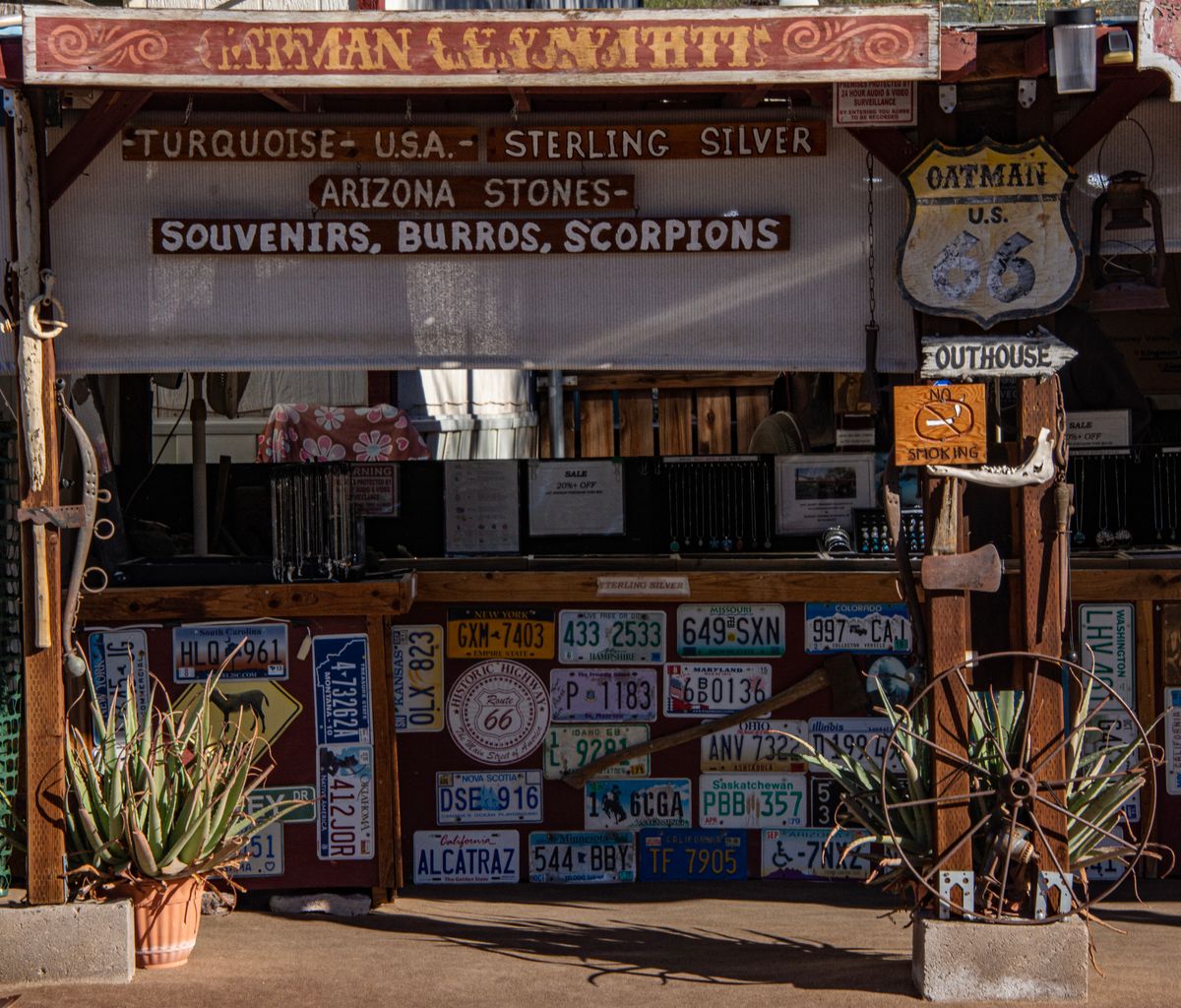
Leg Three: Sitgreaves Pass, 1,128 Metres, Grade 15 Percent
Elevation at the summit: 1,128 metres, up from 795 metres at Oatman itself, a gain of 333 metres in fourteen kilometres of switchback. Grade: 15 percent in the tightest curves, unposted, because the road was cut by hand in 1926 by men who did not have a grade study, just a mule train and a mountain that needed crossing. Temperature at the Colorado River crossing that morning: 34°C by nine a.m. Ninety minutes later, at the summit, it read 24°C, a ten-degree drop earned entirely by altitude. My brakes smelled like a hazard report by the time I pulled into Oatman, and that is not an exaggeration for effect, it's a stated fact: sustained braking on a 15 percent grade for fourteen kilometres will overheat pads not rated for it, and two cars pulled over ahead of me for exactly that reason.
Oatman survives on the burros that wander down from the hills their mining-town ancestors left behind, descendants of pack animals turned loose when the mines closed in the 1940s and never rounded back up. They stand in the middle of the two-lane road expecting carrots, and southbound traffic simply stops, which is its own kind of load-bearing structure, an entire local economy resting on the patience of tourists in rental cars.
The storefront sells turquoise jewelry, plush burros, and, per the hand-painted sign, 'scorpions,' which turned out to be real dead scorpions embedded in resin paperweights, $8 each, and not a typo I was hoping for. Its owner told me the building dates to the 1920s mining boom and has 'never needed a single repair.' The door frame disagreed with her, visibly out of plumb by what I'd estimate at two centimetres over its height, which is either settling that stabilized decades ago or settling that hasn't finished yet. I didn't have a level in the car, and I regret that more than most engineering oversights of my career.
Fourteen kilometres of switchback, cut by hand, no grade study, still holding.
Leg Four: Santa Monica, Sea Level, Mile 3,940
Elevation: 0 metres, officially, though the pier itself sits roughly 9 metres above the water on timber pilings driven into the seabed in 1909 and replaced in sections ever since. Grade: the parking ramp down to the beach lot, 11 percent, steeper than anything Missouri bothered building and steeper than most of the mountain I just came down. Temperature: 22°C, marine layer, a ten-degree drop from the desert two hundred kilometres inland that morning, which after three weeks of dashboard thermometers felt less like weather and more like a data point.
The pier's timber substructure is rated, per the placard near the entrance, for pedestrian loads only, no vehicles past the service gate, and the wood underneath has clearly been replaced piecemeal rather than as a full re-deck: newer pale planks alternate with silvered, decades-weathered ones in a pattern that reads less like design and more like a maintenance budget spent one grant at a time. Grade for the pier: B-minus. It's still standing over a century of Pacific swell, which is more than most timber structures manage, but the patchwork repair strategy means nobody has a single clean drawing of what's actually holding the far end up anymore, and I'd bet money the last full inspection report has a line item that says 'assumed adequate' at least once.
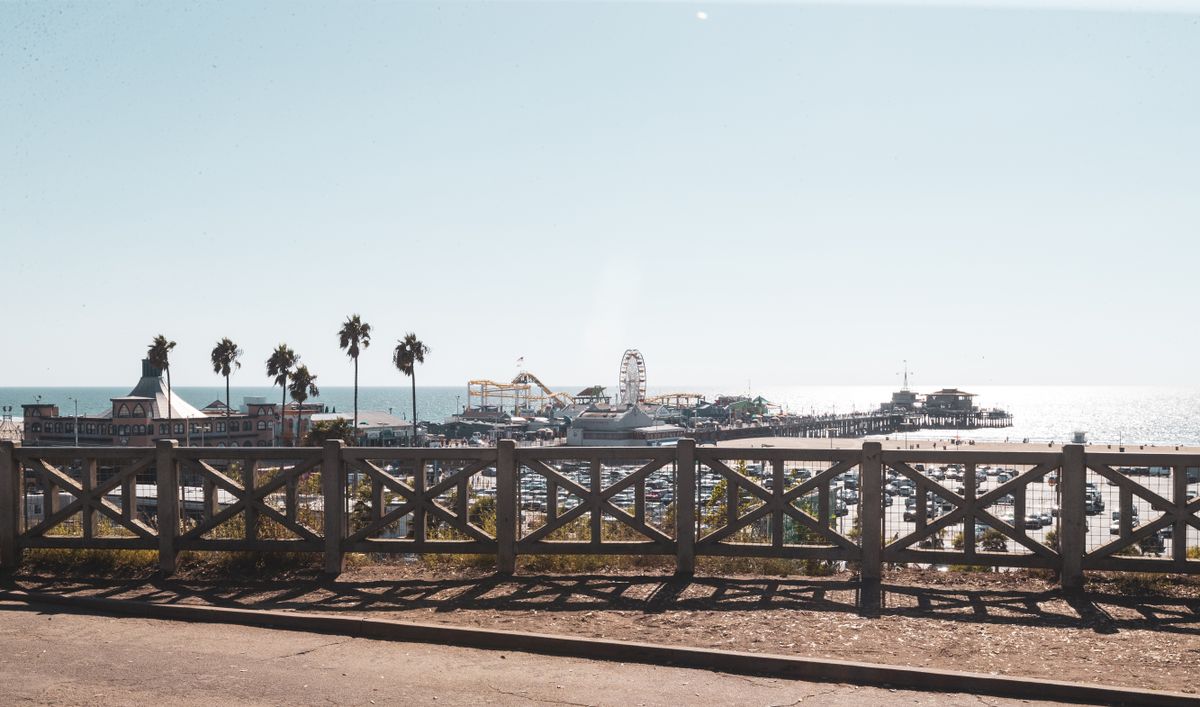
A sign near the pier entrance declares this the official end of Route 66 and puts the total length at 2,448 miles, a number I'd clocked at closer to 2,451 on my own odometer, accounting for the detour through Oatman and a wrong turn outside Kingman that cost me six kilometres I am still annoyed about. Three miles is not a rounding error you get to keep on a road this famous. I skipped a photo with the sign and photographed the pier decking instead, because at least the decking was honest about its condition, which the sign was not.
Fuel across seven fill-ups: $312. Motels for nine nights: $612, four of those nights share-parked next to eighteen-wheelers whose engine brakes I could have used on the Sitgreaves grade. The bridge over the Mississippi will outlast the pier. I'd stake my license on it. ■