Nothing Crisped Yet: A Day on Valencia's Albufera Rice Circuit
A paella chef drives south from Valencia to watch the rice that will end up in her own pan still drinking water, months before anyone calls it ready.

Water Still Going In
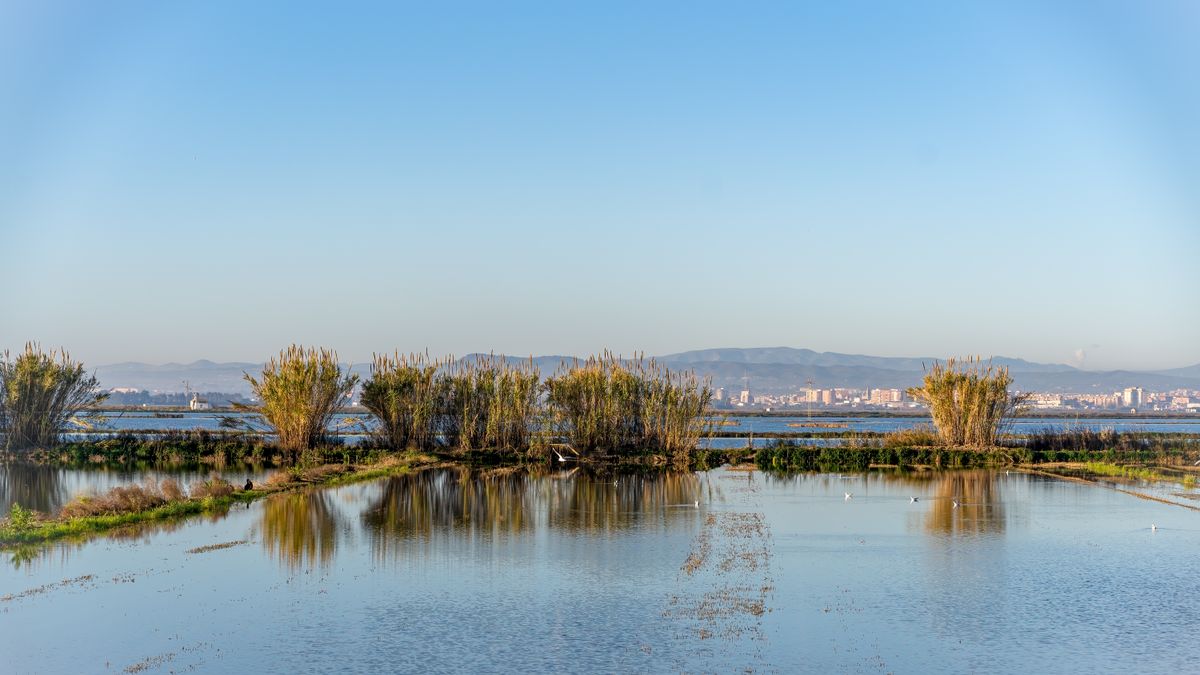
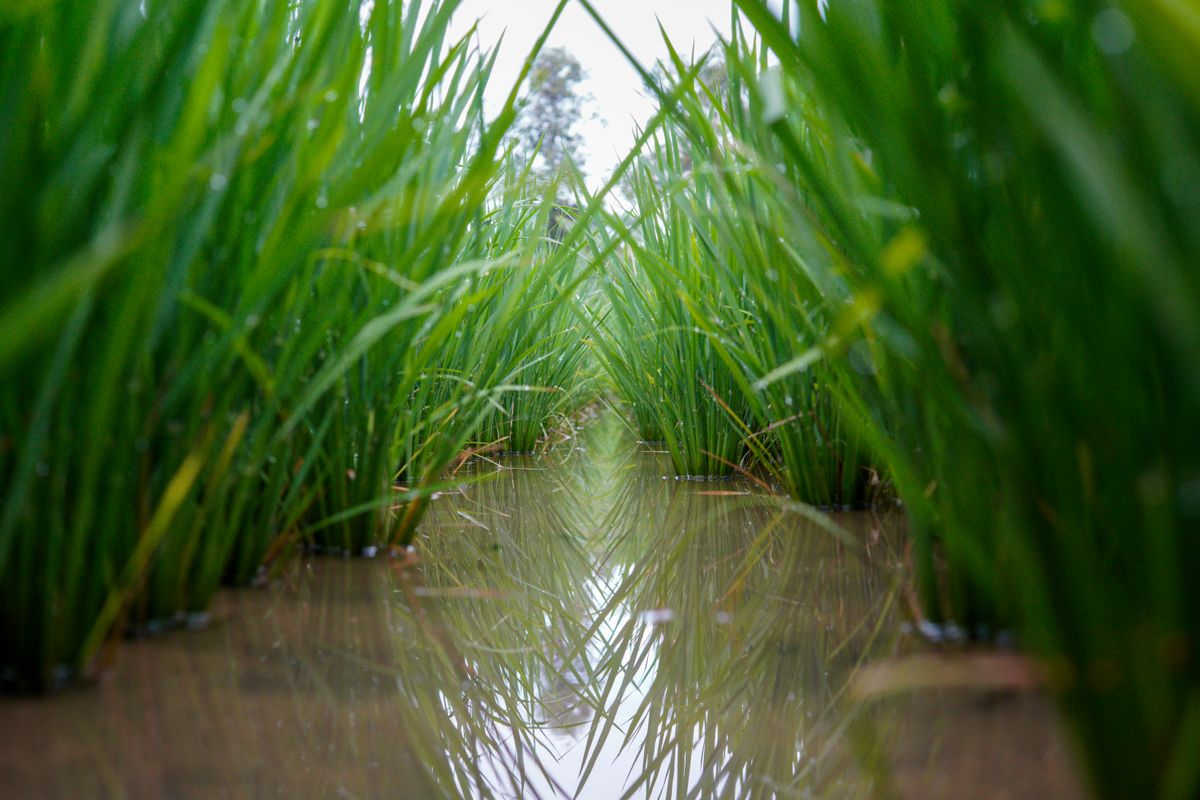
Forty minutes into a paella you don't touch the rice. You watch the surface, listen for the hiss dropping to a crackle, and until then you leave it alone. The paddies outside El Palmar in the third week of August are at that same stage, only stretched out over months instead of minutes: every field flooded ankle to knee deep, the water sheeted flat and green-black under a white sky, the rice itself barely a hand's width above the surface. Nothing here is close to ready. The harvest that turns these fields gold doesn't start until September, later still in a wet year, and anyone who drives down expecting the postcard version in August has the wrong month.
I came down the CV-500 from Valencia with the windows open, and the smell changes before the view does: wet mud, cut reeds, something sweeter under it I've never managed to name despite cooking with the stuff that grows here. El Palmar sits low, a single road in, rice on both sides all the way to a horizon you can't quite locate because the water keeps reflecting the sky back at you. An egret stood in one paddy so still I mistook it for a marker post until it unfolded and left. Herons work the drainage channels between plots, unhurried, the kind of unhurried that comes from never having to explain yourself to a dining room full of hungry people.
Bomba is the grain that grows in these paddies, round and short, kept true by generations of farmers saving the right seed rather than any lab. It holds its shape in a way most rice can't, low enough in the starch that turns rice gluey that it won't collapse into paste no matter how long it sits in stock. A lot of the kitchens around here now use the Albufera variety instead, a cross of bomba and senia bred for a bigger yield but built on the same trick. Rice has been grown in this delta since the Al-Ándalus period, channels and paddies laid down long before anyone thought to put saffron and rabbit in a pan, and standing at the edge of a flooded field in August it's easy to forget you're looking at an old piece of engineering dressed up as scenery.
A minibus pulled up while I stood at the edge of one paddy, and eight people got out already holding their phones up, already disappointed. One woman asked her group, loud enough for me to hear, why nobody told her the fields would be green instead of gold. I've watched that exact face at a dinner table, the one that orders paella at eight and expects it plated by quarter past. You don't rush a pan, and you don't rush a wetland that took centuries to organize itself into rice. She was back on the bus within a few minutes. That's a table I'd have refused to reset early.
Call this stage what it is. Nothing crisped, nothing close, the grain still taking on water with months to go before anyone calls it ready. The only honest report from the paddies themselves in August is green, and if you came for gold, you came in the wrong season. Never got there, not yet, not by a long way.
Coming to a Simmer
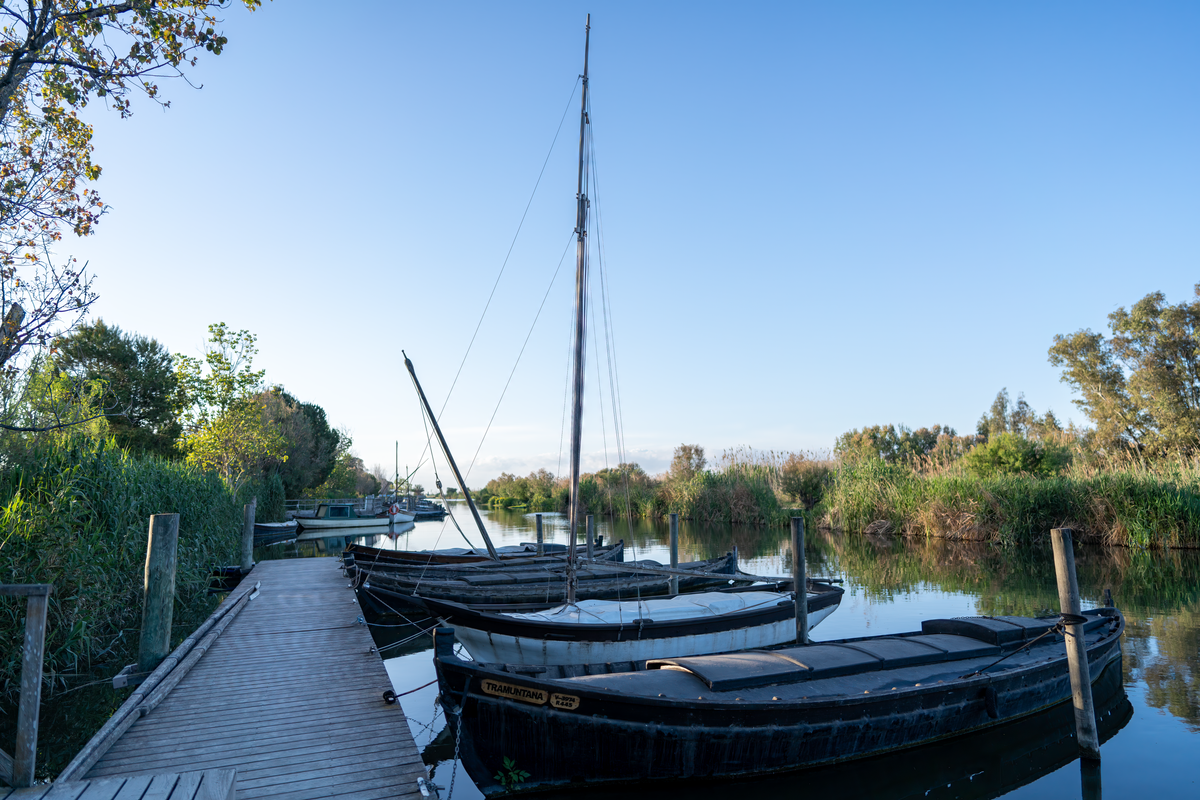
There's a stretch in every paella, maybe ten minutes after the stock goes in, where nothing looks like it's happening and everything is. The boat out of Catarroja does the same thing to a group of strangers. Six of us climbed into a flat-bottomed lagoon boat at the little dock there, a low black hull with a bench down each side, and for the first few minutes it was just the boatman poling us past the moored boats while nobody talked.
Catarroja's port is small, a run of these traditional boats tied along a concrete edge, paint flaking on most of the hulls. The basic ride, no guide, no lunch, just the trip out and back, runs somewhere around 5 to 8 euros a head depending who's asking and how many of you there are. I paid mine in coins because the boatman made a face at my ten-euro note, and I understood the face completely. Nobody wants to break a ten at seven in the evening for a boat ride.
Past the last of the moored boats the channel narrows and the reeds close in taller than the boat, and that's when the talking starts again, quieter than before. The lagoon opens out flat and enormous once you clear the reed banks, water in every direction, more egrets working the shallows, a pair of coots that scattered when we got close. Someone at the front asked the boatman how deep the water was, and he just held up one hand, flat, level with his own knee. That was the whole answer. The Albufera is a wetland before it's anything else, and everyone on board with a mental picture of a proper lake had to sit with that for a while.
This is the stage where you leave the pan alone and it either turns out right or it doesn't, and you won't know until the rice tells you. The ride back into Catarroja as the light dropped had that same suspended quality, everyone quiet, nothing crisped yet, but for the first time all day I'd have put money on it going well.
Off the Heat
A pan comes off the heat when the sound underneath it changes, the hiss thinning into something closer to a crackle, and that's the moment you find out whether you nailed it. Lunch in El Palmar told me which one, fast.
I sat down two streets back from the water, plastic chairs, a pan the width of a manhole cover already going over a ring of gas out front, and ordered the real thing: chicken, rabbit, green beans, garrofón, rosemary laid across the top for the last few minutes, rice gone the deep saffron orange that only comes from real stock, not the packet version. A full lunch like this runs 18 to 25 euros a head around the village, and at that price the kitchen isn't cutting corners on the rice.
The table next to mine, four Germans, asked the waiter for a seafood paella and got the kind of pause a good cook gives before saying no. El Palmar is the village where this dish was born, chicken and rabbit and rice grown in the paddies you can see from the terrace, and asking for prawns here is a bit like walking into a bakery and requesting a croissant made of rice. The waiter didn't explain any of that. He just said they didn't have it, which was its own kind of verdict.
cook's notes
Bring repellent from June through September, the reed channels breed mosquitoes badly at dusk.
Come July or August for the flooded green paddies, September through November for the gold harvest ones, they're two different trips.
Boats wait at the Catarroja dock, flag one down or ask at any bar along the front, no booking needed for the short ride.
Carry small notes and coins for the boat, a ten-euro bill for a five-euro ride gets you a look, not a smile.
A day on the Albufera
Seafood in a paella valenciana is a menu written for people who won't ask questions.
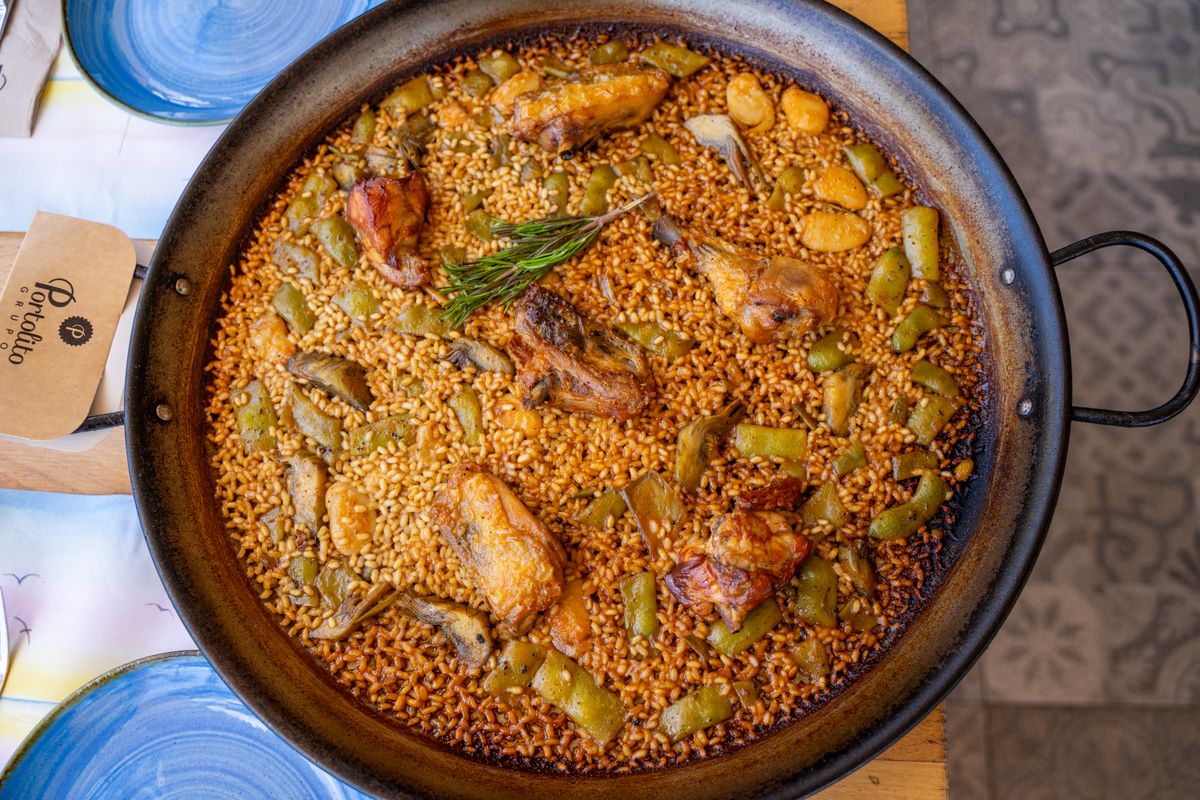
Mine arrived with the socarrat already showing at the edges, a dark lace of rice gone crisp against the pan, and when I got my spoon under it the bottom layer came away in one piece instead of crumbling. That's the tell. Crumble means the heat caught too hard in one spot. A clean sheet means it stayed even the whole way through, which on an outdoor gas ring in August, cooking for a full terrace, is not nothing.
Crisped right, this once. Not every plate in El Palmar earns that, and the Germans got their chicken version eventually and picked around the rabbit like it had personally wronged them. I finished mine down to the pan, scraped the corner where the socarrat holds thickest, and left thinking about how long these paddies take to grow something that gets eaten in under twenty minutes. Fair trade, most days. Today, barely. ■