Gloss, Snap, Bloom: A Chocolatier's Walk Through Zurich
A Swiss chocolatier checks the temper of three Zurich chocolate shops, starting with the lake and ending with a verdict.
Dry Conching: Paradeplatz
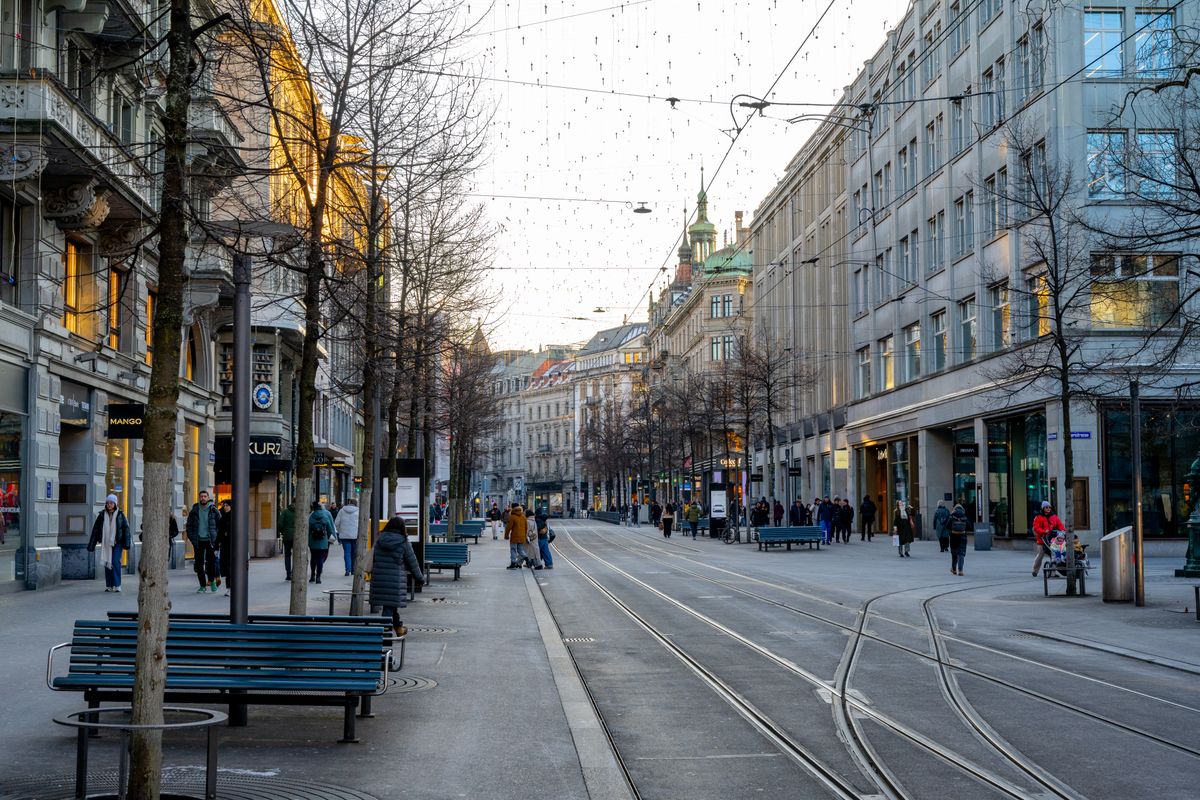
Paradeplatz sits partway down this street, tram bells included at no extra charge.
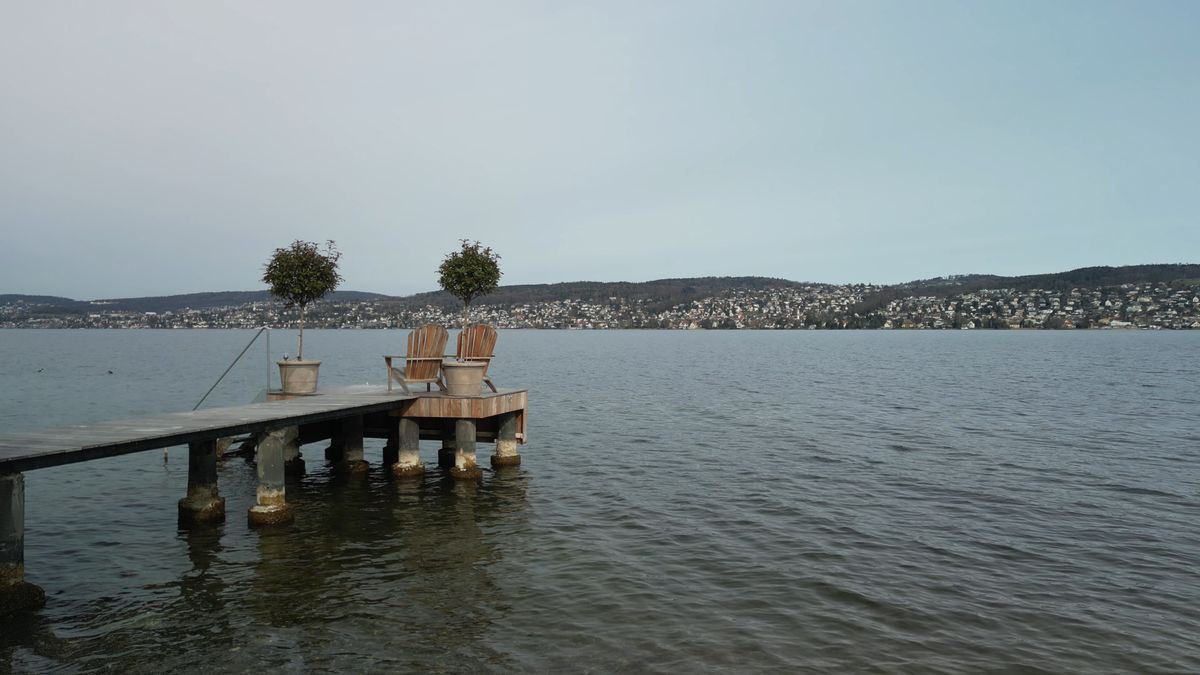
The lake at Bürkliplatz was doing something no couverture should ever manage: throwing back a flat, unbroken sheet of morning light, no streaking at the rim, no dull patches where the surface had cooled too fast. Two chairs sat empty on the pier, potted trees between them, the far shore sitting low and gray across the water. If a batch came out of my tempering machine with a surface like that, I would still check it before I trusted it. Water gets to cheat. It has no cocoa butter crystals to keep in line, so the gloss means nothing except that the wind had stopped. I left the chairs empty and walked into town.
Bahnhofstrasse by late afternoon was trams and shoulders and the kind of light that makes every window look better than it is, brass fittings picking up gold, glass throwing it back twice. Pedestrians moved in that particular Zurich hurry that isn't quite a rush, more a refusal to be seen standing still. Paradeplatz sits partway down the street, and Confiserie Sprüngli sits on Paradeplatz, and has done since 1859.
David Sprüngli founded the business in 1836. The building took its current face, all curling Jugendstil ironwork and glass, after a renovation finished in 1910, which makes the version tourists photograph a kind of re-temper: the original shop reheated, reworked, and cooled again into a shape that held. I've re-tempered chocolate that had gone wrong before service often enough to recognize the impulse to fix a surface rather than start over.
In 1892, Rudolf Sprüngli split the business between his two sons, and the split still shapes what a visitor gets today. Johann Rudolf took the chocolate factory, which grew into Lindt and Sprüngli, the industrial side, bars sold everywhere from here to an airport kiosk in a country that has never seen this lake. David Robert kept the confectionery counter, the one still standing on Paradeplatz, still run by the same family, sixth generation now. One brother scaled up. The other stayed at the counter and stayed independent, which is the harder thing to keep doing for over a century.
Inside, the cases were doing what good tempered chocolate does: even sheen, a hard clean edge where the pieces had been cut, no bloom fogging the surface even under the case lights. Whatever else got re-tempered here since 1836, the chocolate itself hadn't been rushed. In temper.
A counter holding its shape for a century is the harder trick than scaling up.
— Nina Baumann
Plastic Phase: Luxemburgerli
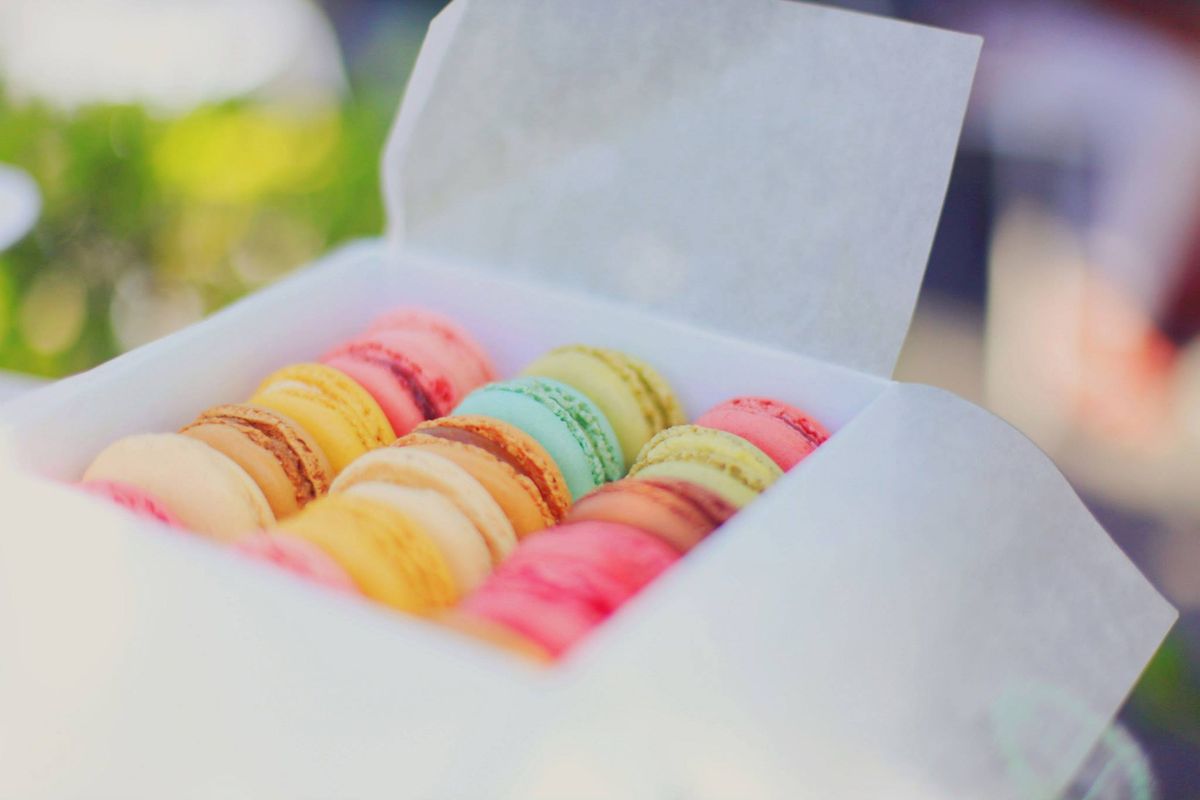
Luxemburgerli don't shine, and they're not supposed to. The test for a macaron shell isn't gloss but give, the soft crush under a thumb before the shell lets go, and the ones in the takeaway box gave exactly that way: pale pink, pistachio green, a yellow that had to be lemon, none of them holding their shape a second longer than they needed to.
The counter queue moved the way queues move when the staff have done this ten thousand times, boxes folded and filled and tied almost without looking at their hands. Nobody behind that counter was rushing the fill or skimping the piping, at least not that I could see from where I stood, and I was watching for exactly that.
The recipe came to Zurich in the 1950s, brought by a young pastry chef from Luxembourg, which is where the name comes from and nowhere else useful. They're still made fresh every day from regional ingredients, sold within hours of coming out of the oven rather than held for a season the way a praline can be.
A shell that's been rushed through its bake dries out at the edge before the center sets, and you can feel it before you taste it: a shell that cracks instead of giving, crumbs instead of a clean bite. Nothing in the box did that. Every piece gave first and broke second, which is the order it's supposed to happen in.
Plastic phase, in the conching sense, is the stage where the mass is soft enough to work but not yet flowing, still holding a shape if you leave it alone. That's what the shells were doing on my tongue, holding shape until they weren't asked to anymore: not bloomed, not rushed, just soft where soft was the plan.
Liquid Conching: Läderach
Läderach chocolate doesn't keep the way Sprüngli's does, and that's a decision, not a flaw. The house works in soft, fresh-filled pieces rather than the long-shelf pralines built for a gift box that sits in a drawer for a month, and a soft filling reads differently under light: less snap when you break it, more give when you bite, a shine that comes from cream fat sitting close to the surface rather than a hard cocoa butter set.
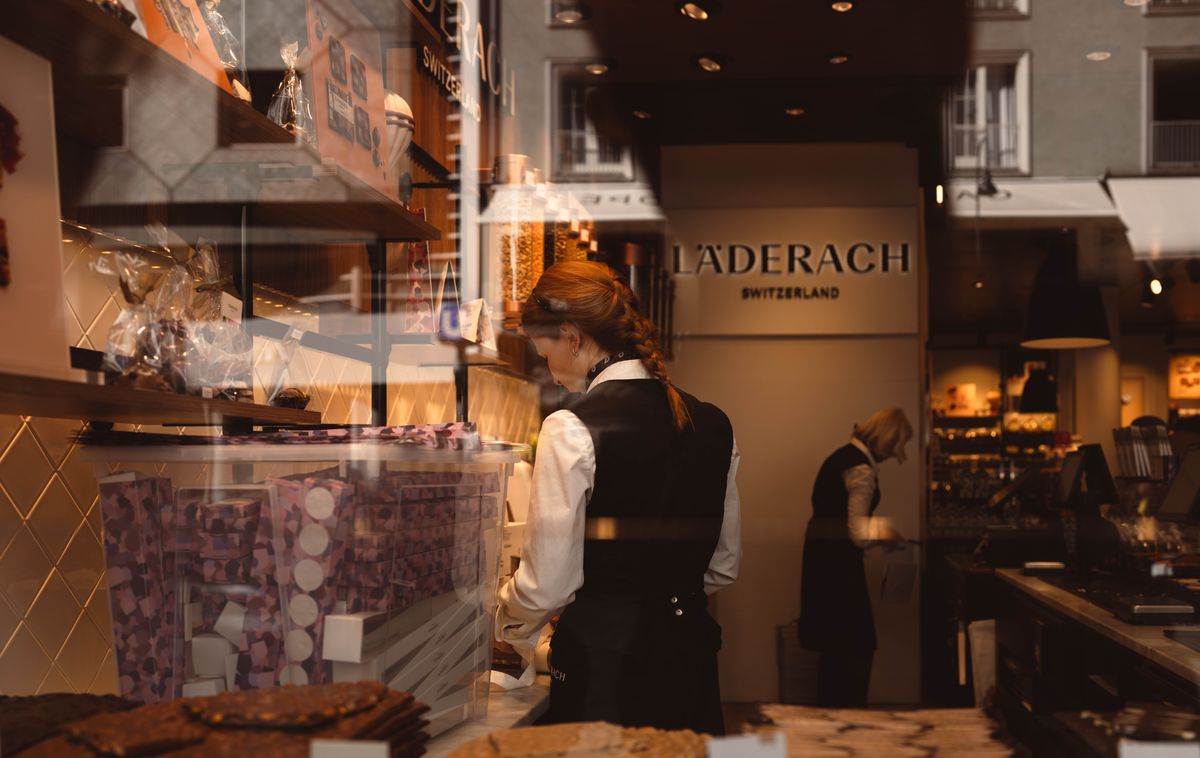
From the street the window read LADERACH SWITZERLAND in plain block letters, no Jugendstil curling anywhere near it, and behind the glass a staff member worked the counter while a tray of chocolates sat foreground, catching the shop lights at an angle that would have shown me a bloom fog in half a second if there'd been one to show.
chocolatier's notes
Check gloss before you check price. Bloom shows up as a gray or white fog, not a flavor.
Eat Luxemburgerli the day you buy them. The shells lose their give by the next morning.
Läderach pieces travel worse than Sprüngli's for exactly the reason they taste better fresh.
Walk the lake first. Nothing on Bahnhofstrasse will make you slow down the way the pier does.
Sprüngli sells a chocolate built to survive a shelf. Läderach sells one built to be eaten within days, and the two businesses are answering different questions with the same raw material, which is the kind of thing that only looks like a contradiction if you've never had to choose a formula yourself. A rushed batch looks fine for an hour and then tells on itself; a slow one looks fine for weeks. Neither is more honest than the other. Both still have to pass the same test at the counter, on the day.
I went back to the pier before the trams started running less often for the night. The lake still had that flat, cheating gloss, the two chairs still empty, the town still sitting low across the water the way it had that morning.
None of the three shops earned that finish honestly, not the way a temper is earned, tested, held. I liked the lake more than I liked any of them, which isn't the review anyone asked for, but it's the one I've got. In temper, all three. The water just got there first. ■