Every Good Gondola Is Built Crooked on Purpose
A squero carpenter crosses Venice to size up the boatyards and boats he didn't build, and finds that the asymmetry everyone assumes is a flaw is actually the whole design.

Keel
I cut frames for a living, on a canal quieter than the ones printed on postcards, and I don't often get a free morning to look at anyone's boatyard but my own. This one I took anyway, in August, because a squero worker who never checks another squero's work is either perfect or lying to himself. I'm neither, so I went to look.
Frame
The reading before I'd crossed a single bridge: a yard carrying more repair work than three men can comfortably clear, hulls stacked two and three deep against the shed wall. That's not failure, that's a squero with more trust than capacity, which in this trade is the better problem to have.
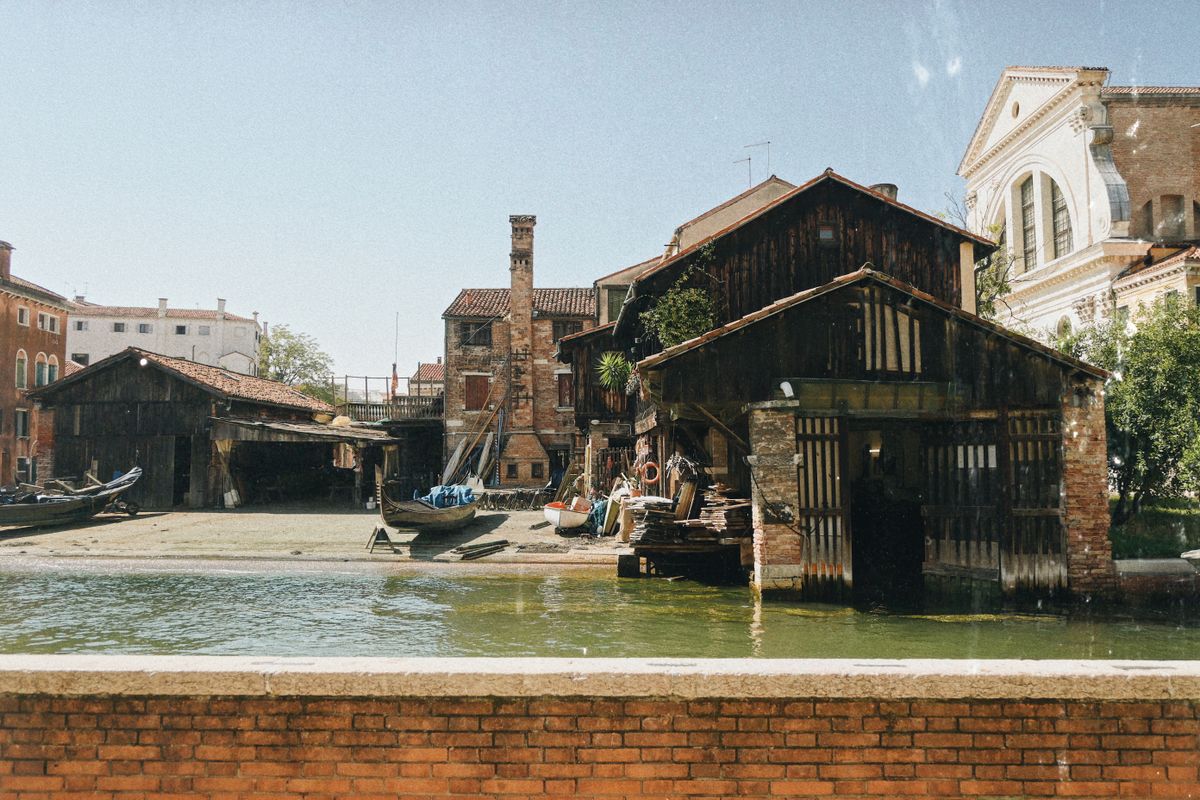
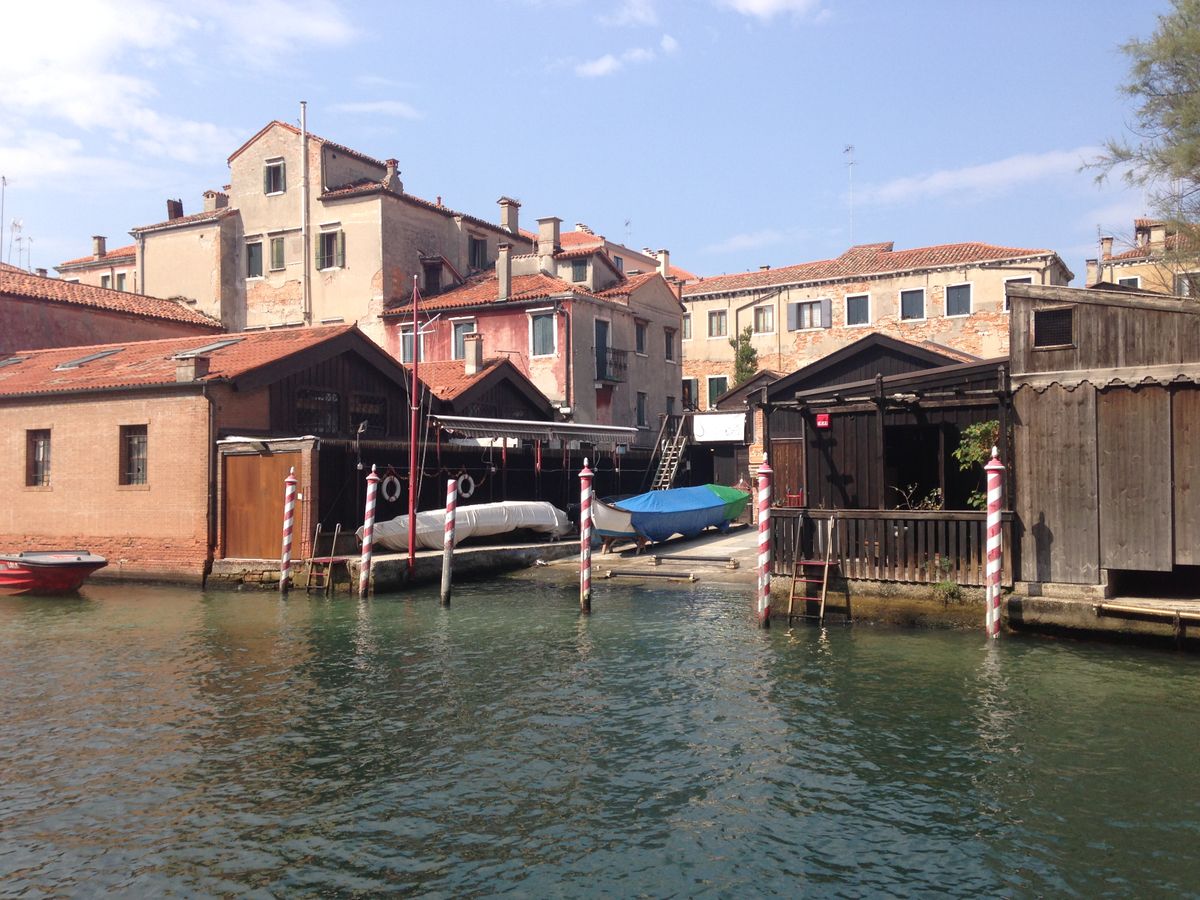
Squero di San Trovaso sits on Rio di San Trovaso in Dorsoduro, and from the fondamenta directly across the water, Fondamenta Nani, you can watch the whole yard for the price of standing still. It dates to the 1600s and it's the oldest of the three or so boatyards left in Venice still building and repairing gondolas for a living, which means every hull propped in that shed has already survived one Venetian winter and is being asked to survive another. Nobody lets you inside. The yard isn't set up for visitors and never claims to be, so the view from across the canal is the whole transaction, and it's a fair one.
A woman two spots down from me on the fondamenta leaned so far back trying to fit the whole shed roof into her phone that she nearly went into the canal, one hand grabbing the rail to correct for a wide shot she didn't need. Over-corrected, plainly, for a building that isn't going anywhere. I've seen apprentices do the same thing with a hull, oversteaming a plank to force a curve the wood was never going to hold, and it ends the same way: a scramble to recover, and a mark left on something that didn't ask for it.
Call the yard itself well trimmed. Carrying that much work without falling behind isn't luck, it's frame practice that hasn't slipped in three centuries, and you can see it holding from thirty meters off without ever setting foot inside.
Planking
The reading here isn't about a building, it's about a single piece of walnut: does the fulcrum sit where the rower needs it, or does he spend the whole crossing fighting his own oar. A bad forcola reads exactly like a bad hinge, and everyone downstream of it feels it.
A gondola is not built symmetrical, and this trips up more visitors than anything else about the boat. One side of the hull runs longer and sits higher than the other, on purpose, because every gondolier stands and rows from the stern, always on the same side, and a boat that met the water evenly on both flanks would roll under him the moment he leaned into the stroke. The asymmetry isn't a flaw somebody never fixed. It's the fix. Eight kinds of wood go into a hull, mahogany, cherry, fir, walnut, oak, elm, larch and lime, and a squeraroli chooses each one for how it bends and how it lasts, but none of that timber selection matters if the base shape doesn't already account for a man standing on one side of it.
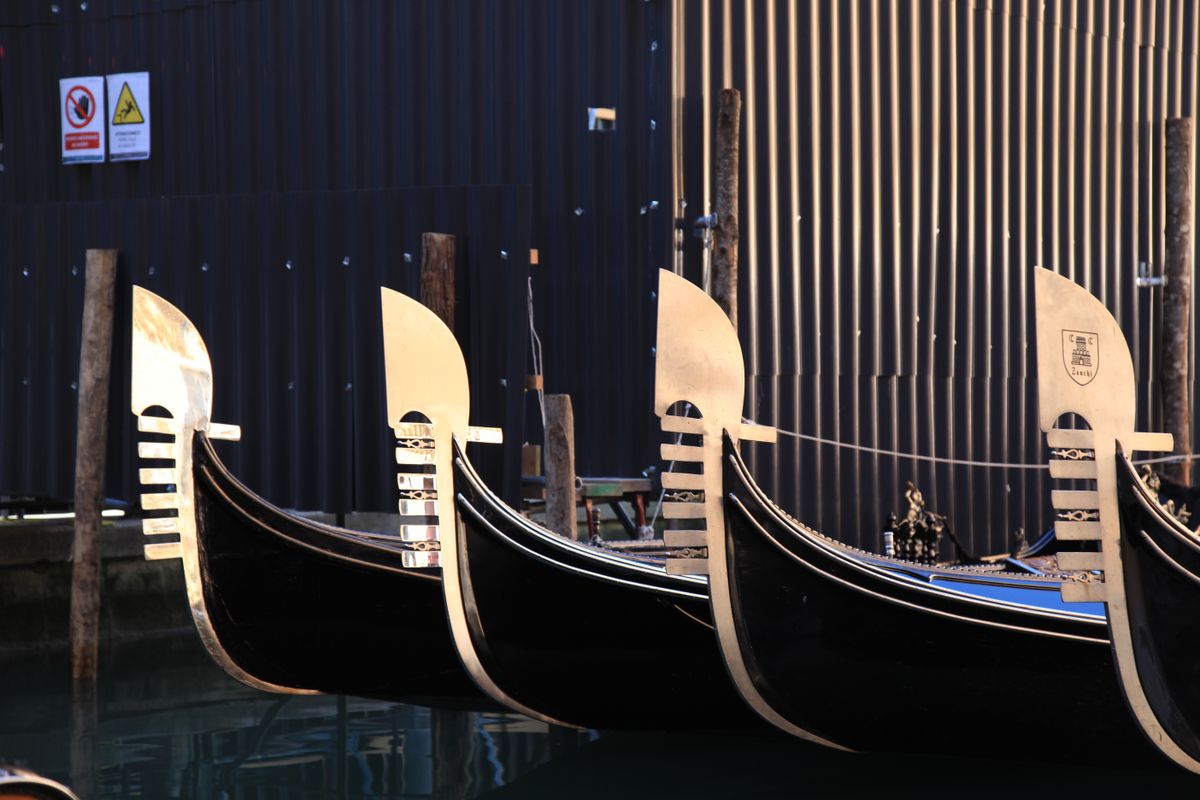
The forcola itself is carved by a remeri, not a squeraroli, a different trade inside the same yard, and it's cut from one block of walnut into a shape that looks less like a tool than a piece of driftwood somebody got sentimental about. That's deliberate too. The asymmetric curves give the rower several different pivot points along the same piece of wood, one for cruising, one for a tight turn, one for backing water, so he isn't rowing against a single fixed hinge all day. What's pictured here isn't the forcola, it's the row of prows and their iron ferri moored along a nearby canal, but the same logic runs the length of the boat: nothing on a gondola is straight by accident.
Call the design well trimmed, the best kind of well trimmed, the kind where the correction is built into the frame instead of bolted on after the fact. Most of what I fix back home is somebody's over-correction from years earlier. This boat never needed one.
A symmetric gondola would roll the moment its oarsman stood up to row.
Trim
The reading before the gondola even entered the canal: gondolier standing tall on the stern deck, weight already shifted toward his rowing side before the first stroke, which is either confidence or a man compensating early for a boat he doesn't fully trust yet.
Ponte dei Pugni crosses a narrow stretch of canal near Campo San Barnaba in Dorsoduro, open to anyone at any hour, no ticket and no gate, and it's a better place to watch a gondola work than most of the wider tourist water because the channel is tight enough that mistakes show. I watched one gondolier bring a boat through a turn there that had maybe a meter of clearance on either side, oar barely leaving the water between strokes, boat holding its line without a single overcorrection.
Boatwright's notes
Watch Squero di San Trovaso for free from Fondamenta Nani, across the canal in Dorsoduro. The yard itself isn't open to visitors, so don't bother asking.
Ponte dei Pugni, near Campo San Barnaba, is open around the clock and free, and the narrow canal there shows a gondolier's technique better than the wide water near San Marco.
Official gondola rates are set by the city and posted at every station: 90 euros for 30 minutes by day, 110 for 35 minutes in the evening or night, 40 for a 20-minute extension.
That price is per boat, up to five people, not per person. Split it before you haggle over it, because there's no haggling anyway.
What a gondola actually costs
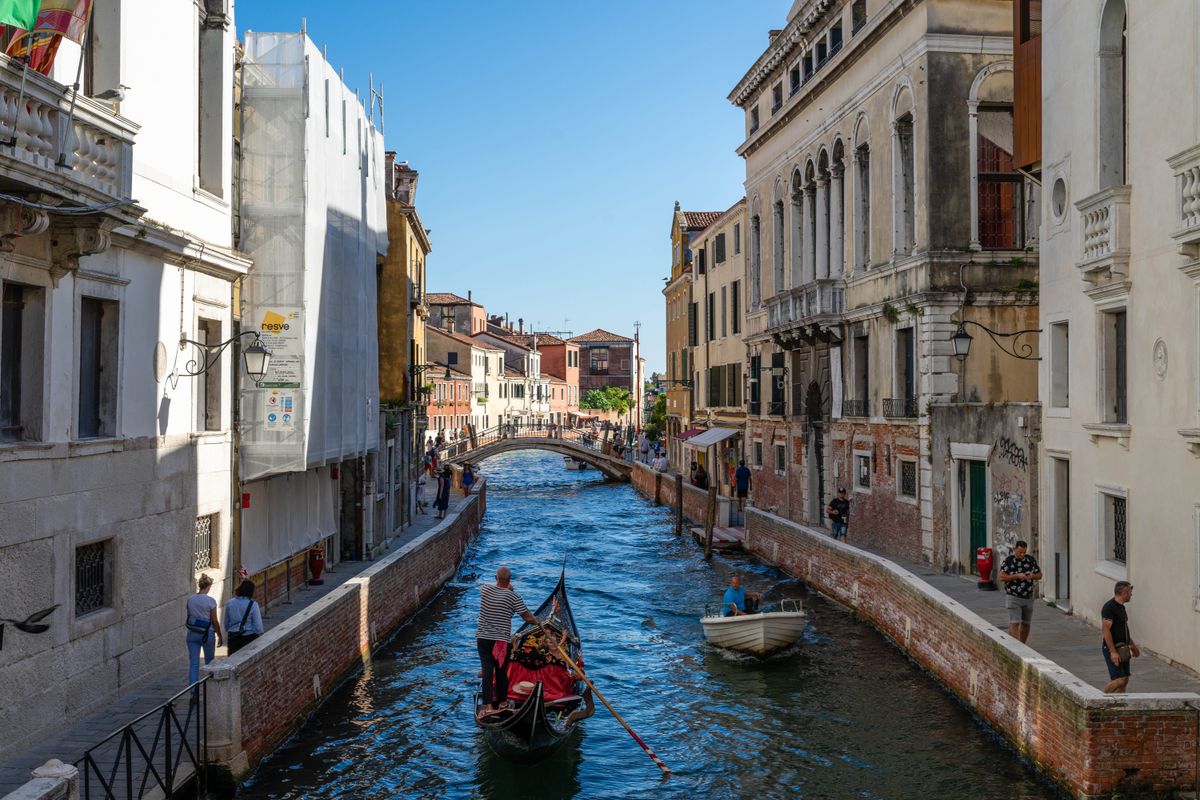
A second gondolier coming the other way wasn't so settled. He dug his oar too deep on the exit stroke, again and again, fighting a drift that his own overcorrection was causing rather than solving, the boat nosing toward the near wall each time he tried to straighten it. His passengers didn't seem to notice, they were looking at the buildings, which is fair, because they'd paid ninety euros for a thirty-minute daytime ride at the going Comune di Venezia rate and nobody promised them a lesson in trim. That rate is posted at every official station and it's per boat, not per person, so five people split it same as one. Evening and night rides, seven at night to four in the morning, run a hundred and ten euros for thirty-five minutes, and a twenty-minute extension is another forty.
I didn't learn anything at San Trovaso or Ponte dei Pugni that I don't already know with my hands, and I'm not going to pretend a morning across town changed how I cut a frame. What I'll say is the whole city runs on the same correction I make every week in my own shed: build the lean into the boat before the man ever steps aboard, or spend the rest of the boat's life fighting him. Venice trimmed that problem out three centuries ago. Most of us are still catching up. ■