Bali's Highlands Are the Real Away Game
Sione trades the surf breaks for volcanic scree, rice terraces, and jungle trail on a highland circuit through Batur, Sidemen, Tegallalang, and Munduk. His first assignment away from the coast, read like a training week.

Mount Batur, 3:40 a.m.
Batur sunrise trek, per person
Guide and summit entry (compulsory). 350,000 IDR
Hotel pickup and return transport. 150,000 IDR
Steam-cooked egg breakfast and coffee. included
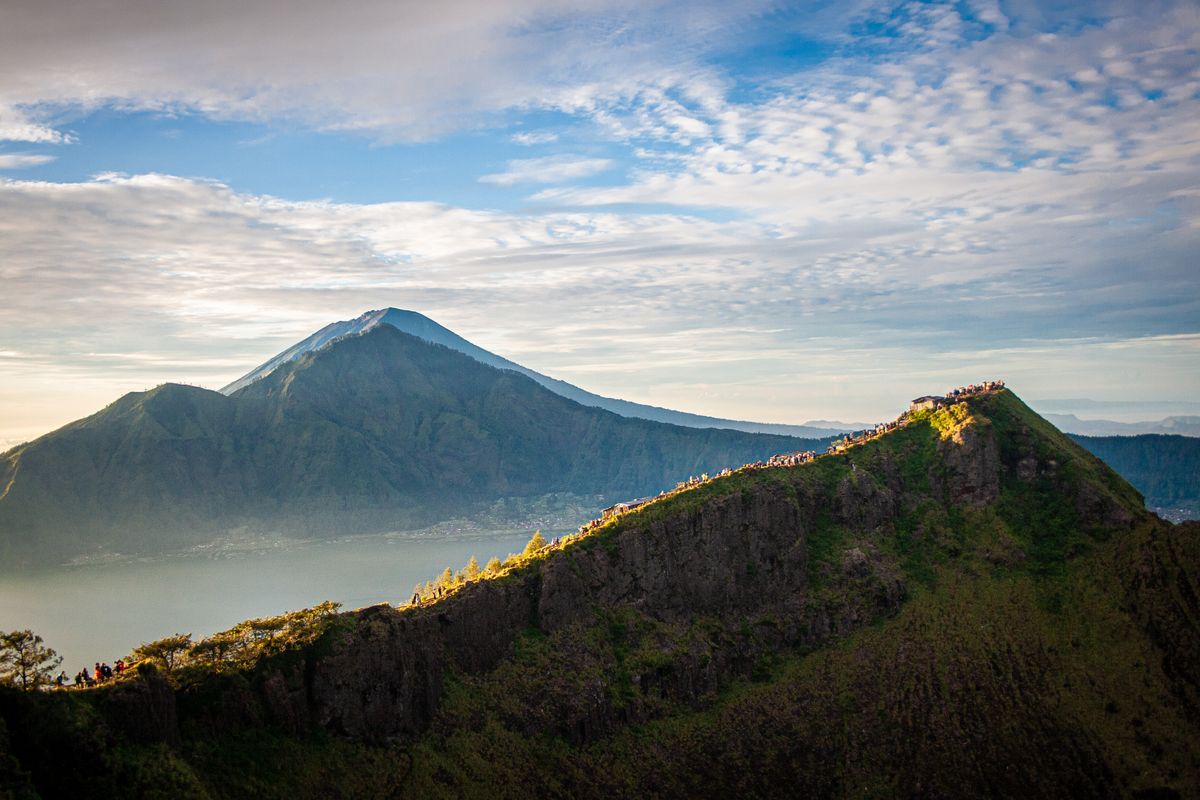
Twenty minutes into the climb and the group has already sorted itself into three lines, same as any first fitness test of preseason. Two backpackers up front setting a pace they won't hold past the treeline. A middle pack finding its rhythm on the switchbacks. And at the back, a guide named Wayan, unbothered, calling out where the loose ash turns to solid rock so nobody plants a foot wrong in the dark.
This is Bali's other workout, the one nobody mentions between the surf lessons and the beach clubs. Every trekking outfit in Toya Bungkah runs the same 3:30 a.m. pickup for the 1,717-metre summit, guide compulsory since the local association locked the mountain down to freelancers a few years back. The track is decomposed volcanic rock the whole way, loose enough that the first half hour is less a hike than a controlled slide uphill, and I've coached enough forwards through hill sessions to know that's the kind of surface that finds out your ankles before it finds out your lungs.
One woman in our group, maybe sixty, dropped off the middle pack after the first switchback and Wayan simply matched her pace without a word about it, which is the correct call every time. Slow isn't a verdict on anybody. It's just today's number, same as a stopwatch doesn't care what you think about it. She made the summit twelve minutes after the rest of us and got the same sunrise for her trouble.
Holding your line at the top turns out to be the real contest. By 5:50 the summit shelter's flat rocks are three bodies deep, tripods jammed in like it's a lineout, and every fresh arrival has to negotiate for a sliver of unobstructed view. Possession lost at the rock ledge, regrouping four steps back with a worse angle and a flask of instant coffee for consolation.
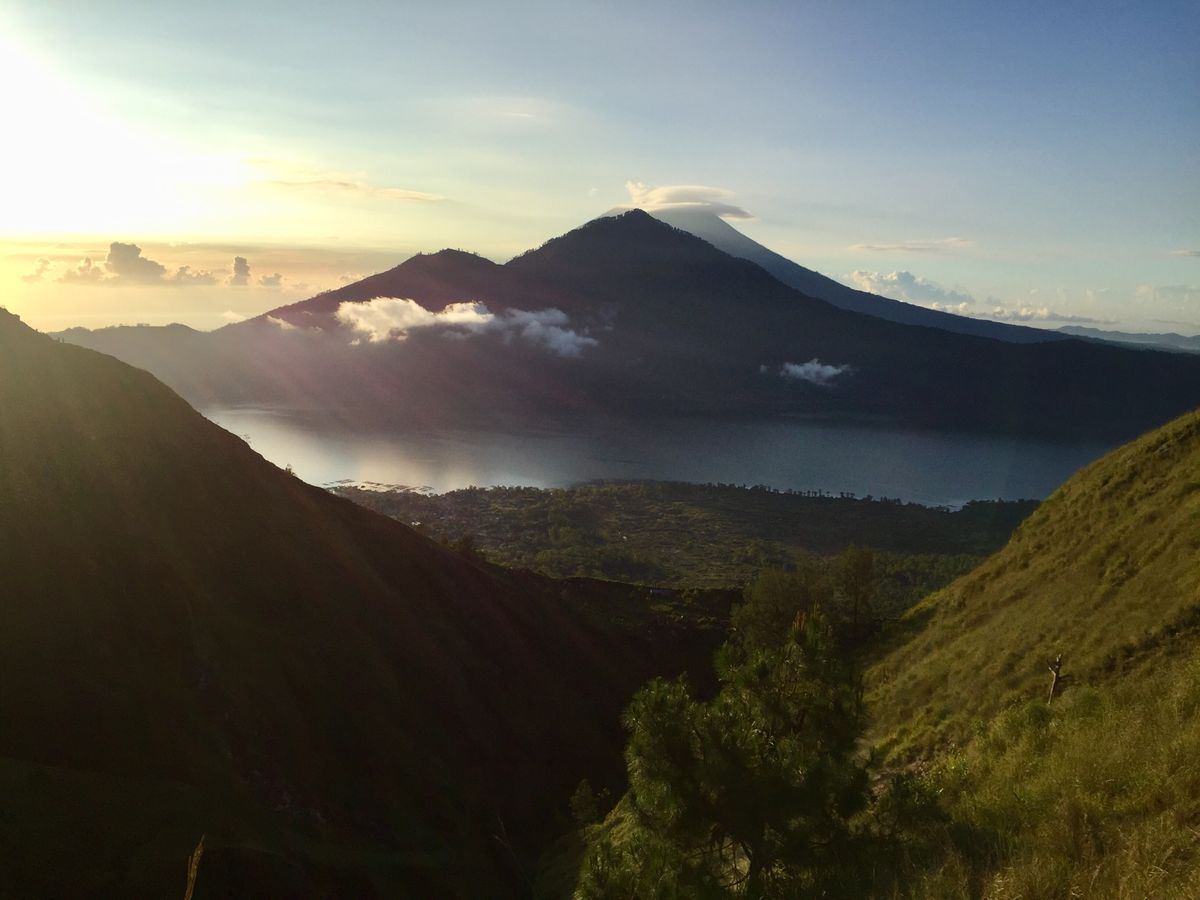
Then the light actually turns, Agung sharpening out of the haze across the caldera lake, and the whole ridge goes quiet in the way a stadium does right before kickoff. Guides start digging into the crater's steam vents with cloth-wrapped eggs, boiled by the mountain itself inside twenty minutes, handed round with a banana sandwich that tastes better than it has any right to at 1,717 metres. Call it two and a half hours, one genuinely brutal loose-scree stretch, and a breakfast cooked by a volcano: full marks for a first session, even before Bali's put its boots on properly.
Holding your spot for sunrise turns out to be harder than the climb that got you there.
Kintamani to Sidemen: The Away Leg
The buffet line at the Kintamani rim restaurants moves slower than a scrum reset, forty trays deep before anyone's actually looked at the volcano they drove two hours to see. Every tour bus in the district seems to arrive at the same lunch window, and the view of Batur across the caldera gets fought over from a plate of rice and satay instead of a hiking trail.
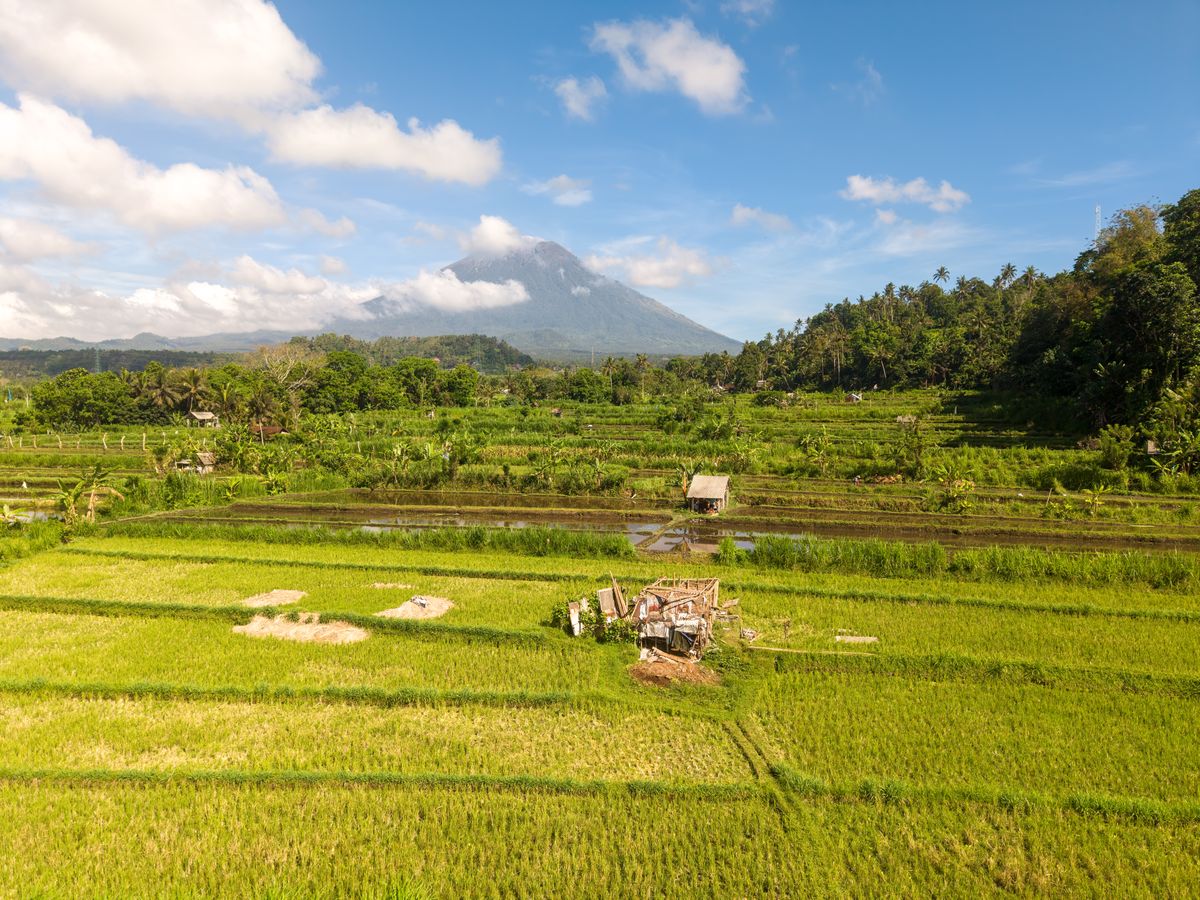
We didn't linger. Twenty minutes further along the ridge road and the crowd thins out completely, the tarmac dropping through Sidemen valley toward Iseh, rice terraces stepping down both sides of the road with Mount Agung sitting square in the middle distance whenever the cloud lifts. No entry gate, no ticket booth, just farm tracks along the paddy bunds that a guesthouse owner in Sidemen pointed us toward for an afternoon walk.
The walking here is deceptive. Nothing steep, nothing technical, but the bunds between flooded terraces are barely a boot wide and slick where the irrigation channels overflow, and I watched more than one confident stride nearly go sideways into a rice paddy. Easy trail, hard mistake to make. Most conditioning work is like that: it's never the steep pitch that catches you out, it's the flat stretch you stopped concentrating on.
Sidemen against Kintamani wasn't a fair contest in the end. One had forty buses fighting over a buffet line; the other had a farmer waist-deep in his own paddy who nodded at us and kept working. Valley wins on the scoreboard, easily, and I didn't need a stopwatch to know it.
In Sidemen the view is free, but the footing on the paddy bunds still charges full price.
Tegallalang: Contact Sport
Four deep on the top step at Tegallalang by 9 a.m., everybody working the same twelve feet of rail for the same photo, and the group ahead of us in matching linen outfits has claimed it for what's already stretching past ten minutes. This is less a rice terrace than a scrum that never gets reset.
Entry's a donation at the gate, twenty thousand rupiah that nobody enforces too hard, and there are a couple of Instagram swings further down charging separately for the privilege of dangling over the terraces for thirty seconds. We paid the entry, skipped the swings, and kept walking past the rail and down into the terraces themselves, where the crowd thins out fast because most people don't actually want to do the stairs.
Down among the paddies the steps are uneven sandstone, wet in patches from the irrigation feeding each level, and a farmer in a conical hat kept working a lower terrace without so much as looking up at the queue above him, which told me everything about whose place this actually is. We finished the day on the Campuhan Ridge Walk instead, free, no gate, a grass spine of a trail running out of central Ubud with nothing to fight for except the humidity.
Different drills, same afternoon: one taught me how to queue politely for a view I'd already seen in photos, the other was just a good clean walk with a breeze at the top of it. Ubud's real trail was never the one on the postcards.
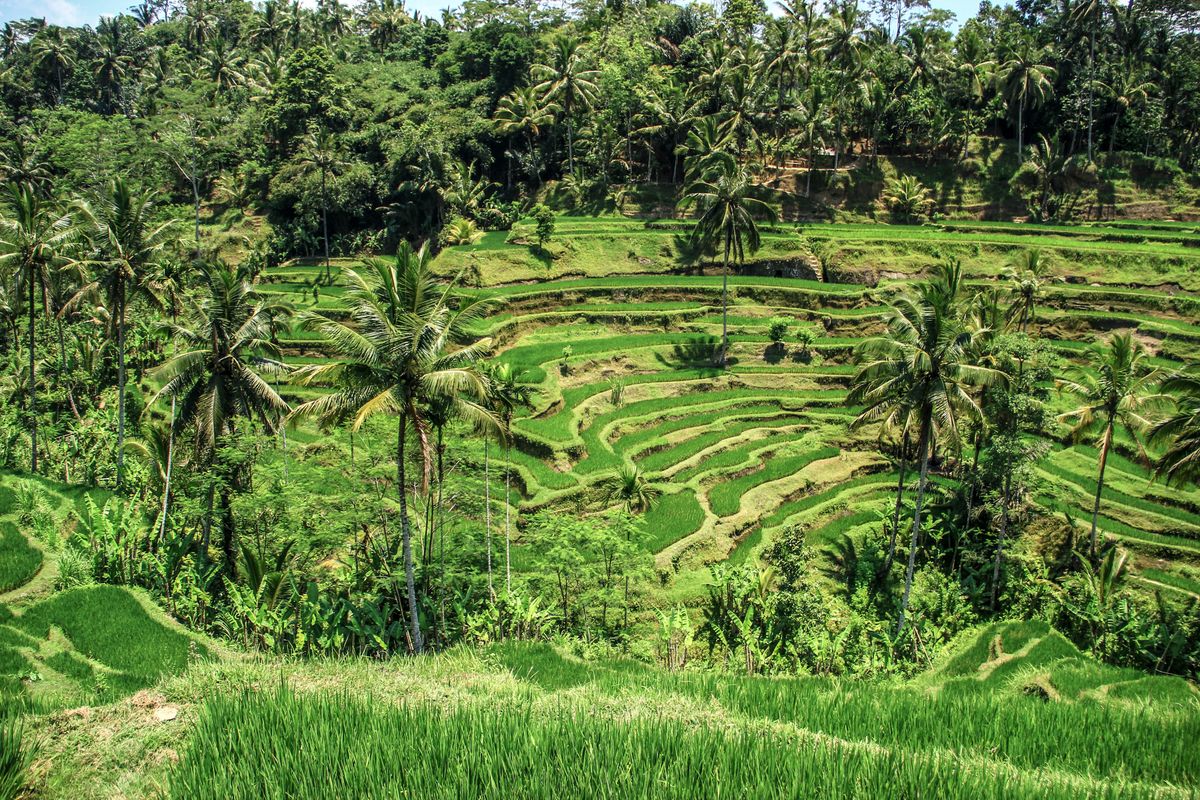
Tegallalang is for the photo, but Campuhan Ridge is where the actual walking happens.
Munduk: Full-Time
Halfway down the canyon steps to the second waterfall and my shoes are already gone, not lost, just soaked through and squelching with every step, the trail a run of wet stone and tree roots that the morning's rain hadn't bothered drying out.
Munduk is a proper away game from Ubud, close to three hours north through Kintamani's back road and down through kopi Bali stalls and clove plantations that scent the whole drive before you see them. We stopped at the Tamblingan-Buyan twin lakes viewpoint on the way in, quieter than anywhere else on this trip, then dropped into Munduk village for the waterfall trail proper.
Nothing about this trail is dangerous, but nothing about it is generous either. Stone steps down into the canyon, slick with spray the closer you get, and a return climb back up that's steeper than it looked going down, the kind of detail a trail map never bothers to mention. Every good waterfall in Bali seems to charge the same fee: whatever it cost you to get down, double it coming back up.
Munduk trail, before you go
Grip matters more than cushioning; the stone steps get slick with spray past the first waterfall
Entry runs 15,000-20,000 IDR per waterfall, cash only at the trailhead hut
Trails past the first falls are barely marked; a local guide earns their fee here
Pack a dry shirt and a plastic bag for your phone, not a suggestion
Every waterfall in Bali charges the same fee: whatever the descent cost you, the climb back doubles it.
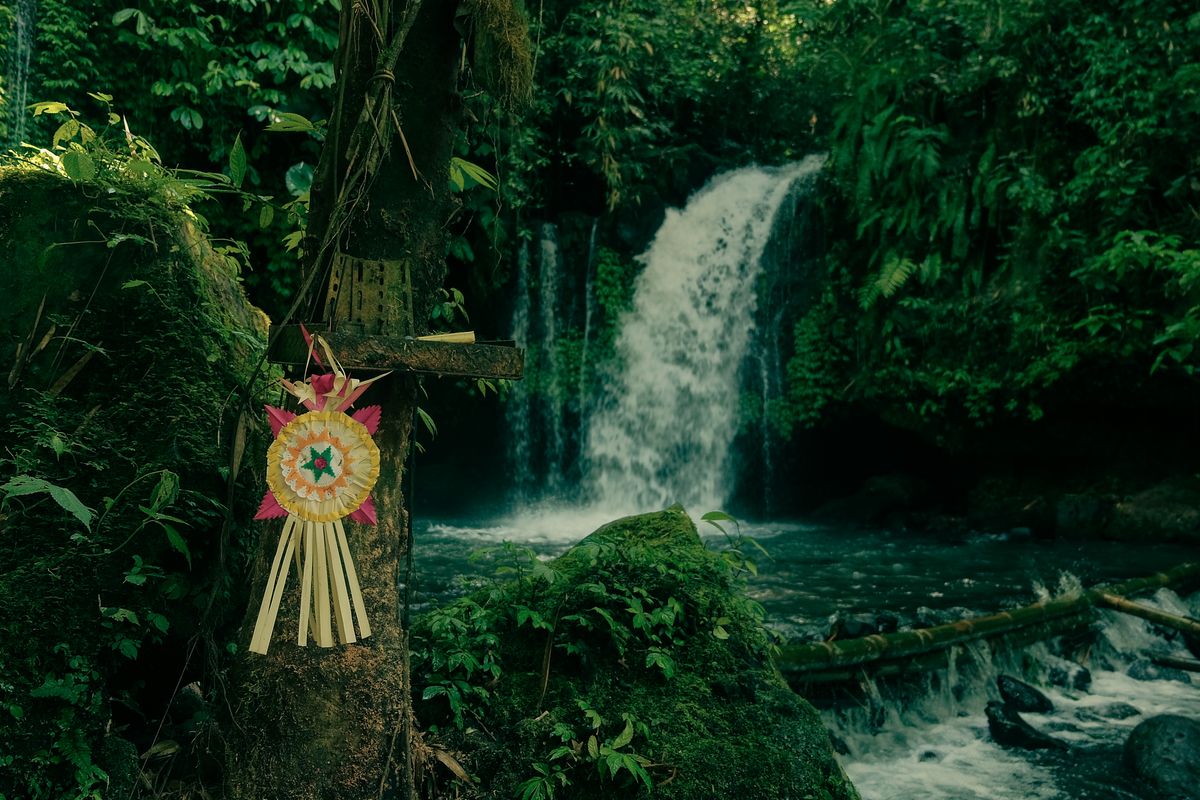
We missed the last decent light at the third waterfall because our driver wanted to beat the afternoon rain back over the mountain, so that one stays a name on a map instead of a photo, which is a fair trade some days and an annoying one on others. Four days, one volcano, two valleys, and more wet socks than the trip description mentioned. Final score: Bali's highlands, well ahead on points, beaches nowhere near the field. ■